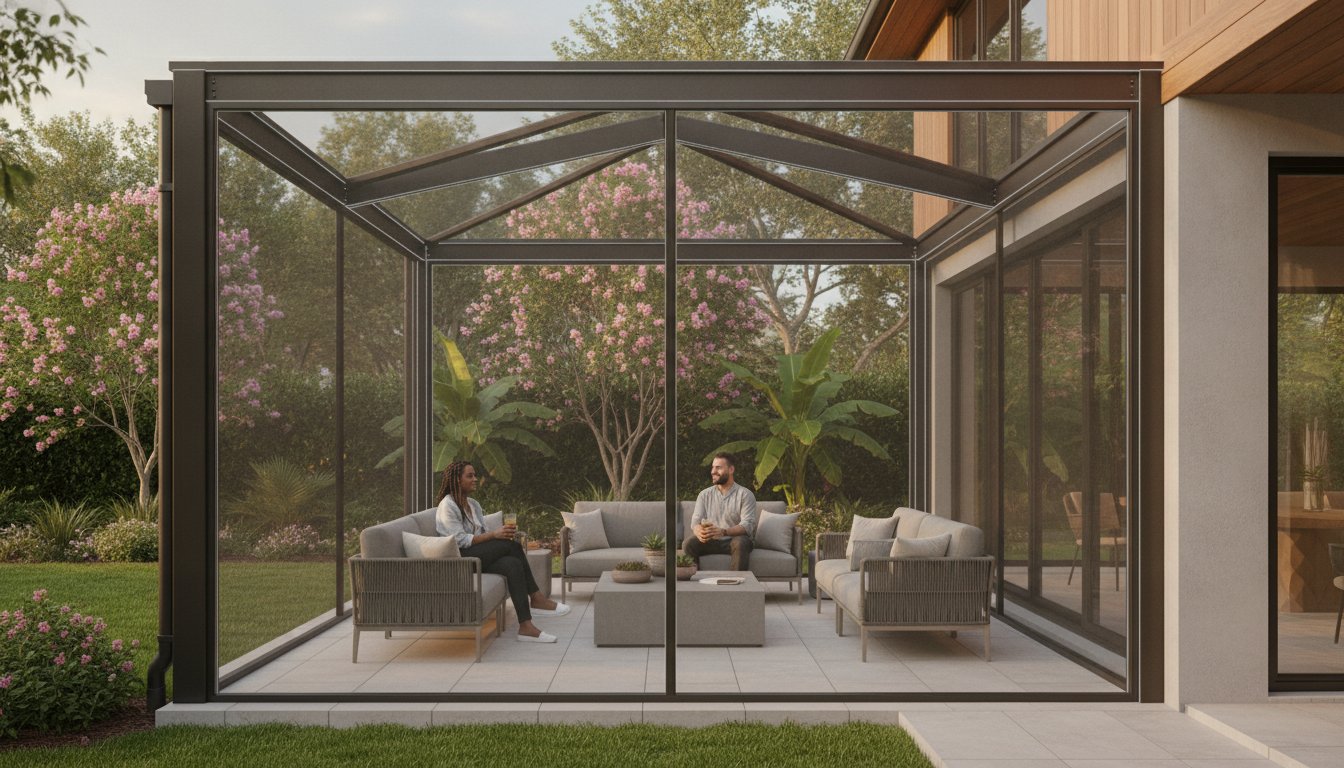
A screen enclosure is far more than a simple mesh fence; it is a precision-engineered structure designed to stand firm against the unique pressures of the Gulf Coast climate. While many homeowners start their search looking for the lowest price, the real value lies in finding screen builders who understand that structural integrity is the only thing standing between your patio and the next major storm. You deserve an outdoor space where you can relax without the constant nuisance of mosquitoes or the fear of a flimsy frame buckling under high winds.
It is natural to feel overwhelmed by shifting material costs and the complex requirements of the 2026 building codes, but you don’t have to manage these technicalities alone. This guide will teach you how to identify quality craftsmanship, navigate regional engineering requirements, and select a partner who handles every permit and plan with expertise. We will examine the essential criteria for choosing a contractor who adds lasting value to your property, ensuring your new outdoor living room is as durable as it is beautiful. By the end of this article, you will have the confidence to choose a builder who treats your home with the respect and precision it deserves.
Key Takeaways
- Understand why professional screen builders operate as structural aluminum contractors, providing the custom engineering required for a permanent and safe home addition.
- Learn to identify premium materials like high-grade aluminum alloys and weather-resistant fasteners that ensure your enclosure withstands the Gulf Coast climate.
- Compare the benefits of standard screen rooms versus insulated patio covers to determine which roofing system offers the best thermal protection for your outdoor space.
- Discover the critical questions to ask regarding licensing and site-specific plans to ensure your contractor meets all local engineering and permit requirements.
- Gain insights into how regional expertise in Louisiana, Mississippi, and Alabama helps homeowners navigate complex building codes for lasting property value.
What Do Professional Screen Builders Actually Do?
At its core, a professional screen builder is a structural aluminum contractor. While a general handyman might be able to replace a single panel of mesh, what is a screened porch if not a fully engineered extension of your home? These specialists design permanent structures that must comply with strict wind-load requirements, especially in coastal regions. Professional screen builders handle the complex geometry of connecting new frames to existing rooflines, ensuring that the final product is both watertight and structurally sound. They don’t just “hang screen”; they create a rigid, load-bearing framework that functions as a seamless addition to your property.
In Louisiana and Mississippi, building codes are particularly stringent due to hurricane risks. For example, Mississippi has adopted the 2021 IRC, requiring enclosures on the Gulf Coast to be designed for wind speeds up to 150 mph. In South Louisiana, those requirements can reach up to 160 mph. General contractors often lack the specific aluminum engineering expertise needed to meet these standards. A specialist manages the entire permitting process, ensuring that the site-specific engineering drawings meet every localized safety requirement for your specific zip code.
The Difference Between DIY Kits and Custom Builds
Choosing a custom build over a retail kit is a decision about longevity and safety. DIY kits found at big-box stores typically use thin-gauge aluminum that can warp or buckle under moderate pressure. Professional screen builders utilize heavy-duty aluminum extrusions that provide the structural integrity needed to maintain mesh tension over several years. This prevents the sagging and “screen blowouts” often seen in cheaper alternatives. Custom builds also offer superior aesthetics. Whether your patio has a unique shape or a complex roofline, a bespoke approach ensures a perfect fit that retail kits simply cannot match.
Why Gulf Coast Homeowners Need Specialists
The environment in coastal Alabama and the surrounding areas is notoriously harsh on building materials. High humidity and salt-air corrosion can quickly degrade inferior metals and fasteners. Specialists select specific alloys and powder-coated finishes designed to resist these elements. They also prioritize the following regional needs:
- Salt-air resistance: Utilizing specialized fasteners that won’t rust or “bleed” onto your concrete.
- Heavy rainfall: Designing precision-engineered drainage systems to prevent water from pooling against your home’s foundation.
- Mosquito protection: Ensuring a gap-free installation that addresses the aggressive Southern mosquito seasons.
A specialist understands that your enclosure is a long-term investment. By focusing on regional engineering and high-grade materials, they ensure your outdoor space remains a bug-free sanctuary for decades, not just a single season.
The Anatomy of a High-Quality Screen Enclosure
A durable outdoor structure is only as strong as its individual components. When professional screen builders design an enclosure, they select materials based on their ability to withstand constant tension and environmental stress. The primary framework typically utilizes 6063-T6 aluminum alloy. This specific grade is the industry standard because it is heat-treated for structural hardness while remaining resistant to the corrosive salt air found along the Gulf Coast. Using this high-grade aluminum ensures that your frame stays rigid and straight for decades, even when supporting large spans of heavy mesh.
The details of the assembly are just as critical as the beams themselves. Standard steel screws will eventually rust, leading to “bleeding” streaks that permanently stain white or bronze aluminum frames. To prevent this, quality builds utilize stainless steel fasteners or ceramic-coated screws equipped with protective caps. These components work in tandem with specialized mesh options tailored to your lifestyle. While standard fiberglass mesh offers excellent visibility, you might consider a 20×20 “no-see-um” weave to block tiny gnats or a vinyl-coated polyester “pet mesh” that is seven times stronger than traditional materials. If you are curious about how these materials look when fully assembled, you can browse a gallery of professional pool enclosures to see the difference quality components make.
Structural Aluminum and Wind Loads
Engineering for wind load is the most important safety factor in aluminum construction. This term refers to the amount of pressure a structure can withstand from high-velocity winds. Because mesh acts like a sail during a storm, the frame must be anchored with heavy-duty gusset plates and internal bracing. Florida’s building codes for screen enclosures provide the most rigorous benchmarks for these calculations, and many builders across the Gulf Coast follow these standards to ensure maximum safety. Proper engineering ensures that the aluminum beams are sized correctly to prevent the structure from collapsing or twisting during severe weather events.
Roofing Styles: From Mansard to Gable
The roof design of your enclosure dictates both the interior feel and the architectural harmony of your home. Mansard roofs are the most popular choice because their sloped sides and flat top maximize the interior volume, making the space feel open and airy. If you prefer a look that mirrors your home’s existing roofline, a Gable or Hip roof provides a more traditional aesthetic. Regardless of the style, integrated gutter systems are essential. These systems redirect heavy Southern rainfall away from your foundation, protecting your patio and landscaping from water damage and erosion.
Comparing Screen Enclosure Types and Roofing Options
Selecting the right structure depends on how you intend to use your outdoor space and the specific climate challenges of your property. Standard screen rooms offer the most straightforward and budget-friendly entry point for homeowners. These structures prioritize maximum airflow, allowing the Gulf Coast breeze to circulate while keeping pests at bay. Because they utilize a mesh roof, they don’t provide protection from rain, but they are an excellent choice for those who want a true “open-air” feeling without the mosquitoes. Expert screen builders can help you determine if your existing foundation is suitable for this type of lightweight addition.
If you require protection from the sun and rain, insulated patio covers are a superior alternative. These systems utilize structural foam-core aluminum panels that provide significant thermal protection. By blocking the sun’s radiant heat, these covers keep the area underneath much cooler than a standard screen roof. They also provide a solid, finished ceiling that is perfect for mounting outdoor fans and lighting fixtures. Professional screen builders often recommend a hybrid approach for maximum versatility. This involves combining a solid insulated roof with screened walls, creating a durable outdoor living room that stays dry during a summer downpour while remaining bug-free.
For those who want to keep their patio bright but protected, Lexan or twin-wall polycarbonate roofs are an ideal solution. These translucent materials allow natural light to filter through while blocking harmful UV rays and keeping the rain out. This is particularly beneficial for patios that sit adjacent to living rooms or kitchens where blocking the sun entirely would make the interior of the home too dark.
Pool Enclosures vs. Patio Screen Rooms
The primary difference between a pool enclosure and a patio screen room is the sheer scale and engineering involved. Pool enclosures cover a much larger area and must be engineered to withstand higher wind pressures because of their height and span. They also require specialized fasteners and coatings to resist the constant moisture and chlorine-heavy air surrounding the pool. You can learn more about the specific requirements for pool enclosure installation Louisiana to see how regional codes impact these larger projects. Experienced contractors will ensure that the drainage and foundation requirements are met for these massive structures.
Solid vs. Translucent Roofing
Choosing between solid and translucent roofing often comes down to heat management. Insulated aluminum is the clear winner for heat reduction, making it the preferred choice for west-facing patios that receive intense afternoon sun. Translucent polycarbonate offers a compromise, providing a dry space without sacrificing brightness. Both materials are engineered to be highly durable. They are designed to withstand the impact of Gulf Coast hail and falling debris far better than thin-gauge retail alternatives, ensuring your investment remains intact through seasons of unpredictable weather.
5 Questions to Ask Before Hiring Screen Builders
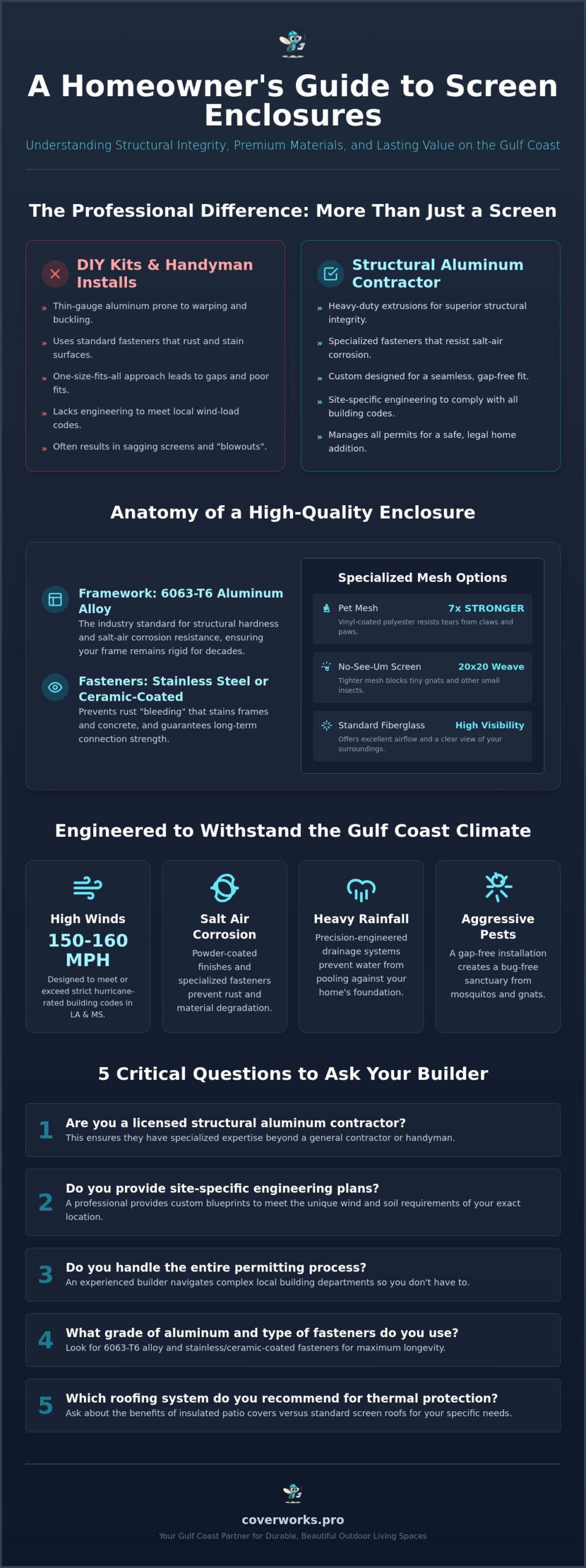
Vetting a contractor is the most critical step in ensuring your outdoor investment lasts for decades. Because an enclosure is a structural addition to your home, you need more than just a general laborer; you need a specialist who understands the physics of aluminum. Before you sign a contract, ask these five targeted questions to ensure you are working with professional screen builders who prioritize safety and quality.
- Are you licensed and insured specifically for aluminum construction? General liability is a start, but your builder should carry coverage that specifically addresses structural aluminum work. This protects you from liability if an accident occurs during the complex assembly of a pool cage or patio cover.
- Do you provide site-specific engineering drawings for my project? As discussed earlier, Gulf Coast wind loads require precise calculations. A reputable builder will provide drawings tailored to your specific address, not generic “one-size-fits-all” plans.
- What is your process for securing local building permits in my parish or county? Professional builders handle the administrative burden. If a contractor suggests you pull the permits yourself, it’s often because they aren’t properly registered with the local building department.
- What specific grade of aluminum and type of mesh do you use? Ensure they are using 6063-T6 aluminum and high-quality mesh. This is the time to confirm they aren’t substituting industry standards with cheaper, thin-gauge alternatives.
- Do you offer a warranty on both materials and labor? A confident builder stands behind their workmanship. Look for a written guarantee that covers both the structural integrity of the frame and the installation of the screen.
Red Flags to Watch For
The most dangerous red flag is a contractor who asks you to pull your own permits. This places all legal and safety responsibility on your shoulders. Additionally, be wary of extremely low bids. These quotes often rely on “thin-wall” aluminum that lacks the structural rigidity to survive a tropical storm. Finally, a lack of a physical portfolio or local references in Alabama or Mississippi is a sign of an unestablished business. Reliable screen builders should be able to show you completed projects in your immediate area that have already weathered several seasons. If you already own an enclosure that has seen a few storm seasons, our detailed guide on screen enclosure repair in Mississippi can help you identify whether existing damage is cosmetic or a sign of deeper structural compromise.
Understanding the Quote Process
An efficient, experienced builder should be able to provide a comprehensive quote quickly. Same-day quotes are often a sign that the company has a streamlined process and a deep understanding of current material costs. A professional quote should be itemized and include everything from materials and labor to permit fees and debris removal. For more detailed advice on vetting local professionals, you can read our guide on hiring screen room contractors Alabama. Once you have your quotes in hand, you can compare them based on the quality of materials and the level of engineering provided. To begin your own project with a team that values precision, you can request a professional consultation from CoverWorks Inc. and see how our regional expertise translates into a more durable home addition.
Why CoverWorks Inc. is the Gulf Coast’s Trusted Screen Builder
CoverWorks Inc. has established itself as the premier choice among screen builders on the Gulf Coast by prioritizing structural durability and regional familiarity. With over 20 years of specialized experience in aluminum outdoor structures, our team understands that an enclosure is more than just a home improvement project; it’s a permanent addition to your family’s lifestyle. We serve homeowners across Louisiana, Mississippi, and Alabama, providing a level of local expertise that general contractors often lack. The identity of CoverWorks Inc. is built on the pillars of experience and a commitment to durable results, ensuring that every structure we build is designed to be storm-ready and aesthetically harmonious with your home.
Our role as a “Master Craftsman” means we take personal responsibility for the quality of the structures we leave behind. We don’t rely on generic designs or flimsy materials. Instead, CoverWorks Inc. focuses on precision craftsmanship that respects both your time and your investment. From the initial design phase to the final installation, our comprehensive service ensures that no detail is overlooked. We manage the technical complexities of engineering and permitting so you can focus on the transformation of your backyard into a functional, comfortable sanctuary.
Our Custom Approach to Outdoor Living
Every home has a unique footprint, which is why CoverWorks Inc. rejects the “one-size-fits-all” mentality. We specialize in the meticulous engineering required for complex structures, such as Mansard roof pool cages that must maintain perfect tension across large spans. Our team also helps you navigate the functional differences between our insulated and non-insulated patio cover systems. While some homeowners prioritize the maximum airflow of a standard screen room, others find the thermal protection of an insulated ceiling essential for the Southern heat. The professional installation teams at CoverWorks Inc. work efficiently to minimize disruption to your daily life, treating your property with the utmost respect from start to finish.
Ready to Transform Your Backyard?
Reclaiming your outdoor space starts with a clear understanding of your goals. Whether you are deciding between standard screen, glass rooms, or translucent polycarbonate roofs, a professional consultation with CoverWorks Inc. is the best way to ensure your vision aligns with regional building codes. We help you identify the best materials for your specific location, whether you are facing salt-air corrosion near the coast or aggressive mosquito seasons further inland. Taking the time to plan with a reliable guide ensures that your new outdoor living area adds lasting property value and years of enjoyment. If you are ready to begin, get your same-day quote from CoverWorks Inc. and take the first step toward a more comfortable, bug-free home.
Reclaim Your Outdoor Space with Confidence
Investing in a screen enclosure is a significant step toward improving your home’s comfort and long-term value. As we have explored, success depends on prioritizing structural aluminum engineering and high-quality materials that withstand the Gulf Coast’s unpredictable weather patterns. By selecting professional screen builders who understand localized building codes and wind-load requirements, you ensure your new outdoor area remains a safe, bug-free sanctuary for your family.
CoverWorks Inc. brings over 20 years of specialized experience to homeowners across Louisiana, Mississippi, and Alabama. Whether you require complex Mansard roof engineering for a large pool cage or a high-performance insulated patio cover, our team provides the precision craftsmanship your property deserves. We manage the technical details and permitting so you can enjoy a seamless installation from start to finish. You don’t have to wait to transform your backyard into a functional, beautiful extension of your home. Request your free same-day quote from CoverWorks Inc. today to get started. We are ready to help you create a durable outdoor living space that you will enjoy for decades.
Frequently Asked Questions
How long does it take for screen builders to install a typical enclosure?
Usually 2 to 5 days is required for the physical installation, though the timeline depends on the size and complexity of the project. This estimate doesn’t include the time needed for engineering drawings, local permit approvals, and material procurement. Professional screen builders will provide a specific schedule during the consultation phase to ensure you know exactly when the crew will be on-site and when the project will reach completion.
Do I need a building permit for a screen room in Louisiana or Mississippi?
Yes, building permits are required for all permanent outdoor structures in Louisiana and Mississippi to ensure compliance with structural safety standards. Louisiana follows a mandatory statewide Uniform Construction Code which adopts the 2021 IRC, and Mississippi has adopted the 2021 IRC with state-specific amendments. Local jurisdictions manage these permits. Your contractor should handle the application process to ensure the design meets regional wind-speed requirements for your specific parish or county.
Will a screen enclosure for my pool lower my insurance rates?
A screen enclosure generally doesn’t lower insurance rates, although it does satisfy the Florida Building Code’s requirement for a self-closing, self-latching safety barrier. While the structure provides essential safety by preventing unauthorized access to the pool area, insurance companies typically view the enclosure as an additional structure to be covered. It’s best to consult with your specific insurance provider to understand how the addition affects your policy and overall coverage levels.
What is the best type of mesh for homes with pets or small children?
Vinyl-coated polyester mesh, often referred to as pet mesh, is the superior choice for households with pets or active children. This material is significantly stronger than standard fiberglass, resisting tears and punctures from claws or accidental impact. While it is more durable, it still maintains excellent visibility and airflow. This ensures your outdoor space remains comfortable while providing the structural strength needed to withstand daily wear and tear from a busy family.
Can screen builders repair an existing pool cage or do I need a full replacement?
Professional screen builders can perform comprehensive rescreening and structural repairs if the underlying aluminum frame remains sound. If the frame has suffered significant corrosion or structural warping, a full replacement may be necessary to ensure the enclosure meets current building codes. A detailed inspection of the fasteners, gusset plates, and beam integrity will determine if a repair is a safe and cost-effective solution for your home or if a new structure is required. Mississippi homeowners can find a thorough breakdown of what to look for in our guide to screen enclosure repair in Mississippi, which covers how to distinguish cosmetic wear from serious structural damage. To understand the warning signs that indicate it’s time to act, review our pool enclosure mesh replacement checklist for a thorough guide to evaluating your screen’s condition.
How much does a custom screen enclosure typically cost in the Gulf Coast region?
The total investment for a screen enclosure varies based on the total square footage, the complexity of the roofline, and the specific wind-load requirements of your location. Factors such as the choice between standard mesh and specialty products, as well as the need for site-specific engineering plans, will influence the final cost. Most professional builders provide detailed, itemized quotes that cover materials, labor, and permit fees after a thorough site assessment is completed.
What is the difference between a pool cage and a screen enclosure?
A pool cage is a specific type of large-scale screen enclosure designed to span the entire area of a swimming pool and its surrounding deck. While both structures utilize aluminum framing and mesh, pool cages require more advanced engineering to manage larger spans and higher heights. Screen enclosures is a broader category that includes smaller patio rooms, porch covers, and various screened-in outdoor living areas attached to the home, often with different roofing requirements.
How do screen enclosures hold up during a hurricane or tropical storm?
Enclosures engineered to current building codes are designed to withstand specific wind speeds, which can reach up to 150 or 160 mph in coastal Louisiana and Mississippi. The structural integrity depends on the use of heavy-duty aluminum alloys and proper anchoring systems. While the mesh is designed to blow out under extreme pressure to protect the frame, the aluminum structure itself should remain standing if it was built according to site-specific engineering standards. Keeping your mesh in optimal condition is equally important; knowing when to schedule a pool enclosure mesh replacement before hurricane season can prevent minor wear from becoming a costly structural vulnerability.
Leave a Reply