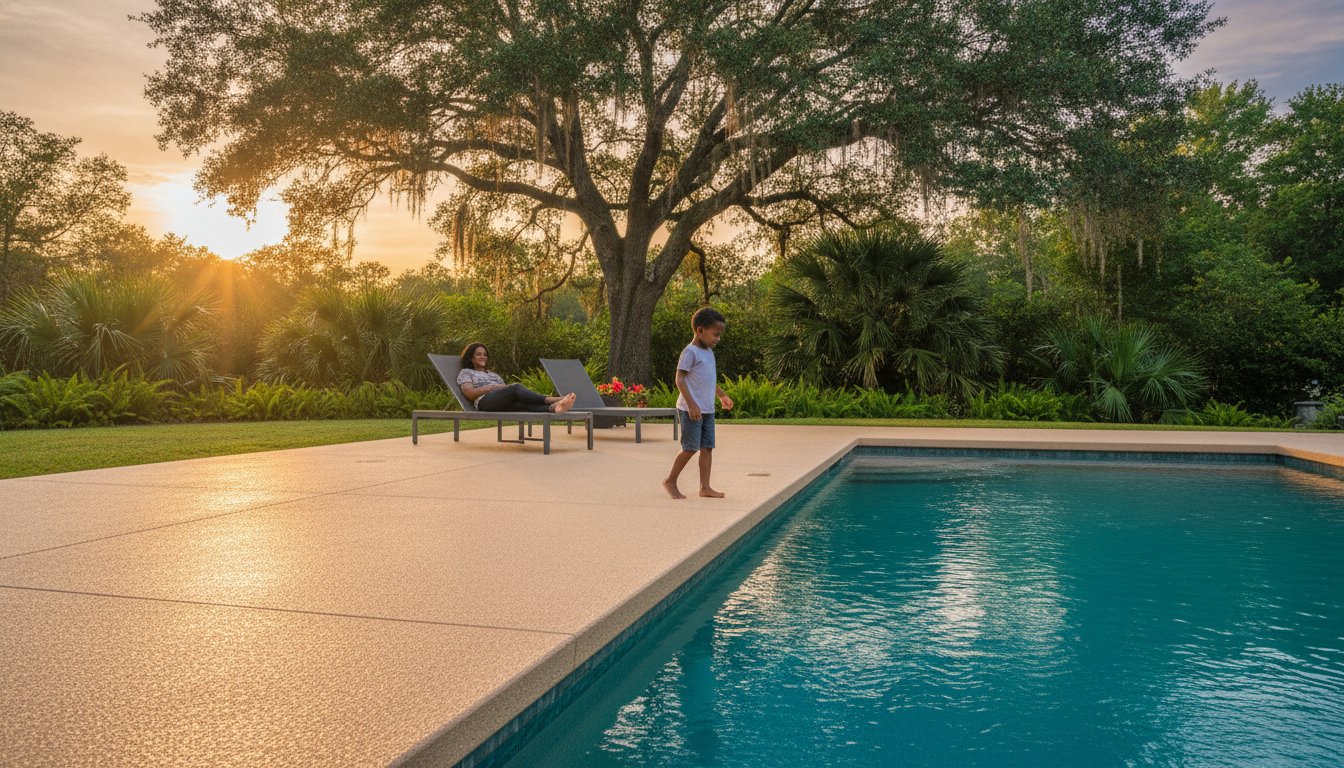
In the sweltering 100-degree heat of a Gulf Coast summer, your pool deck should be a place of relaxation, not a source of burned feet and slippery falls. You likely already know that standard concrete absorbs heat like a sponge and becomes dangerously slick the moment it gets wet. It’s frustrating to watch your kids run across a surface that feels like a frying pan, or to deal with peeling coatings that just can’t handle our regional humidity. With over 200,000 pool-related injuries occurring annually, safety isn’t just a preference; it’s a necessity for your home.
Our goal is to help you reclaim your backyard. By following this guide, you’ll learn how a professional kool deck resurfacing pool deck project can transform your outdoor space into a cool, slip-resistant oasis. We’ve compiled the ultimate checklist for homeowners in New Orleans, Gulfport, and across the coast. This list covers everything from meeting the 0.42 Dynamic Coefficient of Friction safety standard to choosing materials that offer long-term durability with minimal maintenance. Let’s walk through the steps to ensure your deck is as safe as it is beautiful.
Key Takeaways
- Understand the science behind cementitious toppings that keep your pool area 20-30 degrees cooler than standard concrete.
- Learn how to perform the “Slick Test” to identify hidden safety hazards on your current walking surfaces.
- Compare the durability and aesthetic benefits of traditional kool deck resurfacing pool deck options against modern decorative overlays.
- Discover why professional surface preparation and regional licensing are the most critical factors for a long-lasting finish in the Gulf Coast climate.
- Master the “3-5-10 rule” for maintenance to protect your new coating from salt air, high humidity, and heavy foot traffic.
What is Kool Deck Resurfacing? Understanding Slip-Resistant Pool Deck Coatings
Kool Deck isn’t just a brand name; it’s a specific type of cementitious topping engineered to handle the brutal thermal demands of a poolside environment. Unlike the standard gray slab, which is essentially what concrete is made of mixed with water and aggregate, a kool deck resurfacing pool deck project involves applying a specialized material that changes the physical properties of the surface. It’s designed to be porous and light-colored, which allows it to stay 20 to 30 degrees cooler than traditional concrete. This thermal protection is vital in places like Slidell or Biloxi, where the summer sun can turn a backyard into a heat trap.
In our high-humidity environment, slip resistance is the top priority for homeowners. The textured finish of a resurfaced deck provides mechanical traction even when the surface is drenched by a summer thunderstorm or splashing kids. It’s a structural upgrade that addresses the root cause of hot feet and slippery slabs rather than just masking them with a temporary fix. For property owners across the Gulf Coast, this process is about creating a safe, functional transition from the water to the home.
The Role of Polymer-Modified Overlays
Modern resurfacing often utilizes polymer-modified overlays to ensure the new surface doesn’t just sit on top of the old slab but becomes part of it. A polymer-modified overlay is a high-performance hybrid of cement and resin designed for maximum adhesion and structural flexibility. These polymers allow the coating to expand and contract with the extreme temperature swings we see in New Orleans and Metairie. These systems also allow for moisture-vapor transmission. This breathability means that ground moisture can escape through the surface without building up the hydrostatic pressure that leads to unsightly delamination.
Why Traditional Paint Fails on Pool Decks
Homeowners often fall into the peeling trap by trying to use standard exterior deck paint. Paint is a film-forming product that seals the concrete. In the intense Louisiana sun, moisture trapped beneath that film turns to steam, causing the paint to bubble and flake off within a year or two. Beyond the maintenance headache, paint fills in the natural texture of the concrete. This creates a dangerous skating rink when the area gets wet.
While a cheap bucket of paint might look good for a single weekend, professional resurfacing is a long-term investment in safety. A properly installed coating can last over a decade with basic care. In contrast, paint typically requires a full, labor-intensive re-application every 12 to 24 months to keep it from looking neglected. Choosing a dedicated resurfacing system over paint saves both time and money over the life of your pool.
The Ultimate Checklist: 7 Signs Your Pool Deck Needs Resurfacing
If you’re questioning the integrity of your outdoor space, start with your bare feet. A high-quality pool deck should remain comfortable even under the intense Louisiana sun. If you can’t walk from your back door to the water at noon without shoes, your current surface has lost its thermal protection. This is often the first indicator that a kool deck resurfacing pool deck project is necessary to restore the cooling properties your family needs. Beyond temperature, you should perform a simple “Slick Test.” Wet a small area of the deck; if it feels like ice underfoot, the original texture has likely worn down to a polished, dangerous state.
Visible physical degradation is the next red flag. Look for spalling, which is when the top layer of concrete begins flaking or pitting. This isn’t just an aesthetic issue; it’s a sign that the bond between the surface and the substrate is failing. You should also examine cracking patterns. Small hairline shrinkage cracks are common in our humidity, but wide, deep cracks that travel through the slab indicate structural shifts that require professional attention. Finally, check for fading and discoloration. When the vibrant color of your deck turns dull or patchy, it’s a clear sign that UV damage has stripped away the protective sealer, leaving the concrete vulnerable to salt air and chemical erosion.
Safety First: Evaluating Slip Resistance
Safety is the most critical factor in any backyard renovation. Over time, heavy foot traffic and cleaning can “polish” concrete, removing the friction needed for safe movement. This is particularly dangerous on stairs and sloped entries. We recommend reviewing pool accessibility and safety standards to understand how slip resistance protects all users. In shaded areas near Slidell or Gulfport, persistent algae growth can also create a hidden slime layer that makes even textured decks hazardous. If you notice uneven slab settling creating trip hazards, the structural integrity of your deck is at risk.
Aesthetic and Structural Red Flags
Chalking is a common symptom of a failing coating. If you touch your deck and a white, powdery residue transfers to your hand, the material is literally disintegrating due to age and weather exposure. Persistent staining from oils, leaves, or pool chemicals is another sign that the surface is no longer sealed. These deep-set stains often can’t be cleaned and require a fresh overlay. For a thorough diagnosis, it’s best to consult with expert decorative concrete resurfacing contractors who understand the specific needs of Gulf Coast properties. Taking action early can prevent a simple resurfacing job from turning into a full concrete replacement. You can start the process today by scheduling a professional deck inspection to catch these issues before they escalate.
Comparing Slip-Resistant Coatings: Kool Deck vs. Modern Decorative Overlays
Selecting the right system for a kool deck resurfacing pool deck project involves weighing cooling properties against long-term durability. While the original cementitious formulas remain popular for their heat management, modern polymer-modified options provide enhanced chemical resistance and a broader range of design choices. Homeowners must decide if they prioritize the lowest possible surface temperature or a finish that offers superior adhesion to an older, existing slab.
To help clarify these differences, we have provided a comparison of the three most common resurfacing systems used throughout the Gulf Coast. Each material offers a different balance of aesthetic flexibility and structural performance.
| Feature | Kool Deck (Cementitious) | Acrylic Spray Texture | Stamped Concrete Overlay |
|---|---|---|---|
| Heat Resistance | Superior (Coolest) | High | Moderate |
| Slip Resistance | High (Knockdown) | High (Spray) | Variable (Requires Grit) |
| Bond Strength | Best on “Green” Concrete | Superior on Existing Slabs | High |
| Maintenance | Low | Low | Moderate (Periodic Sealing) |
In high-traffic areas where heavy patio furniture is moved frequently, acrylic spray textures often outperform traditional cementitious coatings. The resin within the acrylic creates a more flexible bond that resists chipping and scratching. If your project involves a kool deck resurfacing pool deck application over an established slab, acrylic systems are generally the more reliable choice due to their enhanced adhesion and UV stability.
The Knockdown Texture: The Standard for Safety
The “knockdown” finish is achieved by spraying a textured coating and then lightly troweling it to flatten the peaks. This creates a surface that breaks up water tension, allowing moisture to drain away rather than pooling into a slick film. The resulting voids and ridges provide the mechanical grip needed to prevent falls on wet concrete. Knockdown texture is the preferred choice for Gulf Coast pool enclosures because it balances superior slip resistance with a surface that stays comfortable in high humidity.
Acrylic vs. Cementitious Systems
Acrylic coatings are resin-based, offering excellent chemical resistance and a wide range of colors that won’t fade in the intense Slidell sun. They bond exceptionally well to older concrete, making them ideal for renovation projects. Cementitious systems, like the original Kool Deck, are composed of natural minerals and white cement. These are world-class at dissipating heat but are best applied to freshly poured concrete for maximum longevity. For homeowners with existing pools, an acrylic-modified system typically provides the best balance of durability and ease of installation.
Choosing the Right Resurfacing Contractor in the Gulf Coast
Selecting a contractor for your kool deck resurfacing pool deck project is a decision that impacts your home’s safety and value for the next decade. While many companies offer basic coatings, a true professional understands that the finish is only as good as the preparation beneath it. In the construction industry, we say that preparation is 90% of the job. This involves high-pressure washing and mechanical grinding to open the concrete’s pores. If a contractor skips these steps, the new coating won’t achieve a mechanical bond, leading to premature failure in our humid environment.
You should always ask specific technical questions before signing a contract. Find out if they use a dedicated primer and how they plan to handle expansion joints. These joints are essential for allowing your slab to move without cracking the new surface. A major red flag is any contractor who promises to simply “paint over” existing cracks. Structural repairs and crack injection are necessary first steps to ensure the integrity of the finished product. Proper licensing and insurance in Louisiana and Mississippi are also non-negotiable; they protect you from liability and ensure the work meets local building codes.
Regional Expertise: LA, MS, and AL Requirements
The Gulf Coast climate presents unique challenges that generic DIY kits can’t handle. High humidity levels during application can prevent polymer bonds from curing correctly, leading to a cloudy or weak finish. If you’re considering resurfacing as part of a larger pool enclosure installation, your contractor must also account for specific wind load requirements in areas like New Orleans or Metairie. For coastal properties in Biloxi or Gulfport, understanding salt-air corrosion is vital. We prioritize materials and structural attachments that won’t degrade when exposed to constant saltwater spray.
The Quote Process: What to Expect
A reliable guide should respect your time and provide clear, transparent pricing. While some firms offer ballpark estimates over the phone, a professional should conduct a detailed structural inspection of your slab. This allows them to identify hidden issues like hollow spots or deep-seated oil stains that might affect the final result. Same-day quotes are a hallmark of an efficient, experienced team, allowing you to plan your summer renovation without unnecessary delays. When comparing bids, look closely at material thickness and the quality of the final sealer rather than just the bottom line.
Extending the Life of Your Resurfaced Deck: Maintenance and Next Steps
Once your project is complete, protecting your investment requires a proactive approach. We recommend following the 3-5-10 rule to ensure your kool deck resurfacing pool deck remains in peak condition for years to come. Every 3 months, you should give the surface a thorough rinse to remove salt, dirt, and chemical residue. Every 5 years, plan for a professional resealing to maintain the UV protection and moisture resistance of the top layer. Finally, at the 10-year mark, schedule a structural inspection to catch any substrate shifts before they impact the integrity of the coating.
Cleaning your new surface doesn’t require aggressive chemicals or heavy machinery. In fact, harsh acids or high-pressure washing can strip the sealer and damage the delicate knockdown texture. Stick to mild, pH-neutral soaps and a soft-bristle brush for stubborn spots. This gentle method preserves the slip-resistant properties and keeps the color vibrant against the intense Mississippi and Louisiana sun. Remember that a professional kool deck resurfacing pool deck is an investment in your home’s value, and proper care ensures that value lasts.
There’s also a significant benefit to combining your resurfacing with structural shade. By cooling patio deck surfaces through the use of screen enclosures or patio covers, you shield the material from direct UV degradation. This synergy adds years to the life of your deck by reducing the extreme thermal expansion and contraction cycles that lead to hairline cracks. In New Orleans and Metairie, where the sun is relentless, this combination is the gold standard for outdoor comfort.
Seasonal Care for Gulf Coast Homeowners
Homeowners across the coast face specific challenges with organic debris. Leaves, pine needles, and pollen can sit in the humid air and create permanent tannin stains if they aren’t cleared away. After heavy tropical rainstorms in Slidell or Biloxi, check that your drainage systems are clear. Standing water is the enemy of any decorative finish, as it can lead to mineral buildup or localized delamination over time. For monthly maintenance, a simple solution of liquid dish soap and warm water is usually all you need to keep the surface looking new.
Ready to Upgrade Your Outdoor Living Space?
A refreshed deck is often the foundation for a complete backyard transformation. A new finish pairs perfectly with custom aluminum patio covers, creating a cohesive outdoor living space that is both functional and beautiful. At CoverWorks Inc., our process begins with a detailed assessment of your existing structures to ensure every new addition is properly engineered and permitted for local wind loads. We handle the technical complexities so you can focus on enjoying your home.
Your pool area should be a source of pride and safety for your family. Taking the step to resurface is a commitment to your property’s longevity and your peace of mind. If you’re ready to move from a cracked, hot slab to a professional, cool-to-the-touch finish, we’re here to guide you through every step of the process.
Get your free estimate for Kool Deck resurfacing today
Transform Your Backyard with Professional Deck Resurfacing
A safe and comfortable pool area is the heart of any Gulf Coast home. By identifying the signs of wear early and choosing high-traction, UV-resistant coatings, you protect your family from the hazards of slick concrete and extreme heat. Investing in a professional kool deck resurfacing pool deck project ensures your outdoor space remains a functional oasis for years to come. We’ve seen how proper engineering and material selection can withstand the unique humidity and wind loads of our region while providing a surface that stays cool under the summer sun.
With over 25 years of field experience, CoverWorks Inc. understands the technical demands of coastal properties from New Orleans to Biloxi. We prioritize structural integrity and building code compliance in every project. Our team provides professional site engineering and same-day quotes to help you start your transformation without delay. You don’t have to settle for a cracked or burning deck when a durable, beautiful solution is within reach.
We look forward to helping you create a safe, beautiful space where your family can relax and enjoy the outdoors all summer long.
Frequently Asked Questions
Can you resurface a pool deck that is already painted?
Yes, but you must completely remove the existing paint before applying a new coating. Applying a resurfacer over paint is a mistake because the paint acts as a bond breaker, preventing the new material from sticking to the concrete. We use mechanical grinding to reach the bare substrate. This ensures your new kool deck resurfacing pool deck system achieves a permanent, structural bond with the slab.
How long does Kool Deck resurfacing typically last in the Gulf Coast climate?
A professionally installed resurfacing project typically lasts between 10 and 15 years. While our regional humidity and salt air are challenging, polymer-modified systems are engineered to handle these specific conditions. You can extend this lifespan significantly by following a consistent maintenance schedule. We recommend a professional inspection and resealing every 5 years to keep the protective UV barrier intact.
Is Kool Deck really cooler than regular concrete?
Kool Deck stays 20 to 30 degrees cooler than standard gray concrete or tile. It achieves this temperature drop through a combination of light-colored pigments and a porous texture that dissipates heat rather than absorbing it. For homeowners in New Orleans or Gulfport, this makes the difference between a surface that burns bare feet and one that is comfortable to walk on at noon.
How long do we have to stay off the pool deck after resurfacing?
You can generally walk on the new surface with light shoes after 24 hours. However, you should wait at least 72 hours before moving heavy patio furniture or planters back into place. Full chemical curing can take up to a week depending on the humidity levels in Louisiana and Mississippi. We suggest keeping pets away from the area until the final sealer has completely dried.
Can cracks in the concrete be permanently fixed during the resurfacing process?
Cracks can be repaired using specialized membranes and epoxy injections, but they require structural stabilization rather than just a cosmetic cover-up. We treat every crack individually to minimize the chance of it reflecting through the new surface. While no contractor can stop the earth from shifting, these professional repair methods provide the most durable foundation for your kool deck resurfacing pool deck project.
What is the best way to clean a slip-resistant pool deck coating?
The safest cleaning method is using a mild, pH-neutral soap, a garden hose, and a soft-bristle brush. You should avoid using high-pressure power washers or harsh acids, as these can erode the knockdown texture and strip away the protective sealer. For organic stains from leaves or pine needles, a diluted solution of water and bleach is usually effective without damaging the finish.
Does resurfacing require a permit in Louisiana or Mississippi?
Standard cosmetic resurfacing usually doesn’t require a permit if the footprint of the deck remains the same. However, if the project involves structural slab repairs or is part of a larger aluminum enclosure installation, local building departments in cities like Metairie or Biloxi may require a filing. A professional contractor should always verify local code compliance and permitting needs before the work begins on your property.
Can I apply Kool Deck myself or do I need a professional?
Professional installation is vital because the success of the coating depends on industrial-grade surface preparation. DIY kits often fail because they lack the high-performance polymers and mechanical grinding steps necessary for a long-lasting bond. A seasoned pro also knows how to time the application in our high humidity. This ensures the texture is consistent and meets the 0.42 Dynamic Coefficient of Friction safety standard.
Leave a Reply