Tag: Pool Enclosure

  • Mansard Roof Pool Enclosures: The 2026 Engineering & Style Guide

    Mansard Roof Pool Enclosures: The 2026 Engineering & Style Guide

    Building a screen enclosure on the Gulf Coast is an exercise in balancing heavy-duty engineering with architectural style. You don’t want a structure that just keeps out the bugs; you want one that enhances your home’s profile while standing firm against high-velocity wind loads. This guide explains why mansard roof pool enclosures are the premier choice for homeowners who refuse to compromise on structural integrity or aesthetic appeal.

    We’ve spent over 25 years refining our aluminum construction techniques to meet the specific challenges of our region. You’ve likely seen the difference between a standard cage and a custom build in neighborhoods across New Orleans, Metairie, and Slidell. In this guide, we’ll break down the anatomy of the Mansard design, compare it to other common roof shapes, and explain the critical role of hurricane-rated engineering. Our goal is to provide the professional insight you need to achieve a spacious outdoor living area with the peace of mind that only a correctly anchored structure can provide.

    Key Takeaways

    • Learn how the Mansard geometry creates a “cathedral ceiling” effect that maximizes vertical space and provides an open, airy feel for your outdoor living area.
    • Understand the aerodynamic advantages of mansard roof pool enclosures, specifically how sloped sides and internal K-bracing deflect high-velocity Gulf Coast winds.
    • Compare the Mansard design against Gable, Dome, and Hip styles to determine which architectural footprint best fits your home’s aesthetic and structural needs.
    • Navigate the complexities of 2026 building codes and permitting requirements across Louisiana and Mississippi to ensure your project is fully insurance-compliant.
    • Discover why 25 years of specialized experience in aluminum construction is essential for securing a hurricane-rated enclosure that stands the test of time.

    Understanding the Mansard Roof Design for Pool Enclosures

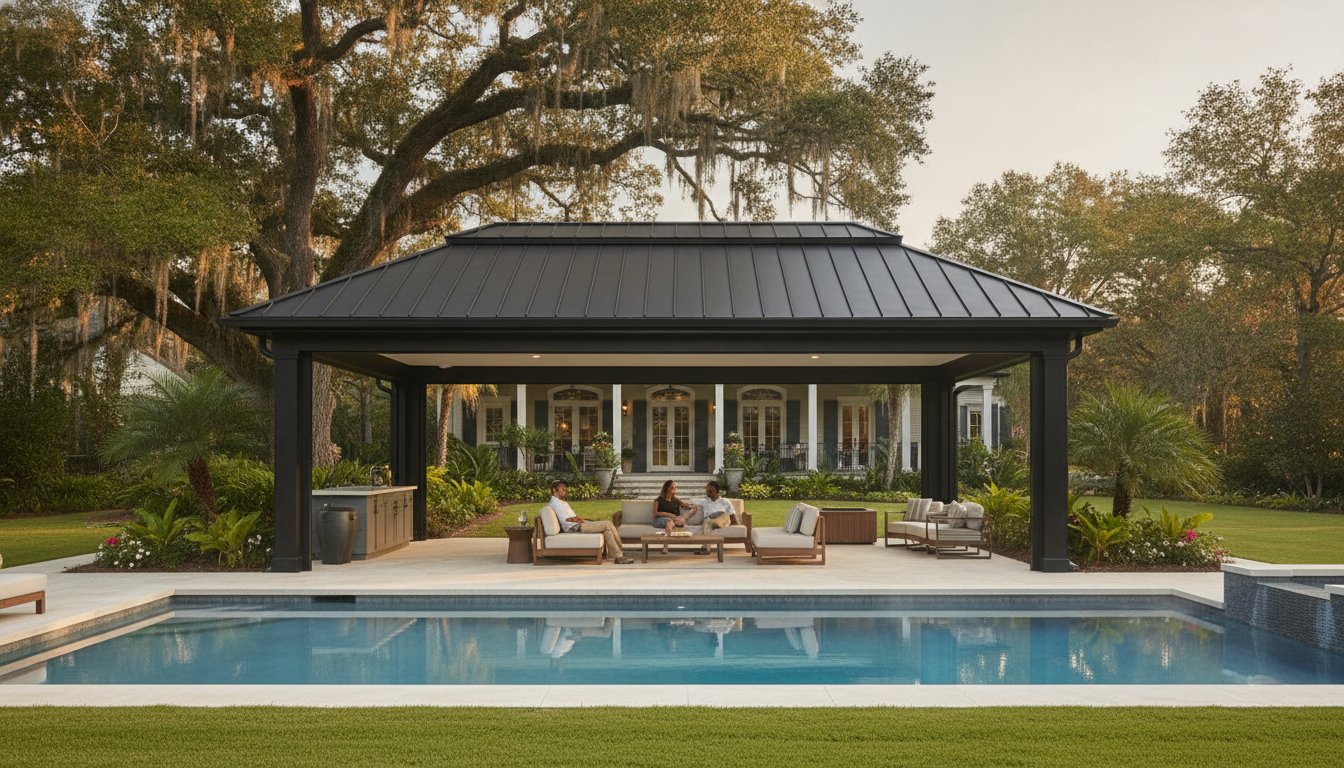
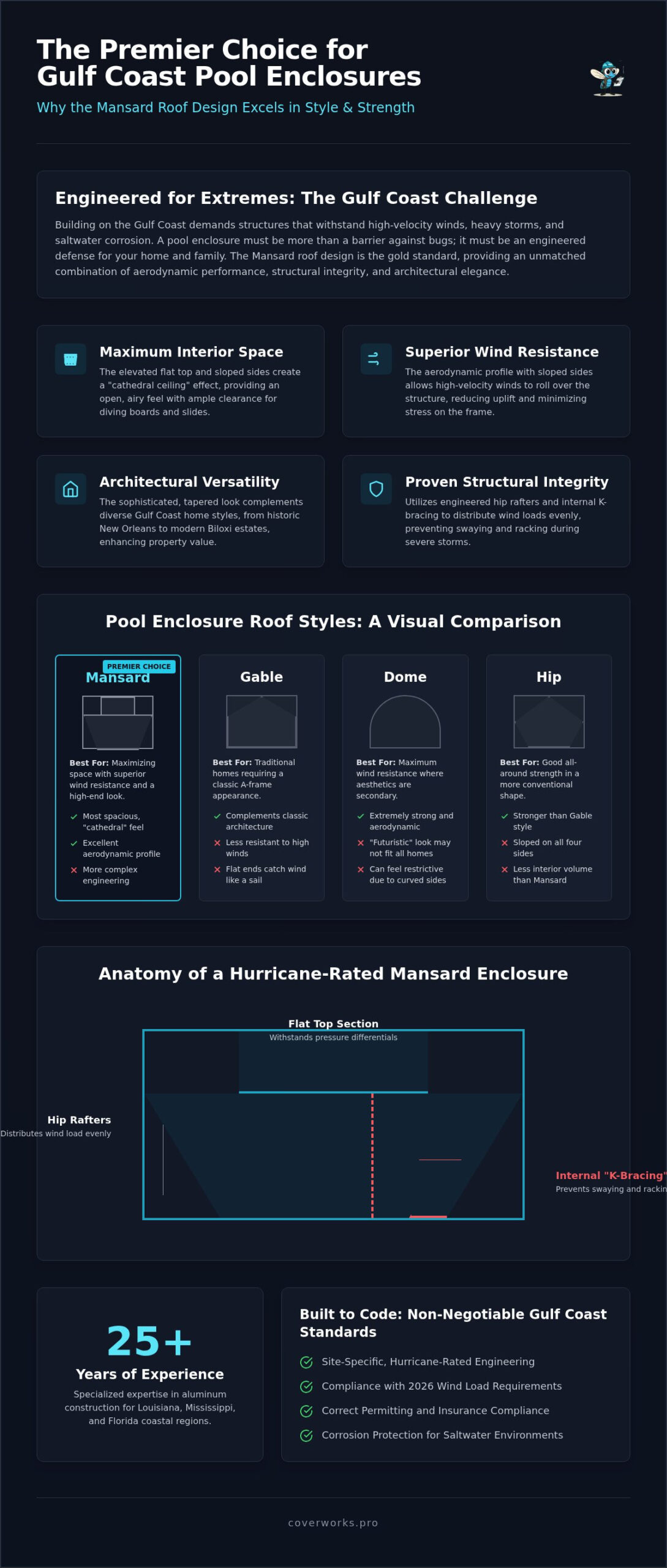
    A Mansard style is defined as a multi-slope roof with a flat top, where four gently sloping sides descend to meet the perimeter support beams. This specific geometry has become the most requested configuration for screen enclosures for pools because it strikes a perfect balance between functional volume and architectural grace. While a standard box enclosure can feel restrictive and a dome style can appear overly futuristic, mansard roof pool enclosures provide a sophisticated, tapered look that complements almost any home design. By elevating the center section, the structure creates a “cathedral ceiling” effect that makes the entire pool deck feel significantly larger and more open.

    The popularity of this design isn’t just about aesthetics; it’s rooted in a deep history of structural efficiency. For a broader perspective on the origins and variations of this style, Understanding the Mansard Roof Design reveals how this shape has been used for centuries to maximize usable space under a roofline. In the context of modern aluminum construction, we use this design to provide maximum clearance for diving boards and slides while maintaining a profile that doesn’t overwhelm the backyard landscape.

    The Anatomy of a Mansard Enclosure

    The strength of a Mansard enclosure lies in its “hip” rafters, which are the corner beams that connect the upright wall columns to the flat roof section. These rafters are engineered to distribute weight and wind pressure evenly across the frame. High-grade, architectural-alloy aluminum is essential here because the geometry requires precise miter cuts and heavy-duty internal splicing to maintain structural integrity. The slope angle of the four sides is typically set to optimize water runoff and prevent the accumulation of heavy debris, such as pine needles or oak leaves, which can weigh down the mesh and stress the fasteners. A well-designed Mansard roof ensures that the center peak remains the highest point, allowing gravity to assist in keeping the screen clear and taut.

    Architectural Versatility for Gulf Coast Homes

    Gulf Coast architecture is diverse, ranging from the historic charm of the New Orleans French Quarter to the stately Colonial homes found in Biloxi and Gulfport. Mansard enclosures are uniquely versatile because they mirror the rooflines of these traditional styles. This design avoids the “industrial cage” look often associated with flat-roof structures. Instead, it adds a layer of bespoke quality to the property. Because the flat top section can be customized in size, we can tailor the enclosure to align perfectly with your home’s existing peaks and valleys. This level of customization ensures that the addition looks like an intentional part of the original build rather than an afterthought, enhancing both your lifestyle and your property’s resale value.

    Structural Benefits: Why Mansard is the Gold Standard for Wind Resistance

    Engineering a structure to survive a Gulf Coast hurricane requires more than just heavy beams; it requires an aerodynamic profile that works with the wind rather than against it. While a flat roof can act like a sail, catching wind and creating massive uplift, the sloped sides of mansard roof pool enclosures allow high-velocity gusts to roll over the structure. This reduces the overall wind load on the aluminum frame and the foundation. By diverting the pressure, the design minimizes the stress placed on the mesh and the fasteners, which are often the first points of failure during a tropical event.

    The stability of this design is further reinforced by internal bracing systems, specifically the use of “K-braces” at the corners. These diagonal supports create a rigid triangle that prevents the enclosure from swaying or “racking” under lateral pressure. The flat top section isn’t just for looks; it’s engineered to withstand specific pressure differentials that occur when wind moves quickly over a surface. Our team of gulf coast pool enclosure specialists ensures that every joint and beam meets the rigorous 2026 wind load requirements for communities from Slidell to Gulfport.

    Engineering for Hurricanes and Heavy Storms

    Site-specific engineering is a non-negotiable requirement for coastal properties. In Biloxi and other saltwater environments, corrosion protection is just as vital as wind resistance. We utilize high-grade stainless steel fasteners that resist the pitting and weakening caused by salt spray. Perhaps the most critical failure point in any enclosure is the structural attachment to the home. We prioritize deep-seated anchors and reinforced host-beam connections to ensure the enclosure remains a permanent, safe extension of your living space. If you’re concerned about your existing structure’s integrity, you can consult with our experts to evaluate your current attachment points.

    Maximizing Interior Airflow and Volume

    Beyond safety, the Mansard design offers a significant functional advantage regarding vertical height. This extra clearance is essential if your pool features a tall slide or a diving board, providing plenty of “headroom” without the need for a massive, oversized footprint. In the sweltering heat of Louisiana and Alabama summers, this increased volume is a lifesaver. Because heat rises, the higher peak of a Mansard roof promotes better heat dissipation and airflow, keeping the pool deck noticeably cooler. By using minimalist beam placement and strategic engineering, we create a structure that feels open and airy, effectively removing the “closed-in” sensation common with lower-profile cages.

    Comparing Mansard Roof Pool Enclosures to Gable, Dome, and Hip Styles

    Selecting the right silhouette for your enclosure involves balancing your home’s architecture with the practical needs of your pool deck. While we’ve discussed the engineering merits, comparing mansard roof pool enclosures to other common styles helps clarify why this design is a regional favorite. Each roof shape impacts your home’s curb appeal and the structure’s long-term durability differently. To help you evaluate these options, we’ve outlined the core differences in the table below.

    Roof Style Wind Resistance Interior Volume Maintenance Ease
    Mansard Excellent High High
    Gable Good Moderate High
    Dome Excellent Moderate Low
    Flat Poor Low Moderate

    For a visual breakdown of these options, you can consult our custom pool cage design guide. When comparing Mansard to the Dome style, the choice usually comes down to aesthetics and maintenance. Domes offer a curved look that some homeowners prefer, but they occupy a larger structural footprint and are notoriously difficult to rescreen. Flat roofs are the final common option, though they are rarely recommended for large pool spans in areas like Metairie or Slidell. Flat surfaces are prone to water pooling and lack the aerodynamic “roll-off” effect that protects sloped roofs during high-wind events.

    Which Style Fits Your Backyard Layout?

    The shape of your house often dictates the best enclosure choice. Gable roofs work well for homes with existing high peaks; they create a mirrored A-frame look that blends with the original architecture. However, for the majority of rectangular pool layouts in New Orleans and Biloxi, the Mansard roof is superior because it provides consistent height across the entire deck. If you live on a corner lot where wind hits from multiple angles, the “Hip” variant is a solid alternative, though it lacks the vertical clearance of a true Mansard. This style slopes on all sides without the flat top, offering excellent wind resistance but slightly less interior volume.

    Maintenance and Longevity Comparison

    Longevity is tied directly to how well a roof sheds debris. Mansard roofs are particularly effective at managing pine needles and oak leaves, as the sloped sides allow gravity to pull debris toward the gutters. Rescreening is another major factor in longevity. Mansard roofs use straight lines and standard panel sizes, making them much easier to rescreen than the curved, custom-cut panels required for a Dome. While a Gable roof is the most affordable to construct, the cost-to-benefit ratio of a Mansard roof is significantly higher because it offers better wind-load protection and more usable interior space for a comparable long-term investment.
    Mansard Roof Pool Enclosures: The 2026 Engineering & Style Guide

    Planning Your Build: Permitting and Engineering in the Gulf Coast

    Building a structure in New Orleans, Metairie, or Biloxi requires navigating a maze of local building codes that are some of the strictest in the country. You can’t simply install a frame and hope it holds; for mansard roof pool enclosures, the engineering must be site-specific. This involves obtaining hurricane-rated engineering stamps that prove the structure can handle the precise wind loads of your specific parish or county. In 2026, insurance adjusters are looking closer at these details than ever before. Without the correct documentation and structural attachment proofs, you might find your property coverage at risk after a major storm.

    Zoning and setback requirements are another critical hurdle. These laws dictate how close your enclosure can sit to your property line or existing easements. In densely populated areas like Metairie or the historic districts of New Orleans, these inches matter. Before you finalize your design, it’s wise to review the cost of pool enclosure in Louisiana to ensure your budget accounts for these essential professional engineering and permitting fees. Proper planning prevents the costly mistake of building a structure that local officials might later order you to modify or remove.

    The Permitting Process: What Homeowners Should Know

    A reputable contractor takes the burden of permitting off your shoulders. We manage the entire application process with local municipalities and ensure the design respects your Homeowners Association (HOA) guidelines. HOAs frequently have specific requirements regarding roof silhouettes to maintain neighborhood consistency, and the Mansard style is often the preferred choice for its architectural elegance. From the initial design phase to the final inspection, you should expect the process to take several weeks. This timeline accounts for the back-and-forth with building departments to ensure every bolt and beam is up to code.

    Screen Selection for Your Mansard Structure

    The mesh you choose is the final layer of your enclosure’s performance. In the Gulf Coast, standard screen is often insufficient for our unique pests. Many homeowners opt for “No-See-Um” mesh, which features a tighter weave to block the tiny gnats and biting midges common in Slidell and Gulfport. If you have active pets, we recommend pet-resistant screens for the bottom panels. These are made from a heavy-duty, vinyl-coated polyester that resists claws and teeth. Additionally, solar screens can be integrated into the roof panels to significantly reduce UV heat gain, keeping your pool water and deck cooler during the peak of a Mississippi summer.

    Why Choose CoverWorks Inc. for Your Mansard Enclosure?

    Selecting a contractor for your outdoor project is about more than finding the lowest bid; it’s about partnering with a team that understands the literal weight of Gulf Coast weather. At CoverWorks Inc., we bring over 25 years of hands-on experience in aluminum specialty construction to every job site. We’ve seen firsthand how mansard roof pool enclosures perform during extreme events, and we’ve refined our methods to ensure our structures are among the most durable in the industry. As leading pool enclosure builders Mississippi and Louisiana residents trust, we prioritize engineering over shortcuts, ensuring every beam and anchor meets or exceeds 2026 building codes.

    Our commitment to your property extends beyond the initial build. We provide a comprehensive suite of services to keep your outdoor living area in peak condition, including professional rescreening and structural repairs. We don’t just “install cages”; we build engineered solutions that protect your investment. By handling the entire process, from the first permitting application in New Orleans to the final inspection in Biloxi, we provide a seamless experience that respects your time and your budget.

    Total Backyard Transformation

    A high-quality enclosure should feel like a natural extension of your home’s interior. To achieve this, we offer a “no-shortcut” philosophy that starts with the foundation. We can integrate your new enclosure with Kool Deck resurfacing, creating a cool, slip-resistant finish that’s comfortable for bare feet even in the July heat. To ensure a perfect aesthetic match, our aluminum frames are available in custom colors like Bronze, White, and Sandstone. We pay close attention to the small details that others might miss, such as using premium structural fasteners and heavy-duty anchoring systems that resist the corrosive effects of our humid, salty air.

    The CoverWorks Process: Fast Quotes, Precise Builds

    We respect that you want to start enjoying your pool as soon as possible. That’s why we’ve streamlined our consultation process to offer same-day quotes for most Mansard projects. Our deep regional familiarity allows us to quickly assess the specific wind load and setback requirements for your community, whether you’re in Slidell, Metairie, Gulfport, or Mobile. We take personal responsibility for the quality of the structures we leave behind, acting as both your master craftsman and your reliable guide through the complexities of coastal construction.

    Secure Your Backyard Investment with Engineered Excellence

    A pool enclosure is more than a screen; it’s a structural shield for your outdoor lifestyle. By prioritizing mansard roof pool enclosures, you’re choosing a design that balances wind-deflecting aerodynamics with a spacious, cathedral-like interior. This strategic choice ensures your backyard remains a low-maintenance sanctuary that can withstand the unique pressures of our coastal environment. Whether you’re in New Orleans, Biloxi, or Mobile, proper engineering and permitting are the only ways to guarantee long-term insurance compliance and structural peace of mind.

    CoverWorks Inc. brings over 25 years of specialized Gulf Coast experience to every project. We don’t believe in shortcuts that compromise safety. As a licensed and insured contractor in Louisiana, Mississippi, and Alabama, we provide the hurricane-rated engineering necessary to protect your home. We’re ready to act as your reliable guide from the first site evaluation to the final inspection.

    We look forward to helping you transform your pool area into a durable, beautiful space you’ll enjoy for decades.

    Frequently Asked Questions

    What is the main advantage of a Mansard roof pool enclosure?

    The primary benefit of this design is the structural balance between interior volume and aerodynamic performance. Unlike flat roofs that can suffer from water pooling or gable roofs that create excessive wind drag, mansard roof pool enclosures use sloped sides to deflect high-velocity gusts. This geometry creates a cathedral-ceiling effect, making your outdoor living area feel significantly more open and airy while providing superior strength.

    Can a Mansard roof enclosure withstand a Category 3 hurricane?

    Yes, provided the structure is built to current 2026 engineering standards. We utilize site-specific wind load calculations and reinforced internal K-bracing to ensure the frame remains rigid. In coastal areas like Gulfport and Biloxi, we prioritize heavy-duty aluminum alloys and stainless steel fasteners to prevent the structural racking that leads to failure during a major storm event.

    How much height does a Mansard roof add to my pool area?

    A typical Mansard design adds between 2 and 4 feet of vertical clearance above the perimeter wall height. This extra headroom is essential for homeowners with tall pool features like diving boards or slides. It provides a spacious feel without requiring a massive, oversized footprint that might violate local zoning height restrictions or Homeowners Association guidelines.

    Is a Mansard roof more expensive than a flat or gable roof?

    The complexity of the miter cuts and the specialized hip rafters does result in a higher initial investment compared to a simple flat roof. However, the cost-to-benefit ratio is much higher. You’re paying for a structure that offers better heat dissipation and significantly higher wind resistance, which can lead to lower long-term maintenance costs and fewer insurance claims after tropical storms.

    How long does it take to install a custom Mansard pool cage?

    The actual on-site installation of the aluminum frame and mesh usually takes 5 to 10 business days. The total project timeline is longer because it includes the engineering phase and the permitting process with local municipalities in New Orleans or Slidell. We handle all the paperwork to ensure your project meets every building code before the first beam is set.

    Do I need to rescreen my entire Mansard enclosure if only one panel is damaged?

    No, you can replace individual panels as needed. Each section of mesh is held in place by dedicated spline grooves in the aluminum beams. If a panel is torn by a falling branch or a pet, we can pull the spline, install new high-grade screen, and secure it without disturbing the rest of the structure, keeping your repair costs manageable.

    Will a Mansard enclosure help keep my pool water cooler in the summer?

    It will, primarily due to the increased vertical volume. Heat naturally rises to the highest point of the enclosure, and the sloped sides of the Mansard roof promote better air circulation than lower-profile designs. By collecting the hottest air well above the water line and the pool deck, the structure helps maintain a more comfortable temperature for swimmers and loungers.

    Does a pool enclosure increase the resale value of my Louisiana home?

    A professionally installed aluminum enclosure is a major selling point in the Gulf Coast market. It effectively adds bug-free, low-maintenance square footage to your property. Buyers in areas like Metairie and New Orleans often view a hurricane-rated enclosure as a premium upgrade that reduces the daily hassle of pool maintenance and enhances the overall safety of the home.
  • Custom Pool Cage Design: Engineering Inspiration for Gulf Coast Homes (2026)

    Custom Pool Cage Design: Engineering Inspiration for Gulf Coast Homes (2026)

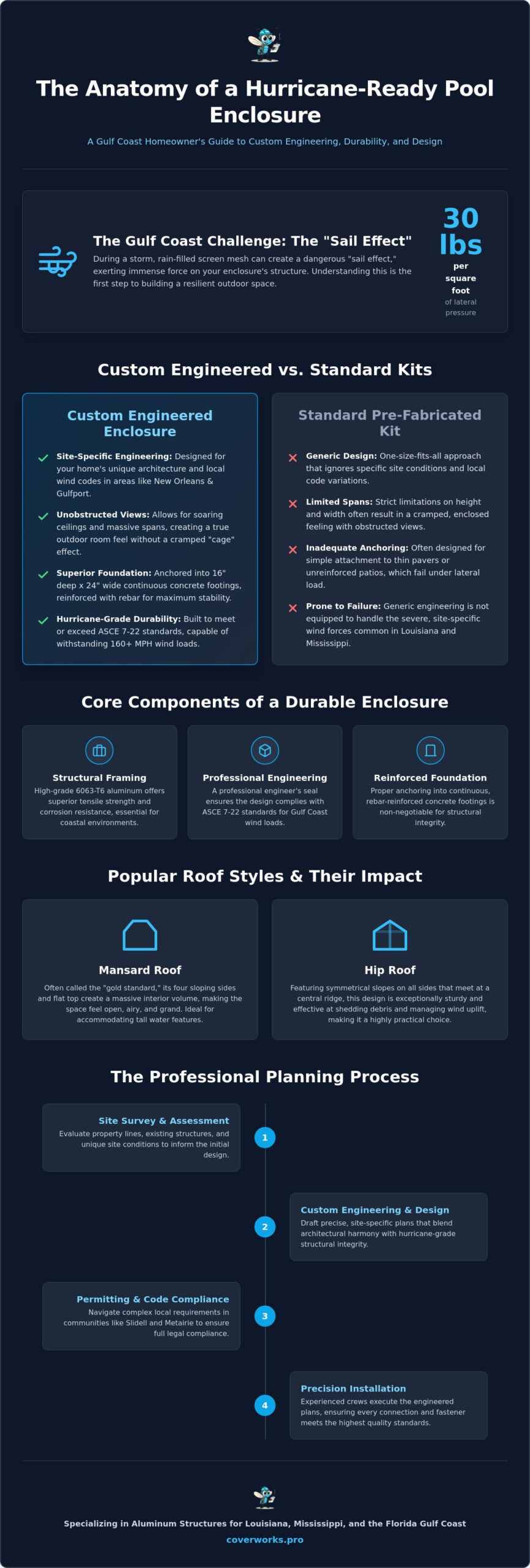
    Did you know that during a Gulf Coast storm, rain can fill standard screen mesh to create a “sail effect” that exerts up to 30 pounds of lateral pressure per square foot? For many homeowners in New Orleans or Gulfport, a pool enclosure often feels like a gamble between enjoying the outdoors and fearing the next major weather event. You want a space that keeps the bugs out and the water clear, but it also needs to complement your home’s unique architecture. Achieving a high-quality custom pool cage design requires more than just basic materials; it demands a precise blend of site-specific engineering and local building code expertise.

    We understand that your outdoor living area should be a sanctuary, not a structural liability. This article will show you how to blend architectural beauty with hurricane-grade engineering to create the ultimate custom pool enclosure for your home. We’ll preview the latest 2026 design trends, discuss the importance of ASCE 7-22 engineering standards, and explain how modern materials can withstand 160 MPH winds while providing panoramic views of the coast. You’ll learn exactly what it takes to build a seamless, low-maintenance retreat that enhances your lifestyle and remains standing when it matters most.

    Key Takeaways

    • Learn why a site-specific custom pool cage design outperforms standard kits by offering superior structural spans and seamless architectural integration.
    • Discover how different roof geometries, such as Mansard or custom pitches, influence both the interior ambiance and the management of debris runoff.
    • Understand the critical engineering requirements for Gulf Coast wind loads and why professional seals are essential for structural integrity in Louisiana and Mississippi.
    • Explore customization options that transform a functional enclosure into a true outdoor living room, including integration with decorative concrete resurfacing.
    • Navigate the professional planning process from the initial site survey to managing complex local permitting requirements in communities like New Orleans and Gulfport.

    Understanding the Anatomy of Custom Pool Cage Design

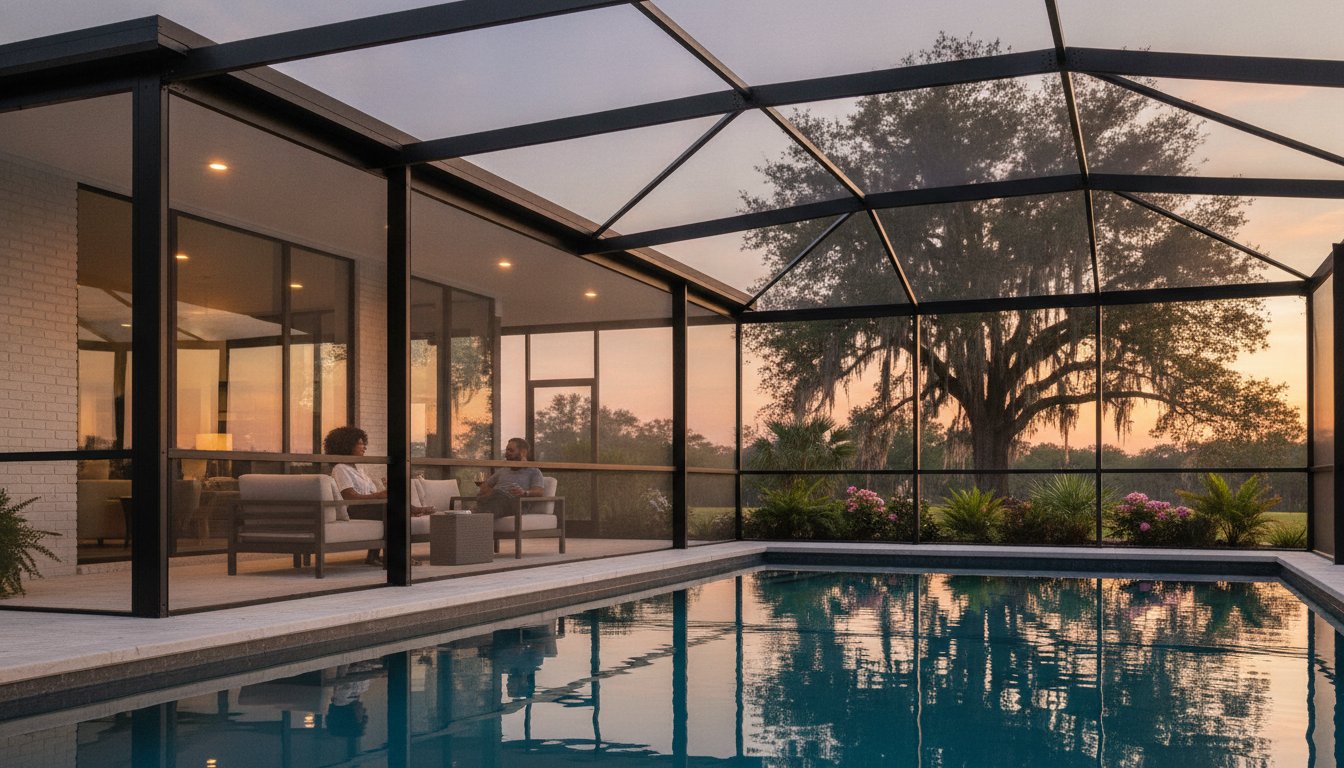
    A custom pool cage design is far more than a simple mesh barrier; it’s a site-specific, engineered aluminum structure designed to withstand the unique environmental pressures of the Gulf Coast. Unlike generic kits, a custom enclosure is drafted from the ground up to account for your home’s specific roofline, the local wind speed requirements in New Orleans or Gulfport, and your personal lifestyle needs. This approach relies on three fundamental pillars: aesthetics that complement your home, engineering that ensures safety, and functionality that reduces maintenance. When these elements align, the result is a structure that feels like a natural part of your property.

    Achieving structural harmony means the enclosure should look like an original architectural feature rather than an afterthought. Historically, homeowners have sought this connection through structures like the Veranda, which provides a sheltered, open-air transition between indoors and out. A modern custom pool cage performs a similar role but adds the benefit of full pest protection and climate resilience. It bridges the gap between your interior living space and the outdoors, creating a cohesive environment that stands up to the elements.

    Form Meets Function in Aluminum Framing

    We build these structures using high-grade 6063-T6 aluminum, a material prized for its high tensile strength and corrosion resistance. The thickness of these structural members is critical. For long-span pool enclosures that stretch across large decks, we use heavier-gauge extrusions to prevent sagging and ensure the frame remains rigid under pressure. Color choice also plays a role in the visual impact of the structure. Bronze frames tend to disappear into the landscape, while White frames provide a crisp, clean border that highlights the architectural lines of your home.

    Why Bespoke Engineering Outperforms Standard Kits

    In high-wind zones like Metairie or Slidell, pre-fabricated kits often fail because they rely on generic engineering that doesn’t account for specific site conditions. These kits typically have strict limitations on height and span that can make a pool area feel cramped. A custom pool cage design allows for soaring ceilings and massive picture window spans that offer unobstructed views of your backyard. This flexibility transforms the space from a “cage” into a true outdoor room.

    Custom designs also prioritize the foundation and structural attachment points. Current building codes require enclosures to be anchored into continuous concrete footings. These are typically 16 inches deep and 24 inches wide, reinforced with rebar. We never anchor into thin patio pavers or unreinforced concrete alone. This level of precision ensures your investment stays put when the lateral pressure of a storm hits, providing peace of mind that a standard kit simply cannot offer.

    The roof geometry of your enclosure dictates the entire atmosphere of your outdoor living area. It isn’t just a matter of aesthetics; the shape of the structure influences how wind flows over your home and how easily debris, such as needles from Southern pines, slides off the mesh. A well-chosen custom pool cage design balances these functional needs with the architectural lines of your existing residence. In cities like New Orleans or Gulfport, where heavy summer downpours and falling foliage are constant challenges, the pitch and profile of your roof can significantly reduce long-term maintenance.

    From an engineering perspective, roof shape also plays a vital role in managing “uplift” during storm events. Flat or low-slope designs can act like a wing, catching wind and creating massive upward pressure on the structural attachments. Steeper, multi-faceted designs help break up wind flow, reducing the lateral load on the aluminum members. If you aren’t sure which profile fits your property best, you can consult with our design team to review the structural advantages of each style for your specific lot.

    Mansard and Hip Roof Designs for Maximum Space

    The Mansard roof is often considered the gold standard for high-end enclosures. It features four sloping sides that lead to a flat top, creating a massive amount of interior volume. This design makes the pool area feel open and airy, providing plenty of clearance for diving boards or tall water features. For a comprehensive breakdown of how this style balances hurricane-rated engineering with architectural elegance, our guide on mansard roof pool enclosures covers the anatomy, structural advantages, and design comparisons in full detail. Similarly, the Hip roof offers a symmetrical, sloped appearance on all sides. It mimics the traditional rooflines found on many Gulf Coast homes, providing a sense of permanence and strength. Both styles are excellent for homeowners who want a grand, sanctuary-like feel that doesn’t feel cramped or restrictive.

    Gable and Shed Styles for Modern Aesthetics

    For homes with high-pitched rooflines, the Gable or A-frame style is an ideal match. This design features two sloping sides that meet at a center ridge, creating a dramatic peak that mirrors residential architecture. It’s particularly effective at shedding debris and rainwater quickly. Conversely, the Shed roof is a minimalist, single-slope design that works perfectly for modern homes or structures that lean against an existing wall. While less common for large pools, the Dome roof remains a viable option for those seeking maximum height on a tighter budget. Its rounded profile is exceptionally efficient at shedding wind, though it offers a more utilitarian look compared to the architectural precision of a Gable or Mansard design.

    Engineering for Durability: Gulf Coast Wind Loads and Corrosion

    For most homeowners on the Gulf Coast, the primary concern when investing in a screen enclosure is simple: “Will this structure survive a hurricane?” It’s a valid question. In areas like New Orleans and Biloxi, wind speeds can easily exceed 140 MPH during major storm events. A high-quality custom pool cage design must be engineered to withstand these extreme lateral pressures. This process begins with site-specific engineering seals. In Louisiana and Mississippi, building departments require these professional seals to ensure the structure meets local wind load requirements. We don’t rely on generic charts; every project is calculated based on the specific wind zone and exposure level of your property. Working with experienced gulf coast pool enclosure specialists ensures these calculations reflect the true environmental demands of your specific location.

    Structural stability relies on more than just the thickness of the aluminum. We utilize specialized components like K-bracing and heavy-duty gusset plates to reinforce the frame. K-bracing provides essential lateral support, preventing the enclosure from swaying or “racking” when wind loads increase. Gusset plates act as structural connectors at the joints, distributing stress across a larger surface area to prevent connection failure. These elements are the backbone of a resilient enclosure, ensuring that the frame remains rigid even when the mesh creates a “sail effect” during heavy rain and high winds.

    Meeting High-Velocity Hurricane Zone (HVHZ) Standards

    Engineering for wind speeds above 140 MPH requires a move away from standard residential materials. We incorporate heavier beam gauges and reinforced extrusions that can handle the immense uplift and shear forces present in coastal zones. These requirements are reflected in the overall project scope. Understanding the cost of pool enclosure Louisiana helps homeowners see the value in these engineering upgrades. While they add to the initial investment, they provide the structural integrity needed to protect your pool and patio for the long term.

    Corrosion Protection and Fastener Integrity

    In humid Mississippi climates and coastal regions near Biloxi, salt spray is a constant threat to metal structures. Stainless steel fasteners are non-negotiable for any coastal build, but they must be installed with protective caps. Without these caps, you risk a process called electrolysis. This occurs when moisture creates a bridge between different types of metal, such as stainless steel and aluminum, leading to rapid corrosion and structural weakening. We use high-quality powder-coated finishes on all our aluminum members. This finish provides a durable, baked-on barrier that resists fading and prevents the humid, salty air from reaching the raw metal. This attention to detail ensures your enclosure remains both safe and aesthetically pleasing for decades.

    Custom Pool Cage Design: Engineering Inspiration for Gulf Coast Homes (2026)

    Beyond the Frame: Enhancing Your Enclosure with Custom Features

    While structural integrity provides the foundation, the finishing touches of a custom pool cage design transform a functional barrier into a true extension of your home’s living room. Modern enclosures are no longer just about keeping out debris; they’re about creating a curated environment where you can relax without compromise. By selecting the right combination of high-visibility screening and integrated accessories, you can tailor the space to fit your specific daily habits. Whether you’re hosting a summer dinner in Metairie or enjoying a quiet morning in Biloxi, these enhancements ensure your outdoor area is as comfortable as your interior.

    A cohesive look often starts at the ground level. Many homeowners choose to integrate their new structure with decorative concrete resurfacing to create a seamless transition from the pool edge to the enclosure perimeter. This approach eliminates the jarring contrast between old, stained concrete and a brand-new aluminum frame. Beyond the flooring, the choice of entry points is vital for long-term usability. We install heavy-duty outswing doors equipped with premium hardware that can handle high traffic and the enthusiastic “welcome home” of large pets. These doors are designed to remain square and latch securely, even after years of exposure to the humid Gulf Coast air.

    Selecting the Right Screen Mesh for Your Lifestyle

    The type of mesh you choose impacts everything from airflow to visibility. Standard insect screen works well for general use, but homeowners with active dogs or cats often benefit from heavy-duty pet screen. This material is made from vinyl-coated polyester and is seven times stronger than standard mesh, resisting tears and punctures. In coastal Alabama and parts of Mississippi, “No-See-Um” mesh is a popular choice. Its tighter 20/20 weave blocks even the smallest gnats that can slip through traditional screens. If your pool deck faces the harsh afternoon sun, solar shades can be integrated to block up to 90 percent of UV rays, keeping the patio significantly cooler during the peak of summer.

    Integrated Lighting and Wide-View Openings

    To maximize your enjoyment after sunset, custom design allows for the installation of “Nebula” or LED perimeter lighting. these systems are built directly into the aluminum beams, providing a soft, dimmable glow that’s perfect for nighttime swims or evening entertaining. This lighting works beautifully alongside “Picture Window” or “Clearview” engineering. By utilizing larger structural members, we can eliminate the horizontal “chair rail” and mid-span vertical posts that traditionally clutter your view. This trend toward minimalist framing is a core part of modern screen enclosures for pools, offering an unobstructed vista of your backyard or the Gulf horizon.

    Planning Your Custom Project: From Site Survey to Installation

    Successful execution begins with a rigorous professional site survey. Before any aluminum is cut, we must identify the exact location of underground utilities and assess the grade of your pool deck. This initial step prevents costly delays and safety hazards during the anchoring process. For homeowners in New Orleans or Gulfport, the administrative side of a project can be more daunting than the construction itself. We handle the heavy lifting of local permitting, ensuring that every detail of your custom pool cage design meets the specific requirements of your parish or municipality. This proactive approach eliminates the stress of navigating bureaucracy alone.

    Custom aluminum fabrication typically follows a structured and predictable timeline. Once the engineering is finalized and permits are issued, the fabrication of structural members usually takes several weeks, followed by a precise installation phase that typically lasts two to four weeks. When evaluating pool enclosure builders in Mississippi, look for a team that prioritizes transparency regarding these timelines. A reliable contractor provides detailed structural data rather than vague estimates, ensuring you know exactly when your new outdoor living space will be ready for use.

    The Importance of Accurate Site-Specific Engineering

    A generic, standardized drawing is a recipe for rejection at the building department. Gulf Coast inspectors require site-specific plans that account for the unique geometry of your home and the local wind exposure. Our designers calculate the specific point loads where the enclosure attaches to your existing roof or walls. This ensures the weight and wind pressure are distributed safely without compromising your home’s structural integrity. Because we utilize real-world data from our initial survey, we can often provide a same-day quote that reflects the actual engineering needs of your property. This precision prevents “surprises” during the inspection phase that could stall your project.

    Navigating Permits and Building Codes in LA, MS, and AL

    Building codes aren’t uniform across the region. The requirements in Metairie often differ from those in Slidell or Biloxi, particularly regarding setback distances and the specific wind speed ratings discussed in previous sections. A professional contractor ensures that the structure is not only physically strong but also electrically safe. This includes proper bonding and grounding of the aluminum frame to protect swimmers from stray electrical currents, a critical safety step often overlooked by less experienced builders. Before the first aluminum beam is set, we verify that every permit is active, every utility is marked, and every engineering seal is in place. This methodical approach guarantees a smooth transition from the planning phase to a finished, code-compliant sanctuary that adds lasting value to your home.

    Build Your Gulf Coast Sanctuary with Structural Confidence

    A well-executed custom pool cage design serves as a permanent bridge between your home’s interior comfort and the natural beauty of the Gulf Coast. We’ve discussed how choosing the right roof profile and high-velocity hurricane zone engineering can protect your property from both daily debris and extreme weather events. By prioritizing structural integrity and code compliance, you’re investing in a space that offers peace of mind alongside improved aesthetics. These structures aren’t just screens; they’re engineered extensions of your home built to last.

    With over 25 years of specialized field experience, our team understands the local nuances of building in New Orleans, Biloxi, and surrounding communities. We combine master craftsmanship with reliable guidance to deliver structures that are as durable as they are beautiful. From initial site surveys to the final inspection, we ensure every beam and fastener meets the highest standards of safety and longevity in Louisiana, Mississippi, and Alabama.

    We’re ready to help you create a secure, bug-free environment that stands the test of time. Reach out today to begin the process of transforming your backyard into a resilient, year-round oasis.

    Frequently Asked Questions

    Do custom pool cages really withstand hurricanes?

    A professionally engineered custom pool cage design can withstand major storms when built to meet local wind load requirements. We use site-specific engineering seals to ensure every structure handles the lateral pressure and “sail effect” caused by high winds. By utilizing heavy-gauge 6063-T6 aluminum and proper K-bracing, these enclosures remain rigid during the hurricane-force events common in New Orleans and Biloxi.

    Will a custom pool cage design block my view of the backyard?

    Modern designs don’t block your view if you opt for “Picture Window” or “Clearview” configurations. These designs utilize larger structural beams to eliminate the horizontal chair rails and vertical posts that typically clutter your line of sight. This allows for massive, unobstructed spans that highlight your landscaping or waterfront vistas while maintaining full structural integrity and safety.

    How long does the design and installation process take?

    The total process typically takes between 6 to 10 weeks from the initial survey to the final inspection. This timeline includes 2 to 6 weeks for the local permitting process in parishes like Jefferson or St. Tammany, followed by several weeks for custom aluminum fabrication. The physical installation on your property usually concludes within 2 to 4 weeks depending on the project’s complexity.

    Can I add a custom roof style to an existing pool deck?

    You can definitely add a custom roof style to an existing deck, provided the foundation meets current building codes. We perform a thorough site survey to verify that your existing concrete can support the new structural loads. If the current deck is too thin, we can install continuous concrete footings to ensure the new enclosure is safely anchored and compliant with local safety standards.

    What is the most durable screen mesh for Gulf Coast homes?

    Vinyl-coated polyester mesh is the most durable option for the demanding Gulf Coast climate. While standard fiberglass mesh is common, premium polyester alternatives offer significantly higher tear strength and can better withstand the intense UV exposure and high winds of the region. For homeowners near the coast, “No-See-Um” mesh provides the added benefit of blocking tiny gnats while remaining highly durable over time.

    Does a custom pool enclosure increase my home value?

    A custom pool enclosure increases home value by expanding your usable indoor-outdoor living square footage. According to industry data for the South Atlantic region, homeowners can often recoup a significant portion of their investment at resale. Beyond the financial return, the enclosure reduces pool maintenance costs and prevents debris from staining your deck, which helps maintain the property’s overall curb appeal.

    How do I maintain the aluminum frame to prevent salt-air corrosion?

    Preventing salt-air corrosion requires simple, regular maintenance like rinsing the aluminum frame with fresh water. This removes salt deposits that can accumulate in humid coastal environments like Gulfport or Biloxi. It’s also important to periodically inspect the protective caps on your stainless steel fasteners. This ensures the barrier against electrolysis remains intact, preserving the frame’s powder-coated finish for decades.

  • When to Schedule a Pool Enclosure Mesh Replacement: A 2026 Homeowner’s Checklist

    When to Schedule a Pool Enclosure Mesh Replacement: A 2026 Homeowner’s Checklist

    A screen enclosure is far more than just a bug barrier; it’s a structural component that can compromise your entire pool cage if it’s neglected. When the mesh begins to pull away from the spline or shows signs of UV degradation, it’s no longer just an aesthetic issue. It’s a signal that your outdoor living space is vulnerable. Deciding when to invest in a pool enclosure mesh replacement is a critical maintenance step for any homeowner in the Gulf Coast region. You’ve likely felt that familiar frustration when mosquitoes start sneaking through small tears or when debris clutters your water after a typical afternoon storm.

    We understand the confusion that comes with choosing between different mesh types and the fear of structural failure during the 2026 hurricane season. This article provides a clear checklist to help you evaluate the health of your screen and explains how high-durability materials offer a better return on your investment. You’ll learn how to select the right materials for our local climate and what to look for when hiring a professional contractor in communities like Slidell, Biloxi, or New Orleans. By the end of this guide, you’ll have a roadmap to ensure your enclosure remains a safe, comfortable sanctuary for years to come.

    Key Takeaways

    • Learn to identify the early warning signs of mesh failure, such as “silvering” and “spline creep,” to prevent structural damage to your aluminum enclosure.
    • Discover the differences between standard fiberglass and high-performance Super Screen to make an informed decision for your pool enclosure mesh replacement.
    • Understand the importance of a pre-project inspection to address aluminum oxidation and rusted fasteners before new screening is installed.
    • Gain insights into the professional rescreening process, including structural tune-ups that ensure your cage meets 2026 wind load requirements.
    • Learn how to accurately estimate your project needs by measuring square footage and evaluating the condition of your existing structural members.

    The Structural Role of Pool Enclosure Mesh

    Most homeowners view their screen as a simple filter for leaves and mosquitoes, but in professional aluminum construction, the mesh is a critical structural component that directly impacts wind load distribution across the entire frame. It’s an engineering reality. While a screened porch attached to a house might rely on the building’s walls for stability, a freestanding pool enclosure depends on the tension of its panels to maintain lateral integrity. Properly installed and tensioned mesh acts like a skin, tying the aluminum members together and helping the structure resist swaying or twisting during high wind events.

    When mesh begins to fail, the risks extend beyond a few bugs in the water. If panels become partially detached but remain hanging, they create a sail effect. Instead of wind passing through the weave as designed, the loose material catches gusts and exerts uneven pressure on the aluminum beams. This can lead to bent members or compromised fasteners, eventually requiring more than just a standard pool enclosure mesh replacement. Maintaining tight, high-quality screening is essential for preserving the box strength of your cage.

    Why Mesh Quality Matters in the Gulf Coast

    The environment in places like Slidell, Louisiana, or Biloxi, Mississippi, is notoriously harsh on building materials. High humidity and salt air from the Gulf create a corrosive atmosphere that accelerates the breakdown of standard materials. You can typically identify this degradation by several key markers:

    • Silvering: UV radiation strips the protective vinyl coating, leaving glass fibers exposed and brittle.
    • Brittleness: The material loses its flexibility and tears under minimal pressure.
    • Impact Vulnerability: Weakened fibers can’t withstand wind-blown debris during storm season.

    In our region, impact resistance is a primary concern. During hurricane season, wind-blown debris can easily puncture weakened screens, making the choice of material your first line of defense for your property. Homeowners in coastal communities should also be aware that what appears to be a simple mesh issue can signal deeper frame problems, as detailed in our guide to screen enclosure repair in Mississippi.

    The Lifecycle of Standard vs. Premium Mesh

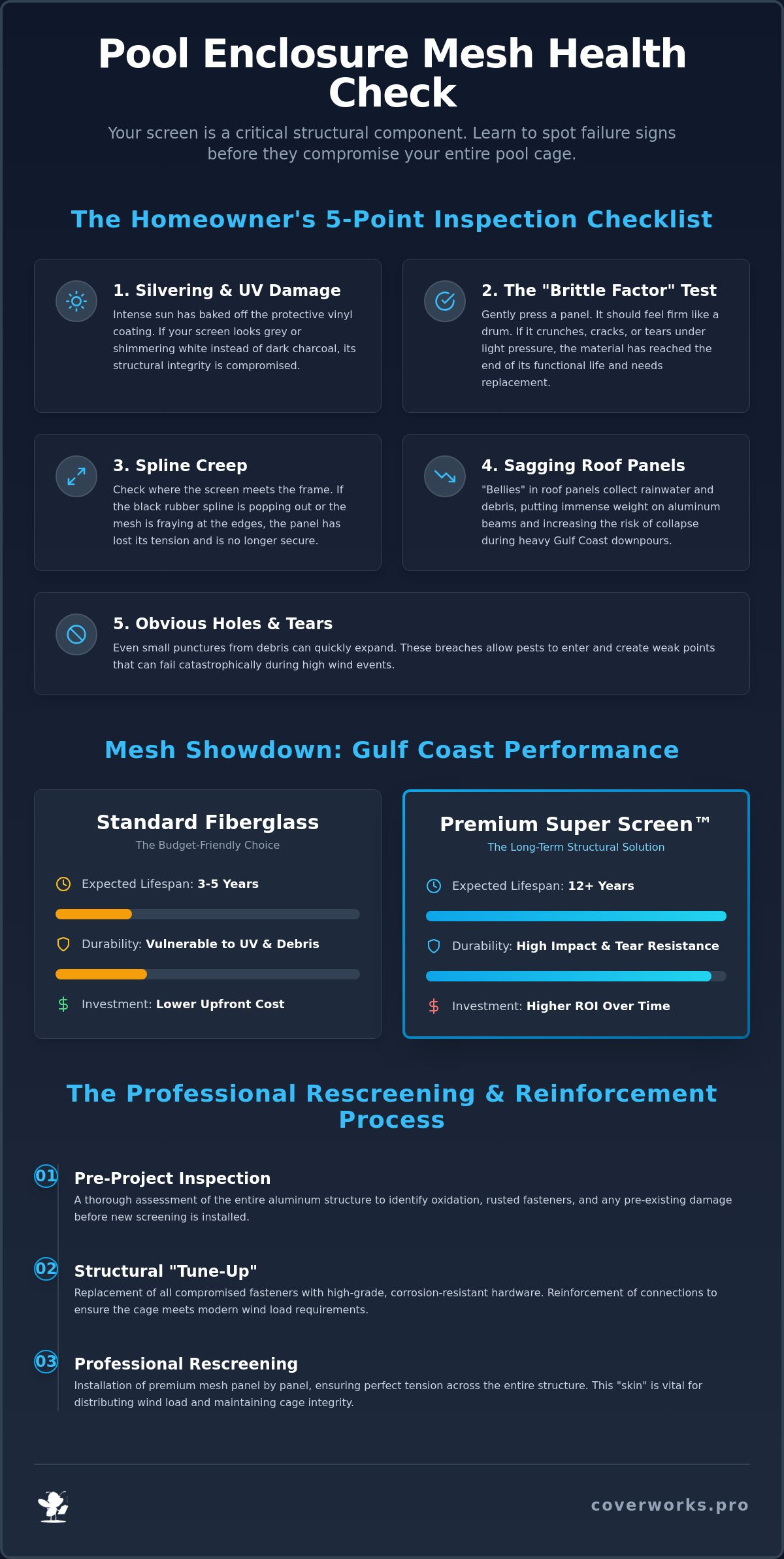
    There’s a significant difference between basic insect screening and true structural mesh. Standard fiberglass mesh is the budget-friendly choice for many, but in the Southern heat, it typically has a functional life of only 3 to 5 years before it loses its tension and strength. In contrast, premium polyester-core mesh is engineered for longevity and can frequently exceed 12 years of service. While the upfront investment is higher, the long-term pool screen replacement cost is often lower when you factor in the extended replacement cycle and the added protection for your aluminum structure. Choosing a higher grade ensures that your pool enclosure mesh replacement provides both aesthetic beauty and structural peace of mind.

    The 10-Point Mesh Inspection Checklist for Homeowners

    A quick walk-around is your first line of defense against a major structural headache. You don’t need a ladder or specialized tools to spot the most common signs of failure. Start by looking for “silvering.” This occurs when the sun’s intense UV rays bake off the protective vinyl coating, leaving the raw fiberglass exposed. If your screen looks grey or shimmering white instead of deep charcoal, it’s already lost its flexibility. You can confirm this with the “brittle factor” test. Simply press your finger gently against a panel. It should feel like a firm drum. If it crunches or breaks under light pressure, the material has reached the end of its functional life.

    Next, look closely at the perimeter of each panel where the screen meets the metal. “Spline creep” happens when the mesh begins to pull out of the aluminum grooves. You’ll see the black rubber spline popping out or the mesh material fraying at the edges. This is a clear indicator that you need a pool enclosure mesh replacement. When the mesh loses its grip, the entire cage loses the lateral stability it needs to survive high winds. Sagging panels, particularly on the roof sections, are another red flag. These “bellies” collect rainwater and debris, putting unnecessary weight on the aluminum beams and increasing the risk of a collapse during a heavy Gulf Coast downpour.

    Visual Signs of Immediate Failure

    Some issues require immediate attention to prevent pests from entering or to stop a small tear from becoming a structural hazard. Keep an eye out for these specific problems:

    • Holes larger than a quarter: These gaps are an open invitation for mosquitoes and wasps, rendering the enclosure useless for pest control.
    • Spline line tears: If the mesh is tearing right where it meets the metal, the frame might be shifting or the tension was set incorrectly during a previous installation.
    • Biological growth: Algae or moss rooted into the fibers can’t be washed off; it actually eats into the mesh, weakening the weave over time.

    Hidden Indicators of Frame Stress

    Your screen health is often a mirror for the health of the aluminum skeleton. In coastal areas like Gulfport or Biloxi, salt air is a constant threat. Look for rust streaks on the aluminum frame. This usually means the steel fasteners are corroding, which can lead to a “bleeding” effect onto the mesh. If you notice panels vibrating or flapping during moderate gusts, the tension is gone and a pool enclosure mesh replacement is likely overdue. Finally, check for gaps between the enclosure base and the pool deck. If you see daylight under the bottom rail, the structure may be settling or moving. Mississippi homeowners dealing with these warning signs can find a comprehensive breakdown of structural failure indicators and local code requirements in our dedicated screen enclosure repair Mississippi guide for 2026. If these signs are present, scheduling a professional rescreening inspection is the best way to ensure your property remains code-compliant and hurricane-ready for the 2026 season.

    Choosing the Right Replacement Mesh for Southern Climates

    Selecting the ideal material for a pool enclosure mesh replacement involves more than just picking a product off a shelf. In the Gulf Coast, your choice must withstand extreme UV exposure, high humidity, and corrosive salt spray. The material you select acts as the structural “skin” of your cage, and choosing the wrong type can lead to premature sagging or failure. While standard fiberglass remains a popular baseline for budget-conscious projects, many homeowners in 2026 are opting for high-performance synthetics that offer a significantly better return on investment.

    Standard 18×14 fiberglass mesh is the traditional choice. It provides a clear view and adequate pest protection at a lower upfront cost. However, in our intense Southern heat, the vinyl coating on fiberglass tends to bake off within a few years. For those seeking maximum longevity, Super Screen is the gold standard. This material features a high-tenacity polyester core that is far more resistant to the “silvering” and brittleness common in standard materials. It’s engineered to maintain its tension and structural integrity for over a decade, making it a preferred option for hurricane-prone areas like Slidell and Gulfport.

    If your property is located near marshes or standing water, No-See-Um mesh is a necessity. This 20×20 weave is tight enough to block the tiny biting gnats that standard screens miss. For households with active dogs or cats, Pet Screen offers a heavy-duty solution. Made from vinyl-coated polyester, it’s seven times stronger than standard mesh and can withstand clawing and jumping without tearing or pulling out of the spline channel.

    Comparing Mesh Density and Visibility

    There is a direct relationship between mesh density and your outdoor comfort. A standard 17×14 or 18×14 weave offers excellent airflow and view clarity, making the screen almost invisible from a distance. In contrast, a 20×20 No-See-Um mesh provides superior protection but slightly reduces cross-ventilation. Most professionals recommend black mesh for Gulf Coast enclosures because it absorbs sunlight and reduces glare, providing the most natural view of your landscaping while helping to manage internal patio temperatures.

    Specialty Options: Privacy and Solar Protection

    Specialized environments require specialized materials. Florida Glass is a popular choice for the bottom “chair rail” sections of an enclosure. It’s a laminated mesh that is opaque, providing privacy from neighbors and blocking dirt and irrigation runoff from entering the pool area. If your pool deck feels like a furnace in July, Solar Mesh can reduce UV heat gain by up to 90 percent. Regardless of the material you choose, ensuring the correct spline size is used during installation is critical. A secure fit prevents the mesh from slipping under the pressure of high winds, preserving the structural safety of your entire aluminum structure.

    When to Schedule a Pool Enclosure Mesh Replacement: A 2026 Homeowner’s Checklist

    Planning Your Replacement: A Pre-Project Checklist

    Successful planning for a pool enclosure mesh replacement requires more than just a quick phone call to a contractor. You need a clear strategy to ensure the final result is both beautiful and structurally sound. Start by measuring the total square footage of your enclosure, including the roof panels and all side walls. This data is essential to accurately estimate your pool screen replacement cost and avoid budgeting surprises. While you’re taking measurements, take a close look at the aluminum members. Look for white, chalky residue or deep pitting. Installing new mesh on an oxidized frame is a mistake; the surface needs to be clean and structurally sound to hold the spline properly.

    Local building codes in coastal Louisiana and Mississippi have become more stringent in 2026. You must verify that your replacement materials and installation methods meet current wind load requirements for your specific community, such as Slidell or Biloxi. It’s also wise to contact your insurance provider before you begin. If your mesh was damaged during a named storm event, you might find that a portion of the replacement is covered under your homeowner’s policy, though this often requires a professional inspection to document the extent of the failure.

    DIY vs. Professional Installation

    Many online retailers suggest that rescreening is a simple weekend project, but they often ignore the physical risks. Working on high-roof enclosures or multi-story cages requires specialized safety gear and professional ladders that most homeowners don’t own. Beyond safety, there is the technical challenge of tensioning. Improperly pulled mesh can lead to frame racking, where the aluminum cage actually twists out of alignment under the uneven stress. Professional screeners use high-leverage spline rollers and precision cutters to achieve a drum-tight finish that DIY attempts rarely match. This precision ensures the mesh stays in the channel during the next heavy gust.

    How to Vet Local Screen Builders

    Choosing a contractor is about more than finding the lowest bid. Ensure any company you consider is fully licensed and insured in your specific state, whether you’re in New Orleans or Gulfport. Ask specific questions about the hardware they use. High-quality contractors prioritize hurricane-rated fasteners and stainless steel anchors to prevent the rust streaks and structural weakening mentioned earlier. For a deeper dive into the selection process, read our guide on choosing the right screen builders. If you want to ensure your project meets the highest standards of craftsmanship, contact CoverWorks Inc. for a professional quote today.

    The Professional Rescreening Process: What to Expect

    The process begins with the methodical removal of all existing mesh and degraded rubber spline. It’s a surgical task. We ensure the aluminum grooves are completely free of debris, as even small amounts of old material or sand can prevent the new spline from seating properly. A clean channel is essential for a watertight seal and long-term tension. A comprehensive pool enclosure mesh replacement is also the perfect time for a structural tune-up. Over time, the vibrations from wind and the weight of the structure can loosen the frame. Tightening every bolt and inspecting the primary connections ensures the cage remains rigid and safe for the years ahead.

    Precision installation is a panel-by-panel job that requires a steady hand and consistent pressure. Our technicians roll in the new material starting from the roof and working down to the walls, ensuring uniform tension across every square inch. This isn’t just about looks; uneven tension can cause the aluminum members to bow or rack over time. Once the mesh is secure, we perform a final inspection of the entire perimeter. This includes checking the alignment of every door and ensuring the bug-tight seals at the deck level are intact, leaving no gaps for pests to enter your sanctuary.

    The Importance of Structural Fasteners

    While the mesh is off, you have a unique opportunity to address the “hardware health” of your enclosure. Standard steel screws often corrode in our salty Gulf Coast air, leading to unsightly “bleeding” rust stains that can permanently discolor your clean aluminum frame. We recommend upgrading to Nylo-Tec or high-grade stainless steel fasteners during your pool enclosure mesh replacement. These premium options are engineered to resist the corrosive environment of communities like Metairie or Biloxi. Additionally, we verify that the base plate is securely anchored to the pool deck, as these anchors are your structure’s final line of defense against uplift during a storm.

    Final Maintenance Tips for Your New Mesh

    Protecting your investment requires simple, consistent care. We recommend a gentle annual cleaning to remove salt, pollen, and environmental acids that can slowly eat away at the vinyl coating. A soft-bristle brush and a mild, non-abrasive soap are all you need. Avoid high-pressure power washing, as the intense stream can force the spline out of its groove or damage the delicate weave of the fibers. Finally, make it a habit to inspect your spline channels every spring. If you notice any “spline creep” or loose edges, addressing them early can prevent a total blowout during the next heavy gust.

    If you’re ready to restore the beauty and structural integrity of your outdoor space, the team at CoverWorks Inc. is here to help. With over 25 years of experience serving Louisiana, Mississippi, and Florida, we understand exactly what it takes to build a hurricane-ready enclosure. Contact CoverWorks Inc. today for a professional inspection and a same-day quote on your pool enclosure mesh replacement. Let us help you protect your home with the precision and durability your property deserves.

    Secure Your Outdoor Sanctuary for the 2026 Season

    Maintaining a comfortable pool area requires proactive attention to the structural health of your screen. Your choice of mesh impacts both the clarity of your view and the lateral stability of the entire aluminum frame. By utilizing our inspection checklist and selecting high-durability materials like polyester-core mesh, you’re investing in the long-term safety of your home. A professional pool enclosure mesh replacement is the most effective way to ensure your cage meets modern wind load requirements and remains hurricane-ready during the volatile Gulf Coast storm season.

    Don’t wait for a major storm to reveal the hidden weaknesses in your aging screen. CoverWorks Inc. brings over 20 years of Gulf Coast expertise to every project, providing the precision craftsmanship that homeowners in New Orleans, Slidell, and Gulfport trust. We’re fully licensed and insured across Louisiana, Mississippi, and Alabama, ensuring every project follows strict local building codes. If you’re ready to enhance your lifestyle and protect your property, Get a Free Rescreening Estimate from CoverWorks Inc. Today. Our team is ready to provide same-day quotes to help you begin your project with confidence.

    Frequently Asked Questions

    How often should pool enclosure mesh be replaced in the Gulf Coast?

    In the harsh Gulf Coast climate, you should plan for a full pool enclosure mesh replacement every 7 to 10 years. While standard fiberglass materials might show significant wear after just 3 to 5 years, premium polyester options are engineered to last much longer. Factors like direct salt spray in Biloxi or intense UV exposure in New Orleans will dictate the exact timing. Regular inspections help identify when the mesh has lost its structural tension.

    Can I replace just one panel of my pool screen?

    You can certainly replace a single panel if the damage is isolated to one area, such as a tear from a fallen branch or a pet. However, if your screen is more than 7 years old, the surrounding panels are likely brittle. In these cases, replacing individual sections often leads to a “domino effect” where adjacent panels tear during the repair process. A comprehensive rescreening is usually the more reliable long-term solution.

    What is the strongest mesh available for pool enclosures?

    Polyester-core mesh is widely considered the strongest material for modern enclosures. These high-tenacity fibers offer superior tear strength compared to traditional fiberglass and are specifically designed to withstand the high wind loads common in coastal Florida and Mississippi. For households with active pets, specialized pet-resistant mesh provides even greater protection against punctures and clawing, ensuring your enclosure remains secure and bug-free for years.

    Does homeowners insurance cover pool enclosure mesh replacement?

    Insurance coverage for a pool enclosure mesh replacement typically depends on the cause of the damage. Most policies cover screen failure resulting from a named storm, hurricane, or a sudden impact like a falling tree limb. Conversely, standard policies don’t cover gradual wear, UV degradation, or “silvering” caused by age. It is best to review your specific policy or consult with an adjuster to determine your eligibility for a claim.

    How long does a professional pool rescreening take?

    A professional rescreening project for a standard-sized residential enclosure usually takes between one and two business days to complete. Larger “Mansard” style cages or multi-story structures may require additional time for safe setup and precision tensioning. Our team prioritizes efficiency without compromising on the structural tune-up, which includes checking fasteners and ensuring the aluminum frame is properly aligned before the new material is rolled in.

    What is the difference between fiberglass and polyester mesh?

    The primary difference lies in the core material and its resistance to the elements. Fiberglass mesh is the traditional, cost-effective baseline used in most construction. Polyester mesh is a premium upgrade that features a synthetic core with significantly higher burst strength and UV stability. While fiberglass eventually becomes brittle and “silvers” under the sun, polyester remains flexible and maintains its dark color and structural integrity for a decade or longer.

    Why is my pool screen turning silver or white?

    This change in color is a clear sign of advanced UV degradation. The dark vinyl coating that protects the screen has been stripped away by years of sun exposure, leaving the raw fiberglass core visible. Once the mesh turns silver or white, it becomes extremely brittle and can no longer provide the lateral stability your enclosure needs. This is a primary indicator that the material is failing and requires immediate professional attention.

  • Pool Screen Replacement Cost: 2026 Gulf Coast Homeowner’s Guide

    Pool Screen Replacement Cost: 2026 Gulf Coast Homeowner’s Guide

    Is your pool enclosure a reliable sanctuary or just a ticking clock waiting for the next Gulf Coast storm to tear through it? Many homeowners assume all mesh is created equal until they’re faced with sagging panels, mold growth, or a quote that doesn’t seem to add up. When you’re calculating the pool screen replacement cost for your home, it’s easy to feel overwhelmed by technical jargon and the fear of choosing a material that won’t survive a single humid summer. You deserve a clear path to a durable, bug-free outdoor space without the usual guesswork.

    We understand that your enclosure is a significant investment in your home’s structural preservation and your family’s comfort. This guide provides the clarity you need to navigate 2026 Gulf Coast standards; we cover everything from wind-load engineering to selecting high-performance mesh that stands up to intense UV rays. We’ll explore the specific factors that drive project expenses and compare the longevity of standard fiberglass against premium options like no-see-um and solar screens. By the end, you’ll have the confidence to choose a solution that delivers both aesthetic harmony and lasting protection for your backyard retreat.

    Key Takeaways

    • Identify how enclosure dimensions and roof styles like Mansard designs directly influence your pool screen replacement cost.
    • Compare the long-term value of standard fiberglass against high-durability polyester mesh designed to withstand Gulf Coast storm seasons.
    • Learn to spot the early warning signs of mesh failure, including UV-induced silvering and spline creep, before they lead to structural issues.
    • Understand the technical precision required for proper spline tensioning and the safety risks involved with working on high-pitched roof panels.
    • Discover why regional expertise and site-specific engineering are essential for maintaining a resilient, professional-looking pool area in high-humidity climates.

    Key Variables Influencing Pool Screen Replacement Cost

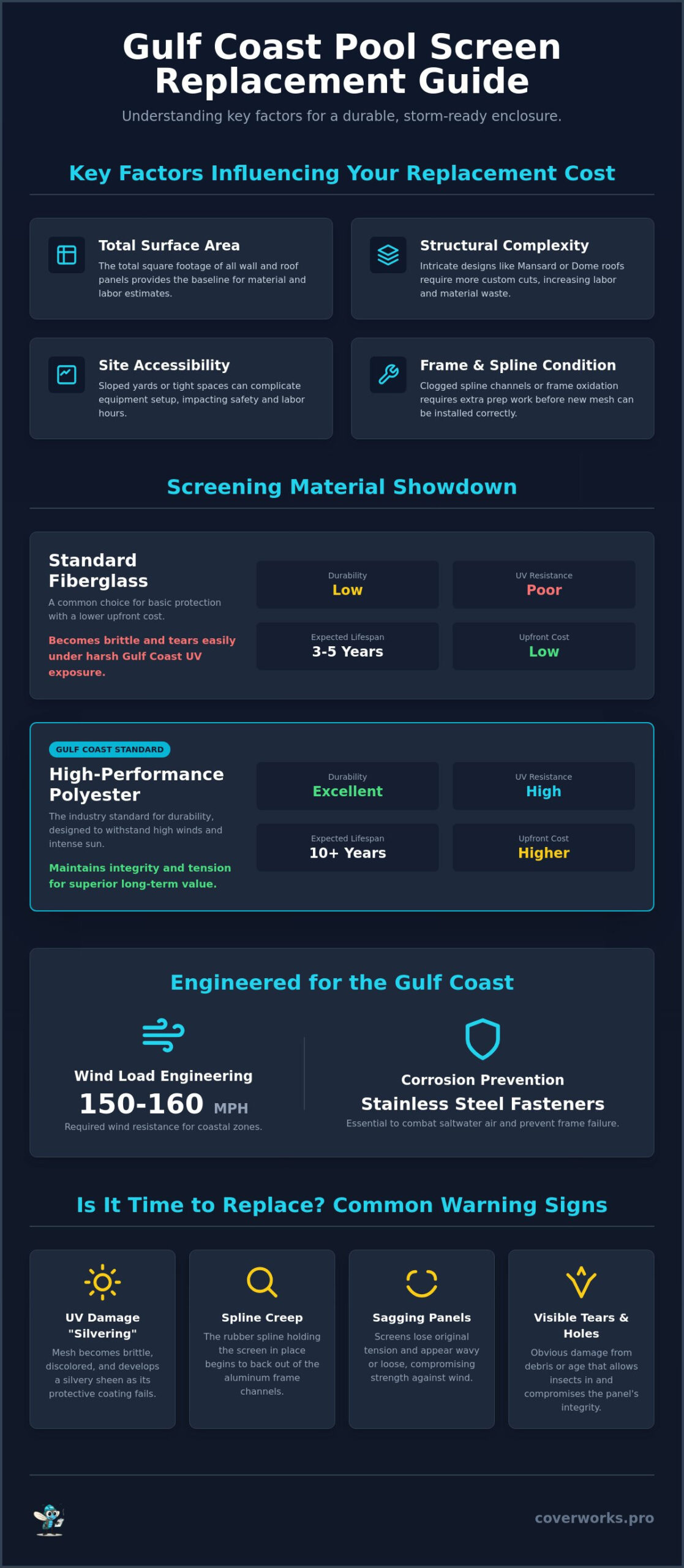
    Every homeowner eventually faces the reality that their enclosure mesh has a finite lifespan. Determining the pool screen replacement cost for your specific property requires a look at several structural factors beyond the mesh itself. While the total square footage of the walls and roof panels provides a baseline, the physical layout of your backyard often dictates the final investment. We view every rescreening as a precision project where the following variables play a critical role:

    • Total Surface Area: This includes the cumulative measurement of all vertical wall panels and the overhead roof sections.
    • Structural Complexity: The shape of your enclosure, such as a standard Gable or a more intricate Mansard design, affects how much material is wasted during custom cutting.
    • Accessibility and Terrain: Technicians need stable ground to stage ladders and safety equipment. Sloped yards or tight spaces between the enclosure and a fence can increase labor hours.
    • Frame and Spline Integrity: The condition of the existing aluminum frame is paramount. If the spline channels are clogged with debris or the frame is oxidized, additional prep work is required before new mesh can be installed.

    While a standard screened porch might be straightforward, a full pool enclosure involves significant engineering that must be respected during the rescreening process.

    Size and Structural Complexity

    Multi-story enclosures or those with high-vaulted ceilings require specialized safety equipment and additional labor to ensure every panel is tensioned correctly. Mansard or Dome roofs significantly increase labor time due to the intricate angled cuts required to fit the mesh into each custom-shaped panel. Increased height directly elevates labor risk and insurance premiums, as technicians must utilize specialized scaffolding or safety harnesses for multi-story structures. This precision ensures your enclosure doesn’t just look better, but remains structurally sound against the elements.

    Regional Climate and Engineering Requirements

    In the Gulf Coast, your screen does more than keep out pests; it acts as a wind-break. Local building codes in Louisiana and Alabama coastal zones often require enclosures to meet wind-load requirements in the 150 to 160 mph range. This means the mesh must be secured with the correct spline weight to prevent it from blowing out during a tropical system. Proximity to saltwater also necessitates a close inspection of your hardware. We often find that upgraded stainless steel fasteners are required during a rescreen to prevent corrosion from compromising the aluminum frame. For those considering a completely new structure, our Custom Pool Enclosure Installation in Louisiana guide offers deeper insights into the building process. Understanding these regional factors is essential for calculating an accurate pool screen replacement cost that delivers long-term durability.

    Comparing Screening Materials: Performance vs. Long-Term Value

    Selecting the right mesh is the most critical decision you’ll make when evaluating your pool screen replacement cost. While the aluminum frame provides the skeleton, the screen material dictates how often you’ll need to revisit this project. Homeowners often choose between immediate savings and long-term resilience. Standard fiberglass remains the most common entry-level option, offering basic insect protection and decent visibility. However, in the intense heat of the Gulf Coast, fiberglass can lose its flexibility within just a few years. For those seeking a more permanent solution, polyester mesh has become the industry standard for durability, especially in regions prone to high winds and heavy tropical downpours.

    Material Durability in High-Humidity Environments

    Southern UV exposure is notoriously harsh on synthetic materials. Standard fiberglass mesh often becomes brittle and “silvery” as the protective coating breaks down, making it susceptible to tearing during minor storms. High-tenacity polyester mesh resists this degradation far more effectively. In Alabama summers, where humidity and heat create a punishing environment, polyester maintains its structural integrity and tension much longer than its fiberglass counterparts. Choosing a more resilient material can significantly lower the effective pool screen replacement cost over the life of your enclosure by extending the time between rescreening cycles.

    Material Type Cost Tier Estimated Lifespan Best Use-Case
    Standard Fiberglass Economy 3 to 5 Years Budget-conscious projects
    Polyester Mesh Premium 10 to 15+ Years High-wind zones and longevity
    Pet-Resistant Specialized 7 to 10 Years Active pets or high-impact areas

    Specialty Mesh for Lifestyle Needs

    Homeowners located near Louisiana marshes or Mississippi bayous often require “No-See-Um” mesh. This 20×20 weave is fine enough to block the tiny biting gnats that standard 18×14 mesh might miss. If your pool deck feels like a furnace, solar mesh can reduce heat gain and UV exposure, creating a more comfortable microclimate. These specialized materials often complement other upgrades, such as Lexan and polycarbonate roofs, which provide total protection from rain and sun. When vetting materials and contractors, it’s wise to review official advice on how to avoid a home improvement scam to ensure you’re getting the quality you pay for. Choosing the right material ensures your backyard remains a sanctuary of aesthetic harmony and functional comfort. If you’re ready to see which mesh fits your lifestyle, explore our professional rescreening options today.

    The Hidden Risks of DIY vs. Professional Rescreening

    While the initial pool screen replacement cost might seem lower if you tackle the job yourself, the technical demands of a full rescreen often lead to hidden expenses. Most homeowners see the mesh as the only variable, but the tension applied during installation is actually a structural calculation. Unlike the minor pool screen enclosure costs associated with a small patch repair, a full rescreen requires a level of precision that preserves the aluminum frame for the long term. A DIY attempt often results in sagging panels or, worse, a warped frame that requires expensive professional correction.

    Structural Integrity and Frame Preservation

    Improper tensioning is the most common mistake in amateur projects. If the mesh is pulled too tightly, it can actually cause aluminum members to bow or pull out of alignment, compromising the entire structure. Our Master Craftsman approach involves a comprehensive inspection of every fastener and anchor point before the first roll of mesh is even opened. We often find that older enclosures have loose anchors or oxidized screws that need replacement to maintain structural integrity. The quality of the spline, the rubber cord that locks the screen into the channel, is just as important as the mesh itself; using the wrong size or a low-grade material leads to “spline creep” and premature failure.

    Safety and Liability Considerations

    The physical risk of working on a pool cage is substantial. Professionals utilize fall protection and specialized staging to navigate high-pitched enclosure roofs, whereas a DIYer often resorts to “walking the beams.” This practice is incredibly dangerous and can lead to catastrophic falls or structural collapse if the beam isn’t rated for point-load weight. Beyond physical safety, using uninsured day labor or attempting it yourself carries significant liability risks. If an accident occurs on your property, you could be held responsible for medical costs and legal fees.

    Professional crews operate with full insurance and the efficiency to complete a project in days, whereas a solo effort might drag on for weeks, leaving your pool exposed to debris and pests. Accessing commercial-grade materials, which aren’t available at big-box retail stores, ensures your investment withstands the next Gulf Coast storm season. When you weigh the potential for frame damage against the upfront pool screen replacement cost, the value of a professional labor guarantee becomes clear. You’re not just paying for new mesh; you’re paying for the structural preservation of your outdoor living space. To ensure you’re partnering with qualified professionals, our guide on choosing the right screen builders for Gulf Coast homeowners can help you identify the craftsmanship and credentials that matter most.

    Pool Screen Replacement Cost: 2026 Gulf Coast Homeowner's Guide

    The Rescreening Checklist: When to Invest in Your Enclosure

    Recognizing the exact moment your enclosure has reached its limit is essential for protecting your property. While it’s tempting to delay the pool screen replacement cost, waiting until a total failure occurs often leads to more expensive frame repairs. A healthy enclosure should be a taut, uniform barrier. If you notice any of the following indicators, your mesh is likely nearing the end of its functional life. Our detailed pool enclosure mesh replacement checklist for 2026 can help you systematically evaluate each of these warning signs before they escalate into structural problems.

    • Visible ‘Silvering’: This silvery or bleached appearance is a clear sign of UV damage. It indicates the protective coating has evaporated, leaving the fiberglass core vulnerable to the elements.
    • Spline ‘Creep’: Look at the channels where the mesh meets the aluminum. If the screen is pulling away or the rubber spline is popping out, the material has lost its elasticity.
    • Organic Penetration: In our humid climate, algae or lichen can actually grow into the weave of the mesh. This doesn’t just look poor; it physically weakens the fibers.
    • The Finger-Poke Test: Gently press your finger against a sun-exposed panel. If the mesh feels brittle or produces a “crunching” sound, it’s ready for replacement.

    Identifying Storm and Wind Damage

    Small tears might seem minor, but they act like a perforated line on a sheet of paper. During high winds, these small openings allow pressure to build up inside the enclosure, often leading to a catastrophic blowout of multiple panels. We recommend checking your corner bracing and door hardware annually. If you find several damaged sections, remember that partial rescreening is often a false economy. The labor required to set up equipment for three panels is nearly the same as a full rescreen, and the older, remaining mesh will likely fail shortly after the new sections are installed.

    Scheduling for Peak Performance

    Timing your project can improve both the installation quality and your overall experience. Spring and autumn are the ideal windows for rescreening in Mississippi and across the Gulf Coast. The moderate temperatures allow the mesh to be pulled to the perfect tension without the extreme thermal expansion seen in mid-July. Before our crew arrives, ensure the pool deck is clear of furniture and potted plants. This allows for a safer, more efficient workflow. Many homeowners choose to pair their rescreening with Decorative Concrete & Kool Deck Resurfacing to achieve a total backyard transformation in a single service window. If you’re seeing signs of wear and want an expert’s eyes on your structure, request a professional enclosure assessment to secure your home before the next storm season.

    CoverWorks: Precision Rescreening for the Gulf Coast

    When you evaluate the pool screen replacement cost for your home, the value of regional experience cannot be overstated. A pool enclosure is a complex architectural feature that must withstand some of the most challenging weather conditions in the United States. With over 20 years of specialized experience serving homeowners across Louisiana, Mississippi, and Alabama, CoverWorks Inc. brings a deep understanding of local building codes and environmental stressors to every project. We don’t just replace mesh; we restore the structural integrity and aesthetic harmony of your outdoor living space.

    Our expertise extends to the most difficult structural designs, including the intricate Mansard roofs and multi-story enclosures that require site-specific engineering. We recognize that a sagging screen or a loose spline is often a symptom of larger structural needs. By focusing on precision and utilizing high-performance materials, CoverWorks Inc. ensures that your rescreening project provides a lasting return on investment. Our goal is to provide a clear, competitive pool screen replacement cost while ensuring the resulting structure remains a point of pride for your property for years to come.

    The CoverWorks Inc. Difference: Quality and Speed

    We position ourselves as the Master Craftsman of outdoor aluminum structures. This means we never cut corners on material quality or installation techniques. Every roll of mesh we use is specifically selected for its ability to resist the intense Southern humidity and UV exposure that typically degrades standard retail products. We respect your time and your property. Our refined workflow allows CoverWorks Inc. to offer a same-day quote process, providing the information you need to make an informed decision without unnecessary delays. This proactive approach ensures that your backyard remains a sanctuary rather than a construction zone for weeks on end.

    • Regional Familiarity: Deep knowledge of coastal wind-load requirements and saltwater corrosion challenges.
    • Structural Accuracy: Specialized techniques for tensioning Mansard and vaulted roof panels without warping the frame.
    • Comprehensive Care: Ability to pair rescreening with Decorative Concrete & Kool Deck Resurfacing for a complete aesthetic upgrade.
    • Efficiency: Professional crews equipped with the safety gear and tools to complete high-pitched roof work safely and quickly.

    Get Started on Your Backyard Transformation

    Protecting your home investment starts with a professional assessment of your enclosure’s current state. Whether you are dealing with storm damage or simply want to upgrade to a high-performance mesh that keeps out the smallest pests, CoverWorks Inc. is here to act as your reliable guide. A well-maintained enclosure enhances your lifestyle, improves your home’s curb appeal, and provides a bug-free environment for your family to enjoy. Don’t wait for the next major storm to test the limits of brittle, aged mesh. We invite you to begin your transformation today with a consultation that focuses on durable results and functional beauty.

    Request your same-day rescreening quote from CoverWorks Inc. and take the first step toward a revitalized outdoor sanctuary.

    Secure Your Backyard Sanctuary for the Seasons Ahead

    Your pool enclosure is the primary shield protecting your family’s comfort and your property’s value. We’ve examined how structural complexity and high-performance material choices dictate the long-term success of any rescreening project. By prioritizing durability over temporary fixes, you ensure your outdoor space remains a source of relaxation rather than a maintenance burden. Choosing the right mesh and ensuring precise tensioning are the most effective ways to safeguard your structure against the intense Southern sun and seasonal storms.

    Understanding your pool screen replacement cost is the first step toward a more resilient home that can withstand the unique environmental pressures of the Gulf Coast. CoverWorks Inc. brings over 20 years of local experience to every project, specializing in complex Mansard roofs and custom aluminum structures. We value your time and offer same-day quotes to provide the clarity you need to move forward with confidence. Schedule your professional pool cage rescreening with CoverWorks Inc. today to restore the structural integrity and aesthetic harmony of your backyard. We look forward to helping you create a bug-free retreat that’s built to last.

    Common Questions About Pool Screen Replacement

    Is it better to replace one screen panel or the entire pool cage?

    Replacing the entire enclosure is usually the most cost-effective decision if your mesh is more than five years old. While a single panel fix addresses an immediate hole, the labor costs for a service call are high relative to the material used. Most homeowners find that once one panel fails from UV brittleness, the rest of the enclosure follows within a few months, leading to multiple repair bills.

    How long does a typical pool screen replacement take to complete?

    A professional rescreening project typically takes between one and three days for a standard-sized enclosure. Larger structures or complex Mansard roofs may require additional time for precision cutting and specialized safety staging. Our crews work efficiently to minimize the time your pool area is exposed to the elements, though Gulf Coast weather patterns can occasionally influence the timeline.

    Does homeowners insurance cover the pool screen replacement cost after a storm?

    Coverage for a pool screen replacement cost often depends on whether your policy includes a specific rider for “Other Structures.” Many standard policies in Louisiana and Alabama have high deductibles for wind damage or may exclude screen enclosures entirely. It’s best to consult your insurance agent before storm season to verify your current level of protection for outdoor aluminum structures.

    What is the strongest screen material for homes with pets or children?

    Polyester-reinforced mesh is the most durable choice for households with active pets or small children. This material is significantly thicker than standard fiberglass and is engineered to withstand scratching, clawing, and accidental impacts. Many homeowners choose to install this heavy-duty mesh on the lower “chair rail” panels while using standard mesh for the roof to balance visibility and structural strength.

    How often should a pool enclosure be rescreened in the Gulf Coast region?

    You should plan to rescreen your enclosure every seven to ten years to maintain its structural integrity. The intense humidity and UV rays in our region break down the protective coating on fiberglass mesh much faster than in dryer climates. Choosing high-tenacity polyester mesh can extend this window to fifteen years or more, providing superior long-term value for your investment. To better understand the specific warning signs that indicate it’s time to act, review our guide on scheduling a pool enclosure mesh replacement before the next hurricane season.

    Can I change the type of mesh during a rescreening project?

    Rescreening is the perfect opportunity to upgrade your mesh type to better suit your lifestyle needs. You can switch from standard fiberglass to no-see-um mesh for better bug protection or solar mesh to reduce heat gain without modifying the aluminum frame. This customization allows you to solve specific problems like tiny biting gnats or uncomfortable deck temperatures during a single project window.

    Will rescreening my pool enclosure help keep the water cleaner?

    Intact screens act as a critical barrier against organic debris that can disrupt your pool’s chemistry. New mesh effectively blocks leaves, pine needles, and heavy pollen that would otherwise clog your filtration system and lead to algae growth. By keeping these contaminants out, you reduce the workload on your pool pump and can significantly lower your monthly chemical expenses.

    Does the color of the screen affect the temperature of the pool area?

    While dark charcoal mesh is the industry standard for superior visibility, only specialty solar mesh significantly lowers the temperature. These specific screens are engineered to reflect a portion of the sun’s infrared heat before it reaches your pool deck. This can make the microclimate inside your enclosure noticeably cooler and more comfortable during the peak of a Mississippi summer.