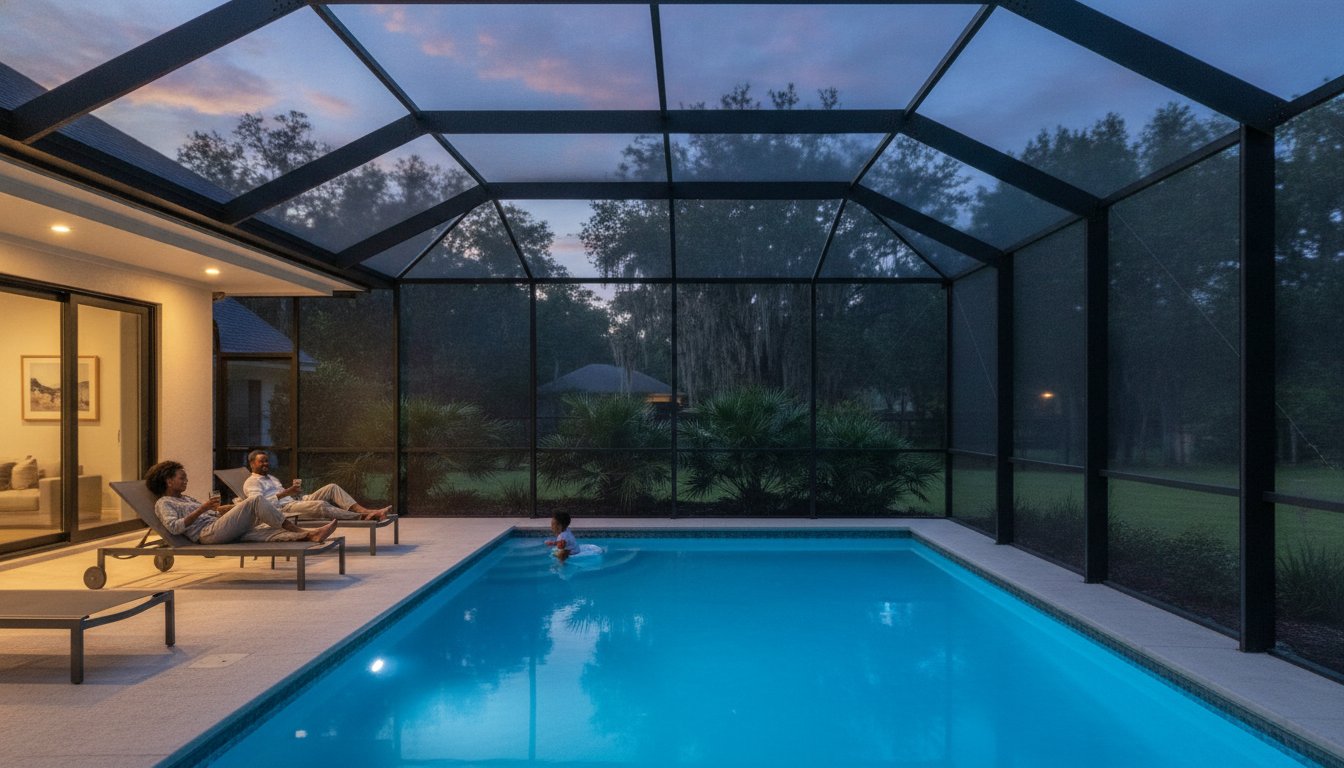
If you live on the Gulf Coast, your backyard isn’t just a place to relax; it’s a battleground against pine needles, swarming mosquitoes, and the relentless sun. Most homeowners accept that owning a pool means spending more time skimming debris than actually swimming. You likely agree that the constant battle with biting flies and rising chemical costs due to UV-driven chlorine evaporation takes the joy out of your outdoor space. This guide will show you how custom-engineered screen enclosures for pools can eliminate these headaches while adding significant property value to your home.
We’ll walk you through the critical 2026 updates to building codes and ASCE 7-22 wind load requirements that affect every project from New Orleans and Metairie to Gulfport and Biloxi. You’ll learn how the right structural attachment and high-performance mesh can withstand 160 mph winds and provide a durable, code-compliant retreat. From understanding regional engineering standards to choosing materials that resist saltwater corrosion, this article covers everything you need to build a structure that lasts.
Key Takeaways
- Learn how custom-engineered screen enclosures for pools create a debris-free environment while providing total protection from mosquitoes and wasps.
- Understand the structural science behind hurricane-ready designs, focusing on gusset plates and bracing that meet 2026 Gulf Coast wind load codes.
- Discover how specialized mesh reduces chemical costs by blocking UV-driven chlorine evaporation and shielding your pool from harmful solar rays.
- Gain insights into long-term maintenance, including the expected lifespan of aluminum frames and the safest methods for removing pollen and algae.
- Identify the essential criteria for selecting a specialty contractor, such as verifying regional licensing and experience with local building code compliance.
What Are Screen Enclosures for Pools and Why Do They Matter?
A pool enclosure is a structural investment that transforms a high-maintenance water feature into a functional outdoor living space. Technically defined, these structures consist of a custom-built aluminum framework that supports specialized mesh panels. For families across Louisiana, Mississippi, and Alabama, screen enclosures for pools serve as the first line of defense against the unique environmental challenges of the Gulf Coast. Whether you’re dealing with the aggressive mosquitoes of Metairie or the constant pine needle fall in Slidell, a properly built cage keeps your water clean and your patio pest-free.
It’s common to hear these structures called “pool cages,” but they differ significantly from a standard screen room or a Lanai. While a lanai is typically a covered porch integrated into the home’s roofline, a pool enclosure is a detached or semi-detached structure designed to handle the massive surface area of a pool deck. In communities like Gulfport and Biloxi, where wind speeds and salt spray are constant factors, these enclosures require specialized engineering that a standard patio cover simply doesn’t possess. Working with gulf coast pool enclosure specialists who understand the unique demands of salt air, high winds, and regional building codes ensures your structure is built to endure rather than just to impress.
The Anatomy of a High-Quality Enclosure
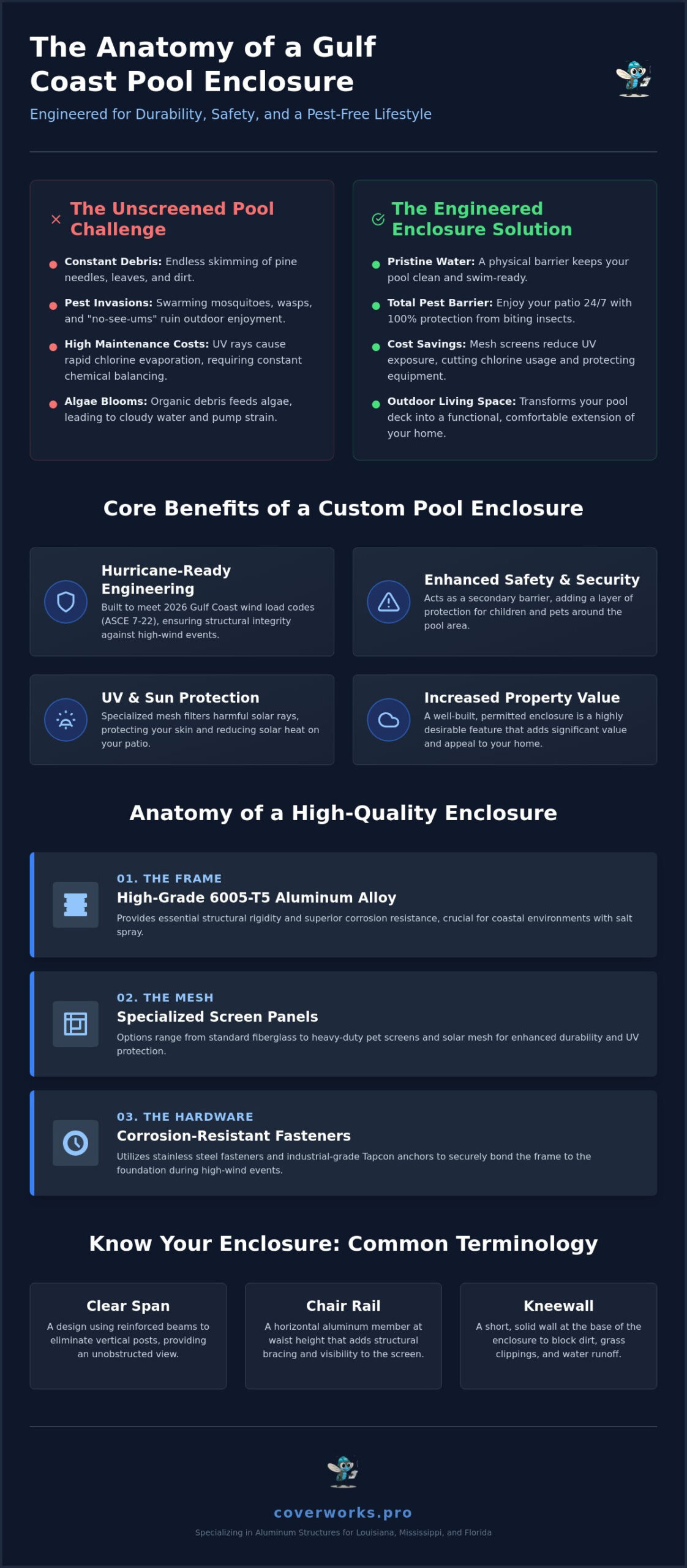
The integrity of the structure depends on three main components. First, the aluminum alloy must be high-grade, such as 6005-T5, to provide the necessary rigidity without succumbing to corrosion. Second, the screen mesh should be selected based on your specific needs. While fiberglass is the standard, heavy-duty pet screens or solar mesh offer better durability and UV protection. Finally, the hardware matters. We use stainless steel fasteners and industrial-grade Tapcon anchors to ensure the frame remains securely bonded to your concrete foundation during high-wind events.
Common Terminology for Homeowners
- Clear Span: A design that uses reinforced beams to eliminate vertical support posts, providing an unobstructed view of your landscape.
- Chair Rail: A horizontal aluminum member installed at waist height. It provides structural bracing and prevents people or pets from accidentally walking into the screen.
- Kneewall: A solid panel, usually 12 to 24 inches high, installed at the bottom of the enclosure to block dirt, grass clippings, and water runoff from entering the pool area.
The Core Benefits of Installing a Screened-In Pool Enclosure
Investing in screen enclosures for pools is about more than just keeping leaves out of the water; it is about reclaiming your outdoor lifestyle. In the humid climates of New Orleans, Metairie, and the surrounding Gulf Coast, an open pool often feels like a liability. Between the swarming mosquitoes and the relentless heat, many homeowners find they rarely use the space they worked so hard to build. A custom enclosure transforms that area into a climate-controlled sanctuary that functions as a seamless extension of your home.
Pest control is the most immediate advantage. Traditional bug sprays and candles only offer temporary, localized relief. A professionally installed pool cage provides a 100% mechanical barrier against mosquitoes, wasps, and those aggressive “no-see-ums” that plague Slidell and Biloxi. Beyond insects, the structure serves as a filter for organic debris. Pine needles, oak leaves, and even local wildlife like frogs are kept out of your skimmer baskets. This reduction in organic matter prevents algae blooms and significantly extends the life of your pool’s filtration pump.
The Southern sun is a primary driver of high maintenance costs. Direct UV exposure triggers rapid chlorine evaporation, forcing homeowners to constantly rebalance their water chemistry. By installing a high-quality mesh, you create a filter that reduces solar intensity. This helps maintain stable chemical levels and protects your skin from the peak afternoon sun. Our designs prioritize these functional benefits while adhering to the Florida Building Code for screen enclosures, ensuring the structure remains stable even as it supports specialized, wind-resistant fabrics. If you’re tired of the constant skimming and chemical adjustments, it may be time to discuss a custom enclosure design with an experienced specialist.
Enhanced Safety and Privacy
Modern enclosures act as a vital secondary safety barrier. While local codes require fences, a lockable, self-closing screen door adds an extra layer of protection for children and pets. For those with close neighbors in densely populated areas like Metairie, we can integrate “Florida Glass.” This vinyl-laminated mesh is opaque, providing total privacy for the lower sections of your enclosure while keeping the view open above.
Extending Your Outdoor Living Season
An enclosure creates a “transition space” that stays significantly cooler than an open deck. By breaking the direct line of sight from the sun, the mesh reduces the “heat island” effect on your concrete or Kool Deck surfaces. This allows you to enjoy your patio in July and August without burning your feet. It also means you can enjoy a swim during a light summer rain without being swarmed by bugs the moment the clouds break.
Engineering Screen Enclosures for Pools: Wind Loads and Roof Styles
In the Gulf Coast, building screen enclosures for pools isn’t just about aesthetics; it’s about survival. Wind loads are calculated based on the ASCE 7-22 standard, which requires structures in coastal areas like Gulfport and Biloxi to withstand 150 to 160 mph gusts. Unlike a solid wall, the mesh in an enclosure allows some air to pass through, yet the frame still experiences significant pressure. We utilize site-specific engineering to ensure that an installation in New Orleans meets the same rigorous safety standards as a project closer to the open water. This precision ensures your structure remains standing when regional weather turns severe. Understanding how gulf coast pool enclosure specialists engineer for wind, salt, and style can help you appreciate why material selection and structural detailing are non-negotiable in this region.
To achieve this level of resilience, we incorporate heavy-duty uprights and specialized bracing. Gusset plates, which are thick aluminum plates that reinforce the corners where beams meet, are essential for maintaining structural geometry under stress. We also utilize K-bracing throughout the walls to prevent the frame from racking or twisting during a storm. This level of detail ensures compliance with the 2026 International Building Code (IBC) and local municipal requirements. Proper engineering means the difference between a permanent addition and a structure that becomes a liability during hurricane season. For a deeper look at how architectural style and structural engineering intersect, explore our guide to custom pool cage design for Gulf Coast homes, which covers the latest inspiration and site-specific techniques for 2026.
Popular Roof Styles and Structural Profiles
Choosing the right roof style is a balance between your home’s architecture and the interior volume you desire. Each geometry offers different benefits regarding wind resistance and water drainage. With over 25 years of experience, we help homeowners select the design that best fits their property.
| Roof Style | Primary Benefit | Structural Profile |
|---|---|---|
| Mansard | Maximum interior space and height. | Flat top with four sloped sides; the most popular choice for a spacious feel. |
| Gable (A-Frame) | Matches residential rooflines. | Two sloped sides meeting at a center ridge; excellent for traditional homes. |
| Dome or Hip | Aerodynamic wind resistance. | Sloped sides meeting at a peak or ridge; offers a unique, curved aesthetic. |
Structural Attachment and Foundation
The point of failure for many substandard enclosures is the connection to the home. We use a “Super Gutter” system, which is a heavy-duty aluminum structural gutter that supports the weight of the enclosure while managing roof runoff. Anchoring the structure to the concrete or Kool Deck is equally vital. We use stainless steel fasteners and industrial anchors to prevent lifting. A “floating” enclosure, which isn’t properly tied to a foundation or the primary structure, is a major safety risk that we never recommend for any project.
Maintenance, Longevity, and the Rescreening Process
A professionally installed aluminum frame is engineered to last 25 years or more, but the lifespan of the mesh panels is shorter. While some online forums suggest screens only last five years, high-quality fiberglass mesh typically provides 10 to 12 years of service. In coastal communities like Gulfport and Biloxi, the combination of intense UV rays and salt air can accelerate the degradation of standard materials. Maintaining screen enclosures for pools involves regular care of both the structural frame and the screening material to ensure the investment remains secure and attractive.
Aluminum care is relatively simple but essential for preventing oxidation. The powder-coated finish on your enclosure acts as a protective shield. Over time, salt deposits and environmental pollutants can create a chalky residue on the metal. Periodically rinsing the frame with fresh water and a mild, non-abrasive detergent will preserve the finish and maintain the structural integrity of the alloy. For the mesh, we recommend a soft-wash approach. Never use high-pressure washers, as the force can tear the fibers or dislodge the vinyl spline that holds the screen in place. A soft brush and a diluted bleach solution are usually enough to remove stubborn algae or pollen build-up.
The Rescreening Lifecycle
Identifying when you need a rescreen is vital for maintaining the tension that helps your enclosure withstand wind. If the mesh feels brittle to the touch or tears easily with a fingernail, the fiberglass has reached the end of its functional life. You might also see the spline popping out of the aluminum tracks. While a single torn panel can be patched, a full rescreen ensures uniform tension across the entire structure. This is also an ideal time to upgrade to “TuffScreen” for pet resistance or No-See-Um mesh to block the smallest biting insects common in the New Orleans and Slidell areas.
Post-Storm Inspections
After any significant wind event, a thorough inspection is the best way to prevent future structural failure. Check for loose bolts at the foundation and examine the purlins, which are the horizontal beams in the roof, for signs of bending or bowing. If the structure feels “shaky” or you notice compromised anchors, professional intervention is necessary. We often assist homeowners with documentation for insurance claims regarding pool enclosure screen repair to ensure the restoration meets current building codes. If you suspect your enclosure has sustained wind damage, schedule a professional inspection with our team to verify its structural safety.
How to Choose the Right Pool Enclosure Builder
Selecting a contractor for screen enclosures for pools requires more than just comparing bottom-line prices. Because these structures must function as engineered safety systems, your choice of builder determines whether your investment survives the next hurricane season. A qualified specialty contractor should demonstrate a deep familiarity with the structural demands of the Gulf Coast, from the expansive clay soils of Louisiana to the high wind zones of coastal Mississippi.
Follow these five essential steps to vet any potential builder:
- Verify Specialized Licensing: Ensure the company holds a specific license for aluminum specialty structures. General residential licenses often lack the necessary bonding for high-wind engineering.
- Review Local Portfolios: Ask for examples of completed projects in communities like New Orleans, Slidell, or Biloxi. A builder with local experience will have a track record of structures that have already weathered regional storms.
- Confirm Permitting Support: Your builder should handle all site plans, engineering stamps, and municipal permits. If a contractor asks you to pull the permit yourself, it is a major red flag regarding their liability coverage.
- Analyze Material Specifications: A professional quote should detail the aluminum alloy grade, the specific mesh brand, and the type of fasteners used. Avoid vague estimates that only provide a total cost.
- Check Warranty Terms: Look for written guarantees that cover both the powder-coated aluminum finish and the labor for the screen installation.
The Importance of Local Expertise
National chains often use “one-size-fits-all” designs that don’t account for the unique soil conditions and wind speed maps of our region. Experienced pool enclosure builders in Mississippi understand that a structure in Gulfport requires different anchoring than one in an inland area. Local expertise also means faster project timelines, as established contractors know exactly how to navigate the permitting requirements of specific parishes and counties. At CoverWorks Inc., we prioritize this regional knowledge, offering same-day quotes and personalized support to keep your project on track.
Making the Final Decision
When you evaluate the cost of pool enclosures in Louisiana, consider the long-term value beyond the initial construction. A well-engineered enclosure can increase your property value by 5% to 10% while slashing your weekly maintenance hours. Once your design is approved and permits are secured, the physical installation typically moves quickly, leading to a final walkthrough where every fastener and screen spline is inspected for precision. Ready to transform your backyard into a low-maintenance oasis? Contact CoverWorks Inc. for your free same-day quote and let our over 25 years of field experience work for you.
Secure Your Backyard Investment with Professional Engineering
A pool enclosure is more than just a convenience; it’s a structural safeguard for your home. By choosing custom-engineered screen enclosures for pools, you eliminate the daily burden of maintenance and provide your family with a pest-free environment that stands up to the harshest Gulf Coast weather. We’ve covered the importance of ASCE 7-22 wind load compliance and the long-term benefits of high-performance mesh, which together ensure your structure remains a durable asset for years to come.
Success in these projects relies on precision, proper permitting, and a deep understanding of local building codes. With over 25 years of expert craftsmanship, CoverWorks Inc. specializes in hurricane-resilient engineering tailored to the unique needs of Louisiana, Mississippi, and Alabama. We take pride in delivering custom pool cage designs that prioritize structural integrity while enhancing your outdoor lifestyle.
Don’t leave your outdoor comfort to chance or substandard installers. Get Your Free Same-Day Quote from CoverWorks Inc. today and begin the process of transforming your pool area into a reliable, low-maintenance retreat. We look forward to helping you build a structure that lasts.
Frequently Asked Questions
How much does a screen enclosure for a pool typically cost in 2026?
The total investment for a pool cage depends on the square footage, the complexity of the roof style, and the specific wind load requirements of your parish or county. Custom features like clear-span beams or specialized privacy mesh will also influence the final price. Because 2026 building codes require more robust engineering for coastal zones, the cost of materials and professional labor reflects these higher safety standards.
How long does it take to install a custom pool cage?
The physical on-site construction of screen enclosures for pools usually takes three to five business days. However, the entire process from design approval to the final walkthrough takes longer because it includes engineering site plans and municipal permitting. Working with a contractor who understands the local building departments in New Orleans or Gulfport can help prevent unnecessary delays in the approval phase.
Will a screen enclosure keep my pool water warmer or cooler?
A screen enclosure generally keeps your pool water slightly cooler by blocking a percentage of direct UV radiation. This filtering effect reduces the “heat island” impact on your deck and prevents the water from reaching extreme temperatures in July and August. An added benefit of this shade is the significant reduction in chlorine evaporation, which lowers your monthly chemical costs.
Do pool screen enclosures require a building permit in Louisiana or Mississippi?
Yes, all structural aluminum enclosures require a building permit to ensure they meet regional wind load and safety codes. In areas like Slidell, Metairie, and Biloxi, these permits verify that the structure is engineered to withstand 150 to 160 mph gusts. A professional specialty contractor will handle the entire permitting process, including the submission of sealed engineering drawings to the local building department.
What is the best screen mesh for high-wind hurricane zones?
High-tenacity polyester mesh is the most durable choice for homes in hurricane-prone areas. These materials have a much higher burst strength compared to standard fiberglass mesh, making them more resilient during severe weather events. When paired with heavy-duty uprights and gusset plates, this specialized mesh helps the entire structure maintain its integrity under the pressure of Gulf Coast storms.
Can I add a screen enclosure to an existing pool deck?
You can certainly install an enclosure on an existing concrete or Kool Deck surface provided the foundation meets structural requirements. Our team inspects the thickness and condition of your current deck to determine if it can support the weight and wind uplift of the aluminum frame. In some cases, we may install reinforced footings or specialized anchors to ensure the structure remains securely bonded to the ground.
How do I clean my pool screen without damaging it?
The safest way to clean your enclosure is by using a soft-bristle brush and a mild detergent mixed with water. Avoid using high-pressure washers, as the concentrated force can tear the mesh fibers or pull the vinyl spline out of its track. A gentle soft-wash approach removes algae, pollen, and salt spray while preserving the tension and longevity of the screen panels.
Leave a Reply