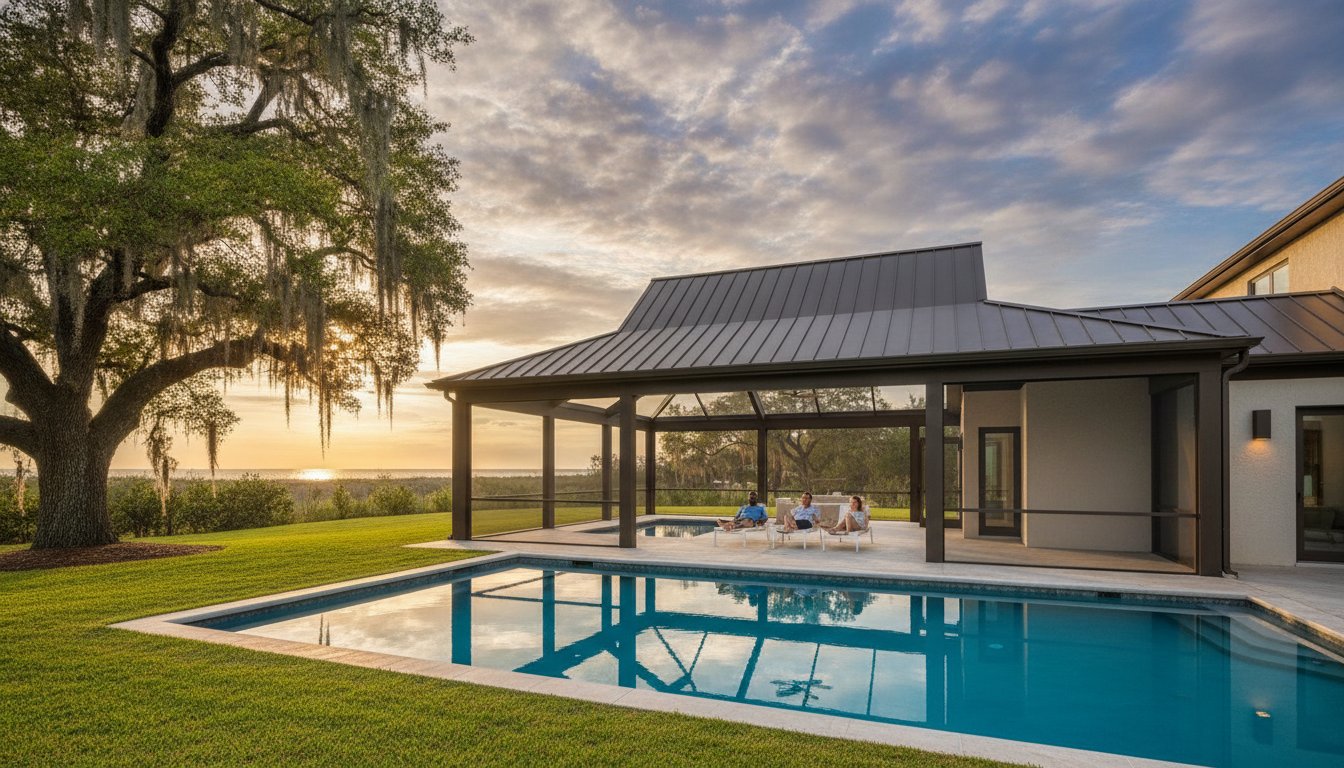
Tag: Pool Enclosures

  • Gulf Coast Pool Enclosure Specialists: Engineering for Wind, Salt, and Style

    Gulf Coast Pool Enclosure Specialists: Engineering for Wind, Salt, and Style

    A pool enclosure along the Gulf Coast isn’t just a luxury; it’s an engineered safety structure that must endure some of the most punishing environmental conditions in the country. You’ve likely seen the aftermath of a storm where substandard screens were shredded or entire frames collapsed because they weren’t built for local wind loads. It’s stressful to invest in your home only to worry that salt air will eat through the fasteners or that a hurricane will turn your patio into a debris field. Partnering with experienced gulf coast pool enclosure specialists ensures your project is designed for survival, not just aesthetics.

    We understand the technical demands of the 9th Edition of the Florida Building Code and the specific windstorm requirements for coastal Mississippi and Louisiana. You’ll learn how expert engineering and regional specialization protect your outdoor investment against the unique challenges of the Gulf Coast climate. We’re going to break down the importance of site-specific wind load calculations, corrosion-resistant materials, and the permitting process that keeps your property compliant and secure.

    Key Takeaways

    • Understand why High-Velocity Hurricane Zone (HVHZ) standards are essential for structures built to withstand extreme wind-driven rain and coastal salt spray.
    • Discover the technical benefits of using 6063-T6 structural aluminum and specialized bracing to prevent corrosion and structural failure during high-wind events.
    • Learn why gulf coast pool enclosure specialists recommend Mansard roof designs as the gold standard for superior aerodynamic strength and modern aesthetic appeal.
    • Identify the critical state-specific licensing and insurance requirements you must verify to protect your property and ensure full building code compliance.
    • See how 25 years of local expertise in custom engineering helps maintain property value through durable, site-specific aluminum construction across the Gulf Coast.

    The Essential Role of Gulf Coast Pool Enclosure Specialists

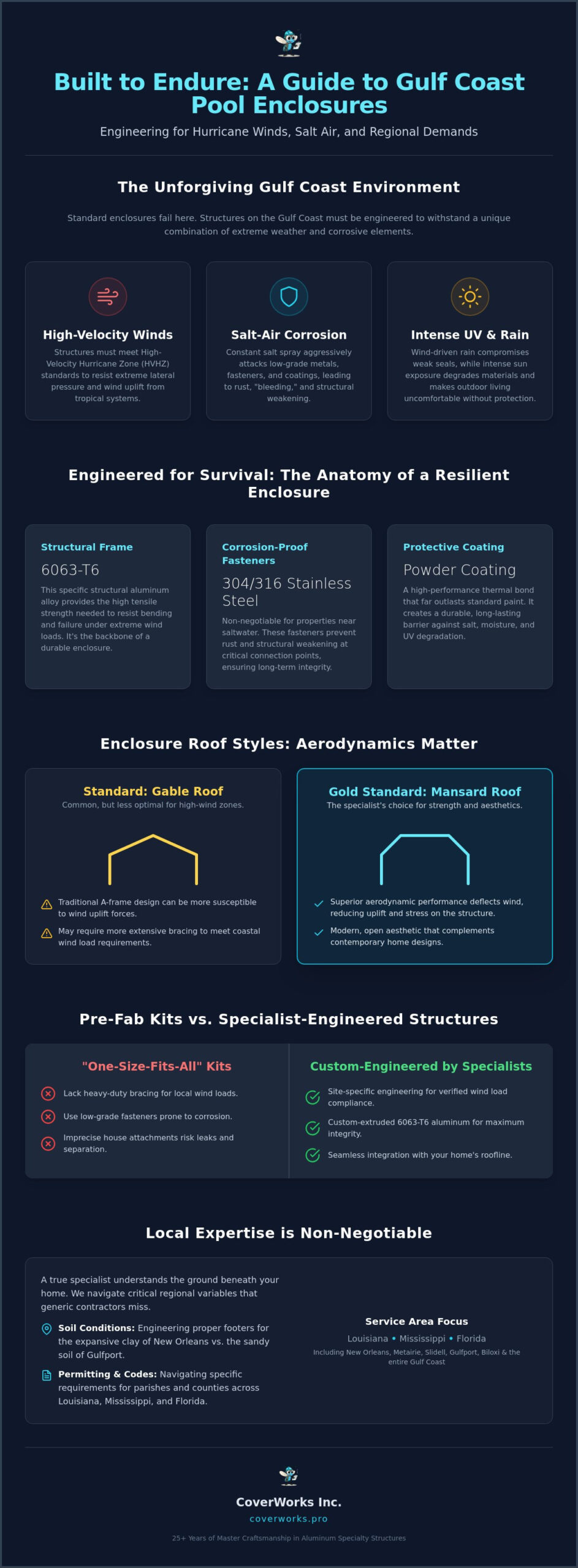
    A true professional in this field understands that the Gulf Coast environment is a laboratory for structural stress. To be classified among elite gulf coast pool enclosure specialists, a contractor must be deeply versed in High-Velocity Hurricane Zone (HVHZ) standards. These aren’t just suggestions; they’re rigorous engineering requirements designed to keep aluminum structures anchored when wind speeds climb. While an inland enclosure might focus on keeping leaves out, a coastal structure must incorporate Hurricane-proof building methods to withstand the lateral pressure and uplift of a tropical system.

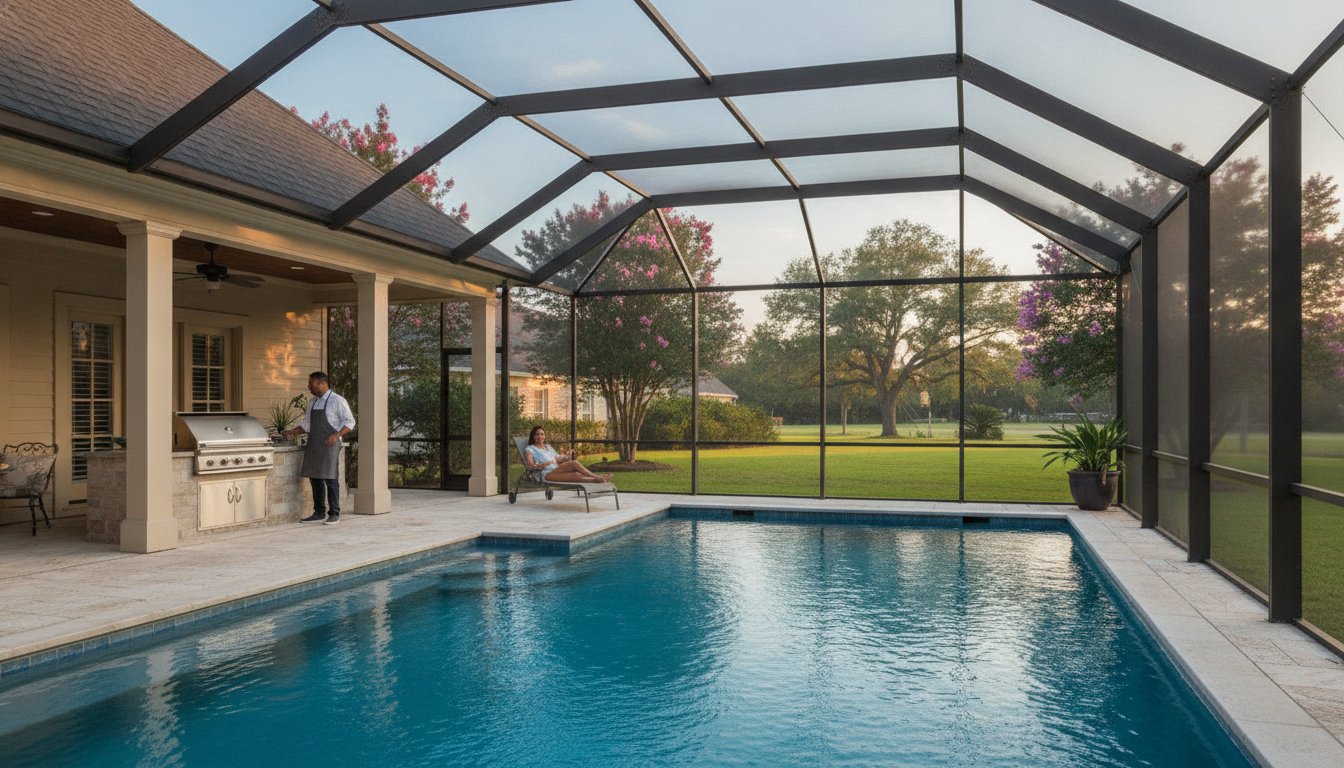
    Standard screen enclosures often fail because they treat the Gulf Coast like any other region. Salt spray acts as a constant abrasive, eating through low-grade fasteners and weakening the finish on standard kits. Wind-driven rain can push through poorly designed seals, while high-velocity gusts can bow frames that lack specialized bracing. Beyond structural survival, these enclosures provide a massive lifestyle upgrade. They offer 24/7 protection from the aggressive mosquitoes common in Southern Louisiana and Mississippi, while significantly reducing UV exposure for swimmers. This creates a “Total Backyard Transformation,” turning a simple pool into a year-round outdoor living room.

    Why Regional Expertise Matters

    Foundational stability varies wildly between New Orleans and Biloxi. In Metairie, we deal with soft, expansive clay that requires specific footer depths to prevent shifting. Moving toward the Mississippi coast, the soil becomes sandier, demanding different anchoring techniques. Local gulf coast pool enclosure specialists must navigate these geological differences while managing the specific permitting requirements of various parishes and counties. For instance, the structural demands in Slidell might differ slightly from those in Gulfport. You can find more detail on these regional variations in our guide on screen enclosures for pools.

    The Problem with “One-Size-Fits-All” Kits

    Pre-fabricated kits often prioritize low cost over longevity, frequently lacking the heavy-duty bracing required for local wind loads. We utilize custom-extruded aluminum with a 6063-T6 temper to ensure every beam and upright has the structural integrity to last for decades. A major failure point for generic enclosures is the house attachment. Without precise engineering, these connections can become sources of roof leaks or structural separation. A specialist designs every attachment point to integrate seamlessly with your existing roofline, ensuring the enclosure remains a permanent, safe addition to your home.

    Engineering for the Gulf: Wind Loads and Corrosion Protection

    Engineering a structure for the Gulf Coast requires a deep understanding of aerodynamics and material science. Wind load is the pressure exerted by wind on a structure, calculated in pounds per square foot. In our region, wind doesn’t just push against the side of a screen; it creates significant uplift, essentially trying to peel the roof off the enclosure. To counter these forces, gulf coast pool enclosure specialists utilize 6063-T6 structural aluminum alloy. This specific temper provides the tensile strength necessary to maintain structural integrity under the extreme pressures of the 2026 building cycle. Every project we undertake includes site-specific engineering stamps to ensure compliance with the latest safety standards and insurance requirements.

    Battling Salt-Air Corrosion

    Living near the water means dealing with a constant salt-heavy mist that can devastate inferior materials. While standard paint might look good initially, it often flakes and peels when exposed to the brine. We prioritize high-performance powder coating, which creates a thermal bond with the aluminum for superior longevity. For properties within five miles of the coast, 304 or 316 stainless steel fasteners are non-negotiable to prevent “bleeding” and structural weakening. Implementing Coastal corrosion protection strategies is the only way to ensure your investment doesn’t rust away. We often recommend pairing these structures with Kool Deck resurfacing to protect your concrete slab from salt degradation while keeping the surface cool under the summer sun.

    Hurricane-Ready Bracing Systems

    The “cage” of your enclosure relies on a network of K-braces and gusset plates to manage lateral movement during a storm. These components distribute the force of the wind across the entire frame rather than letting it concentrate on a single joint. We also use high-strength mesh secured with internal splines to prevent screen blowouts, which can lead to a dangerous pressure imbalance inside the structure. If you’re planning a new build, exploring custom pool cage design options can help you balance these technical requirements with your home’s unique architecture. If you’re ready to see how these engineering principles apply to your backyard, you can always reach out to CoverWorks Inc. for a professional assessment.

    Comparing Enclosure Styles: Mansard vs. Gable Roofs

    Choosing the right roof profile is a critical decision that impacts both the durability and the maintenance schedule of your structure. As gulf coast pool enclosure specialists, we evaluate your home’s existing architecture alongside regional wind patterns to recommend the most stable geometry. While aesthetics play a role, the way wind interacts with the roof surface determines whether your enclosure survives a tropical event or suffers structural fatigue. Every angle is calculated to minimize resistance and maximize structural lifespan.

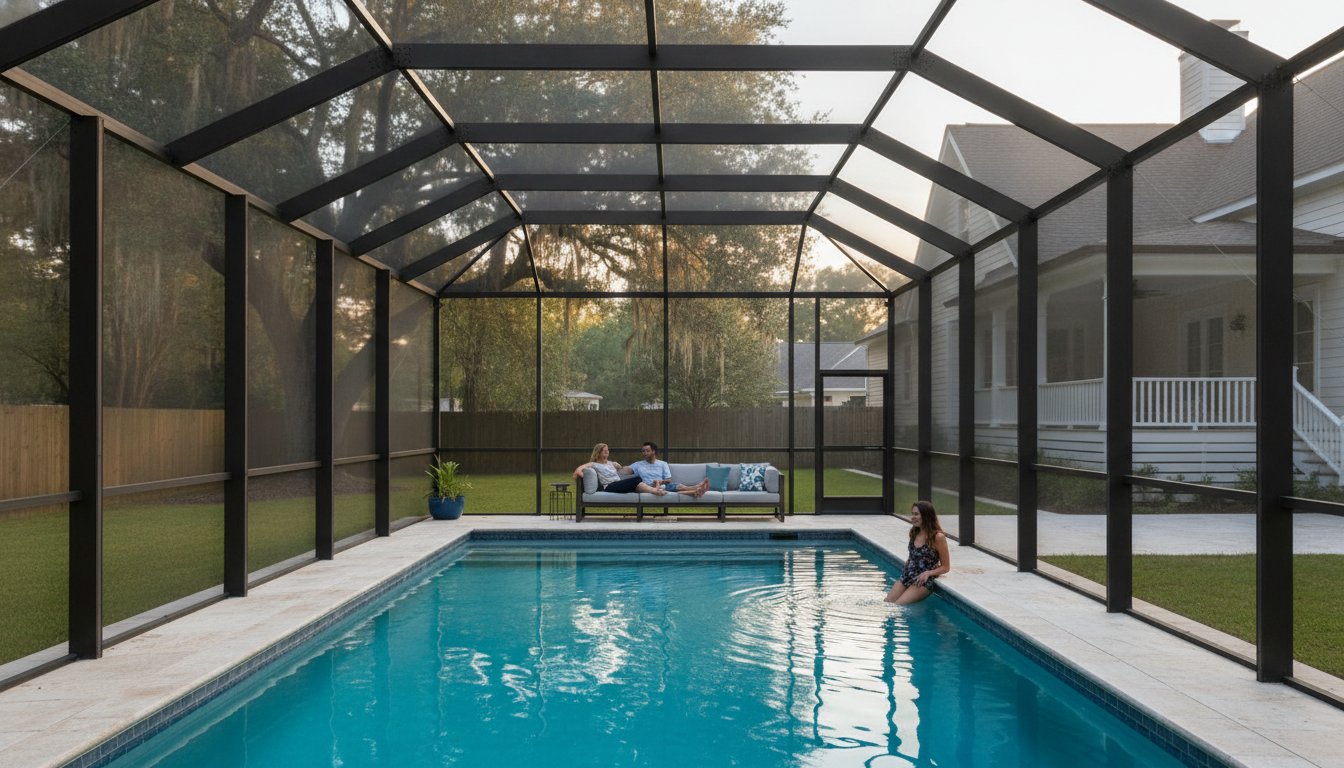
    The Mansard roof is widely regarded as the gold standard for high-wind environments. Its four-sloped design allows wind to glide over the structure from any direction, significantly reducing the lateral pressure that can plague less aerodynamic shapes. For a detailed breakdown of how this design balances hurricane-rated engineering with architectural style, our guide on mansard roof pool enclosures covers the full anatomy of this premier construction approach. In contrast, a Gable roof features two slopes meeting at a central ridge, offering a classic vaulted feel that integrates perfectly with traditional home styles. For modern architectures or tighter footprints, a Slant or Shed roof provides a clean, single-slope transition that works well with contemporary home lines.

    Geometry also dictates how much time you’ll spend cleaning. Steeper pitches, typical of Mansard and Gable designs, allow oak leaves and pine needles to slide off more easily during a rainstorm. Flat or low-slope sections tend to trap organic debris. This trapped material holds moisture against the mesh, which can lead to premature screen failure or frame staining if not cleared regularly. Understanding these maintenance trade-offs is a vital part of the design process.

    The Mansard Roof Advantage

    This design creates a sense of luxury and openness while providing the highest level of structural rigidity. Because the load is distributed across four sloping sides, the frame is naturally more resistant to twisting and lateral sway. This aerodynamic efficiency is why we often recommend Mansard roof pool enclosures for coastal properties where wind gusts are most frequent and severe. It offers a sophisticated silhouette that complements high-end custom homes across the Gulf South.

    Custom Engineering for Complex Attachments

    Integrating an enclosure with a two-story home or a complex roofline requires master-level precision. We use specialized flashing and custom-height walls to ensure a watertight seal where the aluminum meets your home’s fascia. Many homeowners now opt for a hybrid approach, combining insulated patio covers for deep shade with a screen enclosure for mosquito-free swimming. This configuration requires heavy-duty gutter systems designed to handle the torrential downpours typical of New Orleans and Gulfport, preventing water from backing up into your living space.
    Gulf Coast Pool Enclosure Specialists: Engineering for Wind, Salt, and Style

    How to Vet Your Pool Enclosure Contractor

    Selecting a contractor for a coastal project is fundamentally different from hiring someone for an inland renovation. Because these structures must withstand extreme pressures, your chosen gulf coast pool enclosure specialists should possess state-specific residential specialty licenses. In Louisiana, this involves registration with the State Licensing Board for Contractors, while in Mississippi, the Board of Contractors oversees these requirements. Don’t simply take their word for it; verify their standing and ensure they carry both active general liability and workers’ compensation insurance. This protects you from financial liability if an accident occurs on your property during the installation of your pool enclosure or screen system.

    Experience is best measured by history and local performance. Ask to see a portfolio of structures that successfully weathered specific regional events like Hurricane Zeta in 2020 or Hurricane Ida in 2021. If a builder’s cages survived these high-wind events in communities like Gulfport or Slidell, it’s a strong indicator of their engineering competence. During your initial consultation, pay attention to the depth of the “same-day quote” process. A professional estimate should provide more than just a final price; it should include technical details regarding wind load ratings, aluminum alloy grades, and the specific anchoring methods they intend to use for your foundation.

    Questions to Ask Before Signing

    • Do you handle all permitting and engineering stamps? Local requirements in Metairie can differ significantly from those in Biloxi. Your contractor should manage the entire process with the local parish or county office to ensure legal compliance.
    • What is the specific wind rating of the mesh and frame? You need to ensure the quoted materials meet the 2026 building code requirements for your specific distance from the shoreline.
    • How do you handle structural attachment? Ask for a detailed explanation of how they will flash and seal the connection to your existing roofline to prevent future leaks and wood rot.

    Red Flags in Coastal Construction

    Be wary of any contractor who suggests skipping the permitting or engineering phase to save money. This is a major safety risk and can lead to insurance claim denials if a storm causes damage later. Another warning sign is a quote that lacks specificity regarding materials. If the contract doesn’t explicitly state the use of 6063-T6 aluminum or stainless steel fasteners, they might be cutting corners with inferior components that will fail in the salt air. For more guidance on selecting a local expert, read our guide on pool enclosure builders Mississippi.

    The CoverWorks Approach: Master Craftsmanship Since 2000

    Since our founding in 2000, CoverWorks Inc. has established a 25-year legacy as the premier gulf coast pool enclosure specialists. We don’t just build screens; we engineer aluminum structures that define the outdoor lifestyle of our region. Our work stretches from the Northshore of New Orleans and Metairie across the Mississippi coast to the Alabama state line. This deep regional familiarity allows us to anticipate the specific structural repairs and wind load requirements unique to each community we serve. Whether we are designing a complex custom Mansard roof or restoring a storm-damaged frame, our focus remains on structural integrity and building code compliance.

    We respect that your time is valuable. This is why we maintain a “Same-Day Quote” commitment for most projects. When we visit your property in Slidell, Gulfport, or Biloxi, you receive a professional assessment that includes the technical specifications necessary for a durable build. This efficiency doesn’t sacrifice precision. We treat every project as a consultation with a seasoned professional, ensuring you understand the engineering behind your investment before the first beam is set. Our goal is to move you from a state of functional need to a vision of improved comfort and style.

    Beyond the Screen: Comprehensive Outdoor Living

    A truly functional backyard often requires more than just mesh. We specialize in integrating Lexan and twin-wall polycarbonate roofs into our designs. These systems provide weather-proof sections that allow for outdoor furniture and electronics protection while still maintaining a bright, airy feel. To complete the aesthetic overhaul, we offer decorative concrete and Kool Deck resurfacing. These finishes protect your slab from the elements while providing a slip-resistant, cool surface for your family. For existing structures, our professional rescreening services are vital to keeping aging enclosures hurricane-ready by replacing brittle mesh and worn fasteners before the next storm season arrives.

    Start Your Project with Confidence

    Our process is methodical and transparent. It begins with an initial expert consultation and site inspection to determine the best engineering path for your home. Once the design is finalized and permits are secured, our experienced crews begin construction with a focus on precision craftsmanship. We conclude every project with a rigorous final inspection to ensure every bolt and brace meets our high standards. This attention to detail is the best insurance against future storm damage. We take personal responsibility for the quality of every structure we leave behind, acting as your reliable guide from the first quote to the final walkthrough.

    Protect Your Home with Engineered Precision

    Protecting your pool area against the relentless Gulf Coast environment requires more than just a standard screen. It demands a commitment to site-specific engineering, high-grade 6063-T6 aluminum, and a deep understanding of evolving building codes. By choosing gulf coast pool enclosure specialists, you’re ensuring that your structure is built to withstand extreme wind loads and salt-air corrosion while significantly enhancing your property’s value.

    With over 25 years of master craftsmanship, CoverWorks Inc. provides hurricane-proven engineering that homeowners across Louisiana, Mississippi, and Alabama have relied on for decades. We take pride in our regional expertise and our ability to handle complex structural attachments that others might avoid. Our team is fully licensed and dedicated to delivering a finished product that balances structural integrity with functional beauty.

    You don’t have to choose between structural safety and aesthetic style when you have a reliable guide to lead the way. We look forward to helping you transform your backyard into a durable, mosquito-free sanctuary that stands the test of time and the elements.

    Frequently Asked Questions

    How long does a pool enclosure typically last on the Gulf Coast?

    A high-quality aluminum enclosure typically lasts 20 to 25 years when built with the correct materials for our environment. While the 6063-T6 aluminum frame is designed for decades of service, the screen mesh and fasteners may require maintenance sooner. Using 316 stainless steel fasteners and high-performance powder coatings helps prevent the salt-air corrosion that often shortens the lifespan of lesser structures.

    Will a pool enclosure significantly increase my home value in Louisiana?

    Yes, a professionally engineered enclosure increases home value by creating a bug-free, semi-conditioned outdoor living space. In markets like New Orleans and Metairie, buyers prioritize homes with reduced pool maintenance and year-round mosquito protection. It’s often viewed as a premium “outdoor room” that enhances the overall square footage and curb appeal of your property.

    What is the maximum wind speed a custom pool cage can withstand?

    Custom pool cages are engineered to meet specific regional wind loads, which typically range from 130 to 150 mph along the coast. As gulf coast pool enclosure specialists, we design every structure to meet or exceed the 2026 building code requirements for your specific location. The exact wind rating is determined by site-specific engineering stamps that account for your home’s proximity to the shoreline.

    Do I need a building permit for a pool enclosure in Mississippi?

    Yes, you must obtain a building permit for any permanent aluminum structure in Mississippi coastal counties like Gulfport and Biloxi. These permits ensure the design meets local wind speed requirements and safety standards. We manage the entire permitting and engineering process for our clients to ensure the structure is fully compliant with local law and insurance requirements.

    Can an existing pool enclosure be reinforced for better hurricane protection?

    Existing enclosures can often be reinforced by adding K-braces, gusset plates, or upgrading to high-strength stainless steel fasteners. This is an effective way to improve the structural integrity of an older cage without a full replacement. We can inspect your current frame to see if the foundation and aluminum members are suitable for these hurricane-ready structural upgrades.

    How often should I schedule a professional rescreening for my pool cage?

    Professional rescreening is generally recommended every 7 to 10 years to maintain the safety of the structure. Constant UV exposure makes older mesh brittle, which increases the risk of blowouts during a tropical storm. Regular rescreening by gulf coast pool enclosure specialists ensures the splines remain tight and the mesh can properly manage the wind pressure exerted on the frame.
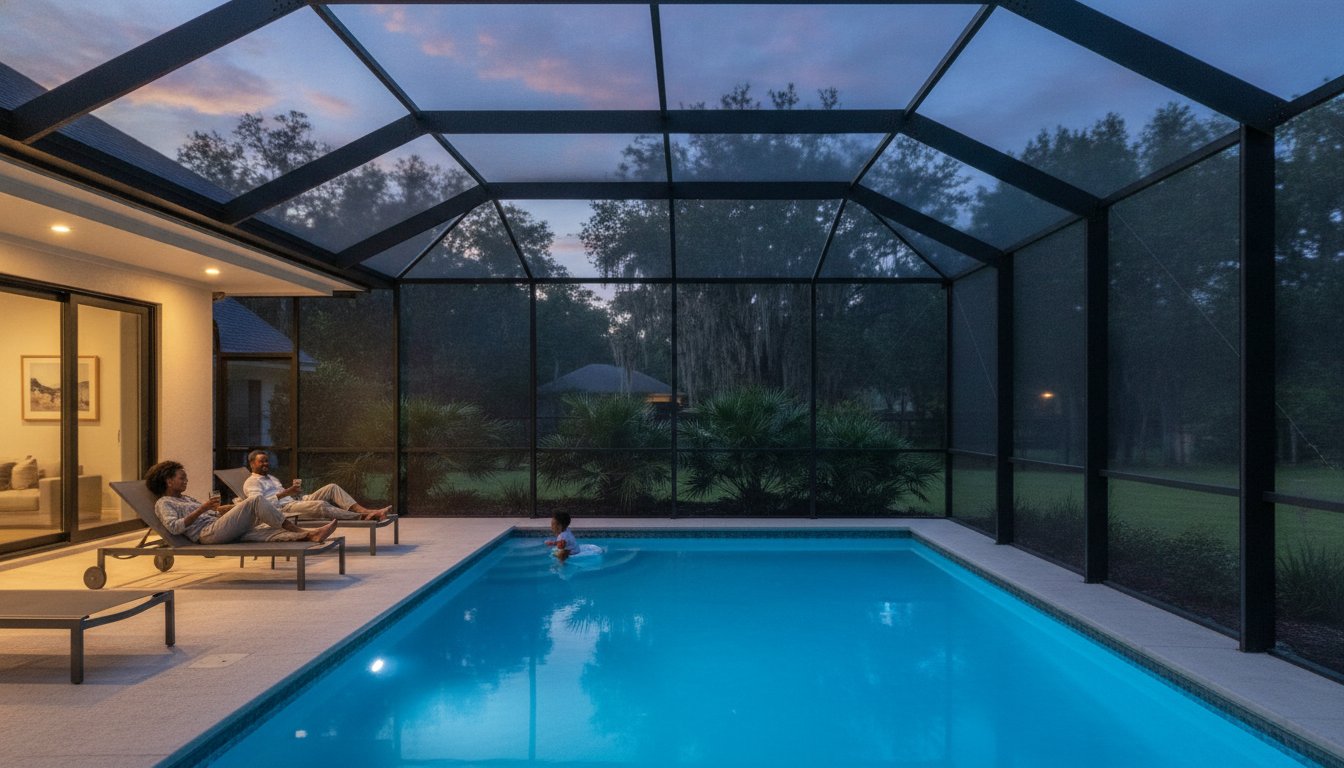
  • Everything You Need to Know About Screen Enclosures for Pools: A 2026 Guide

    Everything You Need to Know About Screen Enclosures for Pools: A 2026 Guide

    If you live on the Gulf Coast, your backyard isn’t just a place to relax; it’s a battleground against pine needles, swarming mosquitoes, and the relentless sun. Most homeowners accept that owning a pool means spending more time skimming debris than actually swimming. You likely agree that the constant battle with biting flies and rising chemical costs due to UV-driven chlorine evaporation takes the joy out of your outdoor space. This guide will show you how custom-engineered screen enclosures for pools can eliminate these headaches while adding significant property value to your home.

    We’ll walk you through the critical 2026 updates to building codes and ASCE 7-22 wind load requirements that affect every project from New Orleans and Metairie to Gulfport and Biloxi. You’ll learn how the right structural attachment and high-performance mesh can withstand 160 mph winds and provide a durable, code-compliant retreat. From understanding regional engineering standards to choosing materials that resist saltwater corrosion, this article covers everything you need to build a structure that lasts.

    Key Takeaways

    • Learn how custom-engineered screen enclosures for pools create a debris-free environment while providing total protection from mosquitoes and wasps.
    • Understand the structural science behind hurricane-ready designs, focusing on gusset plates and bracing that meet 2026 Gulf Coast wind load codes.
    • Discover how specialized mesh reduces chemical costs by blocking UV-driven chlorine evaporation and shielding your pool from harmful solar rays.
    • Gain insights into long-term maintenance, including the expected lifespan of aluminum frames and the safest methods for removing pollen and algae.
    • Identify the essential criteria for selecting a specialty contractor, such as verifying regional licensing and experience with local building code compliance.

    What Are Screen Enclosures for Pools and Why Do They Matter?

    A pool enclosure is a structural investment that transforms a high-maintenance water feature into a functional outdoor living space. Technically defined, these structures consist of a custom-built aluminum framework that supports specialized mesh panels. For families across Louisiana, Mississippi, and Alabama, screen enclosures for pools serve as the first line of defense against the unique environmental challenges of the Gulf Coast. Whether you’re dealing with the aggressive mosquitoes of Metairie or the constant pine needle fall in Slidell, a properly built cage keeps your water clean and your patio pest-free.

    It’s common to hear these structures called “pool cages,” but they differ significantly from a standard screen room or a Lanai. While a lanai is typically a covered porch integrated into the home’s roofline, a pool enclosure is a detached or semi-detached structure designed to handle the massive surface area of a pool deck. In communities like Gulfport and Biloxi, where wind speeds and salt spray are constant factors, these enclosures require specialized engineering that a standard patio cover simply doesn’t possess. Working with gulf coast pool enclosure specialists who understand the unique demands of salt air, high winds, and regional building codes ensures your structure is built to endure rather than just to impress.

    The Anatomy of a High-Quality Enclosure

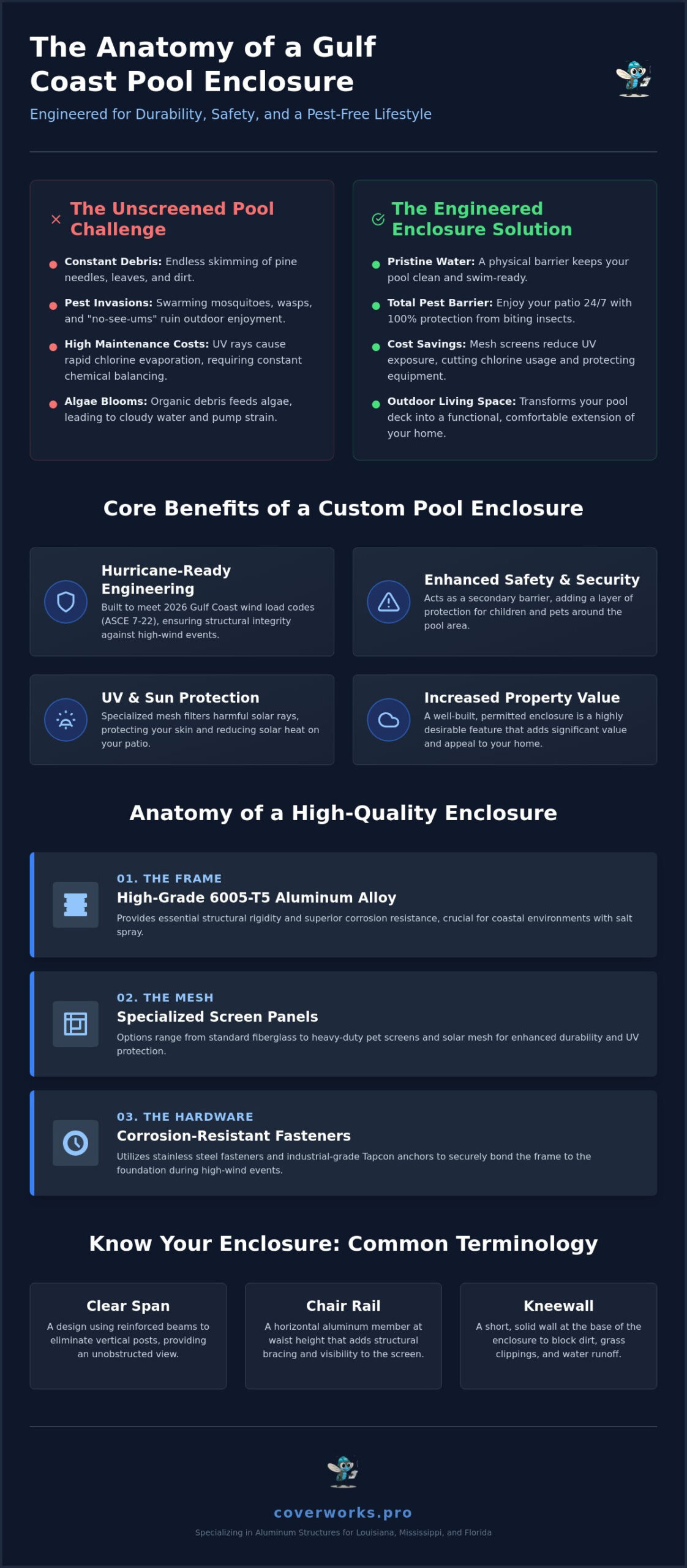
    The integrity of the structure depends on three main components. First, the aluminum alloy must be high-grade, such as 6005-T5, to provide the necessary rigidity without succumbing to corrosion. Second, the screen mesh should be selected based on your specific needs. While fiberglass is the standard, heavy-duty pet screens or solar mesh offer better durability and UV protection. Finally, the hardware matters. We use stainless steel fasteners and industrial-grade Tapcon anchors to ensure the frame remains securely bonded to your concrete foundation during high-wind events.

    Common Terminology for Homeowners

    • Clear Span: A design that uses reinforced beams to eliminate vertical support posts, providing an unobstructed view of your landscape.
    • Chair Rail: A horizontal aluminum member installed at waist height. It provides structural bracing and prevents people or pets from accidentally walking into the screen.
    • Kneewall: A solid panel, usually 12 to 24 inches high, installed at the bottom of the enclosure to block dirt, grass clippings, and water runoff from entering the pool area.

    The Core Benefits of Installing a Screened-In Pool Enclosure

    Investing in screen enclosures for pools is about more than just keeping leaves out of the water; it is about reclaiming your outdoor lifestyle. In the humid climates of New Orleans, Metairie, and the surrounding Gulf Coast, an open pool often feels like a liability. Between the swarming mosquitoes and the relentless heat, many homeowners find they rarely use the space they worked so hard to build. A custom enclosure transforms that area into a climate-controlled sanctuary that functions as a seamless extension of your home.

    Pest control is the most immediate advantage. Traditional bug sprays and candles only offer temporary, localized relief. A professionally installed pool cage provides a 100% mechanical barrier against mosquitoes, wasps, and those aggressive “no-see-ums” that plague Slidell and Biloxi. Beyond insects, the structure serves as a filter for organic debris. Pine needles, oak leaves, and even local wildlife like frogs are kept out of your skimmer baskets. This reduction in organic matter prevents algae blooms and significantly extends the life of your pool’s filtration pump.

    The Southern sun is a primary driver of high maintenance costs. Direct UV exposure triggers rapid chlorine evaporation, forcing homeowners to constantly rebalance their water chemistry. By installing a high-quality mesh, you create a filter that reduces solar intensity. This helps maintain stable chemical levels and protects your skin from the peak afternoon sun. Our designs prioritize these functional benefits while adhering to the Florida Building Code for screen enclosures, ensuring the structure remains stable even as it supports specialized, wind-resistant fabrics. If you’re tired of the constant skimming and chemical adjustments, it may be time to discuss a custom enclosure design with an experienced specialist.

    Enhanced Safety and Privacy

    Modern enclosures act as a vital secondary safety barrier. While local codes require fences, a lockable, self-closing screen door adds an extra layer of protection for children and pets. For those with close neighbors in densely populated areas like Metairie, we can integrate “Florida Glass.” This vinyl-laminated mesh is opaque, providing total privacy for the lower sections of your enclosure while keeping the view open above.

    Extending Your Outdoor Living Season

    An enclosure creates a “transition space” that stays significantly cooler than an open deck. By breaking the direct line of sight from the sun, the mesh reduces the “heat island” effect on your concrete or Kool Deck surfaces. This allows you to enjoy your patio in July and August without burning your feet. It also means you can enjoy a swim during a light summer rain without being swarmed by bugs the moment the clouds break.

    Engineering Screen Enclosures for Pools: Wind Loads and Roof Styles

    In the Gulf Coast, building screen enclosures for pools isn’t just about aesthetics; it’s about survival. Wind loads are calculated based on the ASCE 7-22 standard, which requires structures in coastal areas like Gulfport and Biloxi to withstand 150 to 160 mph gusts. Unlike a solid wall, the mesh in an enclosure allows some air to pass through, yet the frame still experiences significant pressure. We utilize site-specific engineering to ensure that an installation in New Orleans meets the same rigorous safety standards as a project closer to the open water. This precision ensures your structure remains standing when regional weather turns severe. Understanding how gulf coast pool enclosure specialists engineer for wind, salt, and style can help you appreciate why material selection and structural detailing are non-negotiable in this region.

    To achieve this level of resilience, we incorporate heavy-duty uprights and specialized bracing. Gusset plates, which are thick aluminum plates that reinforce the corners where beams meet, are essential for maintaining structural geometry under stress. We also utilize K-bracing throughout the walls to prevent the frame from racking or twisting during a storm. This level of detail ensures compliance with the 2026 International Building Code (IBC) and local municipal requirements. Proper engineering means the difference between a permanent addition and a structure that becomes a liability during hurricane season. For a deeper look at how architectural style and structural engineering intersect, explore our guide to custom pool cage design for Gulf Coast homes, which covers the latest inspiration and site-specific techniques for 2026.

    Popular Roof Styles and Structural Profiles

    Choosing the right roof style is a balance between your home’s architecture and the interior volume you desire. Each geometry offers different benefits regarding wind resistance and water drainage. With over 25 years of experience, we help homeowners select the design that best fits their property.

    Roof Style Primary Benefit Structural Profile
    Mansard Maximum interior space and height. Flat top with four sloped sides; the most popular choice for a spacious feel.
    Gable (A-Frame) Matches residential rooflines. Two sloped sides meeting at a center ridge; excellent for traditional homes.
    Dome or Hip Aerodynamic wind resistance. Sloped sides meeting at a peak or ridge; offers a unique, curved aesthetic.

    Structural Attachment and Foundation

    The point of failure for many substandard enclosures is the connection to the home. We use a “Super Gutter” system, which is a heavy-duty aluminum structural gutter that supports the weight of the enclosure while managing roof runoff. Anchoring the structure to the concrete or Kool Deck is equally vital. We use stainless steel fasteners and industrial anchors to prevent lifting. A “floating” enclosure, which isn’t properly tied to a foundation or the primary structure, is a major safety risk that we never recommend for any project.

    Everything You Need to Know About Screen Enclosures for Pools: A 2026 Guide

    Maintenance, Longevity, and the Rescreening Process

    A professionally installed aluminum frame is engineered to last 25 years or more, but the lifespan of the mesh panels is shorter. While some online forums suggest screens only last five years, high-quality fiberglass mesh typically provides 10 to 12 years of service. In coastal communities like Gulfport and Biloxi, the combination of intense UV rays and salt air can accelerate the degradation of standard materials. Maintaining screen enclosures for pools involves regular care of both the structural frame and the screening material to ensure the investment remains secure and attractive.

    Aluminum care is relatively simple but essential for preventing oxidation. The powder-coated finish on your enclosure acts as a protective shield. Over time, salt deposits and environmental pollutants can create a chalky residue on the metal. Periodically rinsing the frame with fresh water and a mild, non-abrasive detergent will preserve the finish and maintain the structural integrity of the alloy. For the mesh, we recommend a soft-wash approach. Never use high-pressure washers, as the force can tear the fibers or dislodge the vinyl spline that holds the screen in place. A soft brush and a diluted bleach solution are usually enough to remove stubborn algae or pollen build-up.

    The Rescreening Lifecycle

    Identifying when you need a rescreen is vital for maintaining the tension that helps your enclosure withstand wind. If the mesh feels brittle to the touch or tears easily with a fingernail, the fiberglass has reached the end of its functional life. You might also see the spline popping out of the aluminum tracks. While a single torn panel can be patched, a full rescreen ensures uniform tension across the entire structure. This is also an ideal time to upgrade to “TuffScreen” for pet resistance or No-See-Um mesh to block the smallest biting insects common in the New Orleans and Slidell areas.

    Post-Storm Inspections

    After any significant wind event, a thorough inspection is the best way to prevent future structural failure. Check for loose bolts at the foundation and examine the purlins, which are the horizontal beams in the roof, for signs of bending or bowing. If the structure feels “shaky” or you notice compromised anchors, professional intervention is necessary. We often assist homeowners with documentation for insurance claims regarding pool enclosure screen repair to ensure the restoration meets current building codes. If you suspect your enclosure has sustained wind damage, schedule a professional inspection with our team to verify its structural safety.

    How to Choose the Right Pool Enclosure Builder

    Selecting a contractor for screen enclosures for pools requires more than just comparing bottom-line prices. Because these structures must function as engineered safety systems, your choice of builder determines whether your investment survives the next hurricane season. A qualified specialty contractor should demonstrate a deep familiarity with the structural demands of the Gulf Coast, from the expansive clay soils of Louisiana to the high wind zones of coastal Mississippi.

    Follow these five essential steps to vet any potential builder:

    • Verify Specialized Licensing: Ensure the company holds a specific license for aluminum specialty structures. General residential licenses often lack the necessary bonding for high-wind engineering.
    • Review Local Portfolios: Ask for examples of completed projects in communities like New Orleans, Slidell, or Biloxi. A builder with local experience will have a track record of structures that have already weathered regional storms.
    • Confirm Permitting Support: Your builder should handle all site plans, engineering stamps, and municipal permits. If a contractor asks you to pull the permit yourself, it is a major red flag regarding their liability coverage.
    • Analyze Material Specifications: A professional quote should detail the aluminum alloy grade, the specific mesh brand, and the type of fasteners used. Avoid vague estimates that only provide a total cost.
    • Check Warranty Terms: Look for written guarantees that cover both the powder-coated aluminum finish and the labor for the screen installation.

    The Importance of Local Expertise

    National chains often use “one-size-fits-all” designs that don’t account for the unique soil conditions and wind speed maps of our region. Experienced pool enclosure builders in Mississippi understand that a structure in Gulfport requires different anchoring than one in an inland area. Local expertise also means faster project timelines, as established contractors know exactly how to navigate the permitting requirements of specific parishes and counties. At CoverWorks Inc., we prioritize this regional knowledge, offering same-day quotes and personalized support to keep your project on track.

    Making the Final Decision

    When you evaluate the cost of pool enclosures in Louisiana, consider the long-term value beyond the initial construction. A well-engineered enclosure can increase your property value by 5% to 10% while slashing your weekly maintenance hours. Once your design is approved and permits are secured, the physical installation typically moves quickly, leading to a final walkthrough where every fastener and screen spline is inspected for precision. Ready to transform your backyard into a low-maintenance oasis? Contact CoverWorks Inc. for your free same-day quote and let our over 25 years of field experience work for you.

    Secure Your Backyard Investment with Professional Engineering

    A pool enclosure is more than just a convenience; it’s a structural safeguard for your home. By choosing custom-engineered screen enclosures for pools, you eliminate the daily burden of maintenance and provide your family with a pest-free environment that stands up to the harshest Gulf Coast weather. We’ve covered the importance of ASCE 7-22 wind load compliance and the long-term benefits of high-performance mesh, which together ensure your structure remains a durable asset for years to come.

    Success in these projects relies on precision, proper permitting, and a deep understanding of local building codes. With over 25 years of expert craftsmanship, CoverWorks Inc. specializes in hurricane-resilient engineering tailored to the unique needs of Louisiana, Mississippi, and Alabama. We take pride in delivering custom pool cage designs that prioritize structural integrity while enhancing your outdoor lifestyle.

    Don’t leave your outdoor comfort to chance or substandard installers. Get Your Free Same-Day Quote from CoverWorks Inc. today and begin the process of transforming your pool area into a reliable, low-maintenance retreat. We look forward to helping you build a structure that lasts.

    Frequently Asked Questions

    How much does a screen enclosure for a pool typically cost in 2026?

    The total investment for a pool cage depends on the square footage, the complexity of the roof style, and the specific wind load requirements of your parish or county. Custom features like clear-span beams or specialized privacy mesh will also influence the final price. Because 2026 building codes require more robust engineering for coastal zones, the cost of materials and professional labor reflects these higher safety standards.

    How long does it take to install a custom pool cage?

    The physical on-site construction of screen enclosures for pools usually takes three to five business days. However, the entire process from design approval to the final walkthrough takes longer because it includes engineering site plans and municipal permitting. Working with a contractor who understands the local building departments in New Orleans or Gulfport can help prevent unnecessary delays in the approval phase.

    Will a screen enclosure keep my pool water warmer or cooler?

    A screen enclosure generally keeps your pool water slightly cooler by blocking a percentage of direct UV radiation. This filtering effect reduces the “heat island” impact on your deck and prevents the water from reaching extreme temperatures in July and August. An added benefit of this shade is the significant reduction in chlorine evaporation, which lowers your monthly chemical costs.

    Do pool screen enclosures require a building permit in Louisiana or Mississippi?

    Yes, all structural aluminum enclosures require a building permit to ensure they meet regional wind load and safety codes. In areas like Slidell, Metairie, and Biloxi, these permits verify that the structure is engineered to withstand 150 to 160 mph gusts. A professional specialty contractor will handle the entire permitting process, including the submission of sealed engineering drawings to the local building department.

    What is the best screen mesh for high-wind hurricane zones?

    High-tenacity polyester mesh is the most durable choice for homes in hurricane-prone areas. These materials have a much higher burst strength compared to standard fiberglass mesh, making them more resilient during severe weather events. When paired with heavy-duty uprights and gusset plates, this specialized mesh helps the entire structure maintain its integrity under the pressure of Gulf Coast storms.

    Can I add a screen enclosure to an existing pool deck?

    You can certainly install an enclosure on an existing concrete or Kool Deck surface provided the foundation meets structural requirements. Our team inspects the thickness and condition of your current deck to determine if it can support the weight and wind uplift of the aluminum frame. In some cases, we may install reinforced footings or specialized anchors to ensure the structure remains securely bonded to the ground.

    How do I clean my pool screen without damaging it?

    The safest way to clean your enclosure is by using a soft-bristle brush and a mild detergent mixed with water. Avoid using high-pressure washers, as the concentrated force can tear the mesh fibers or pull the vinyl spline out of its track. A gentle soft-wash approach removes algae, pollen, and salt spray while preserving the tension and longevity of the screen panels.

  • Finding the Best Pool Enclosure Builders in Mississippi: A Homeowner’s Guide

    Finding the Best Pool Enclosure Builders in Mississippi: A Homeowner’s Guide

    A backyard pool should be a sanctuary, but in the humid Mississippi climate, it often feels like a full-time job spent skimming debris and fighting off swarms of mosquitoes. Most homeowners along the Gulf Coast understand the frustration of an outdoor space that becomes unusable the moment the sun goes down or a summer storm rolls through. Finding the right pool enclosure builders Mississippi residents can trust means looking for more than just a screen installer. It requires a partner who understands regional wind loads and precision engineering. You deserve a structure that protects your investment without making your backyard look like a cage.

    This guide will show you how to select a builder who balances storm-ready structural integrity with a custom aesthetic design that adds genuine value to your property. We’ll explore the critical technical standards for regions like Gulfport and Biloxi, from self-closing gate requirements to the durable aluminum frames that withstand our unique coastal environment. By the end, you’ll know exactly how to achieve a maintenance-free outdoor space that provides a seamless, elegant transition from your home to the water.

    Key Takeaways

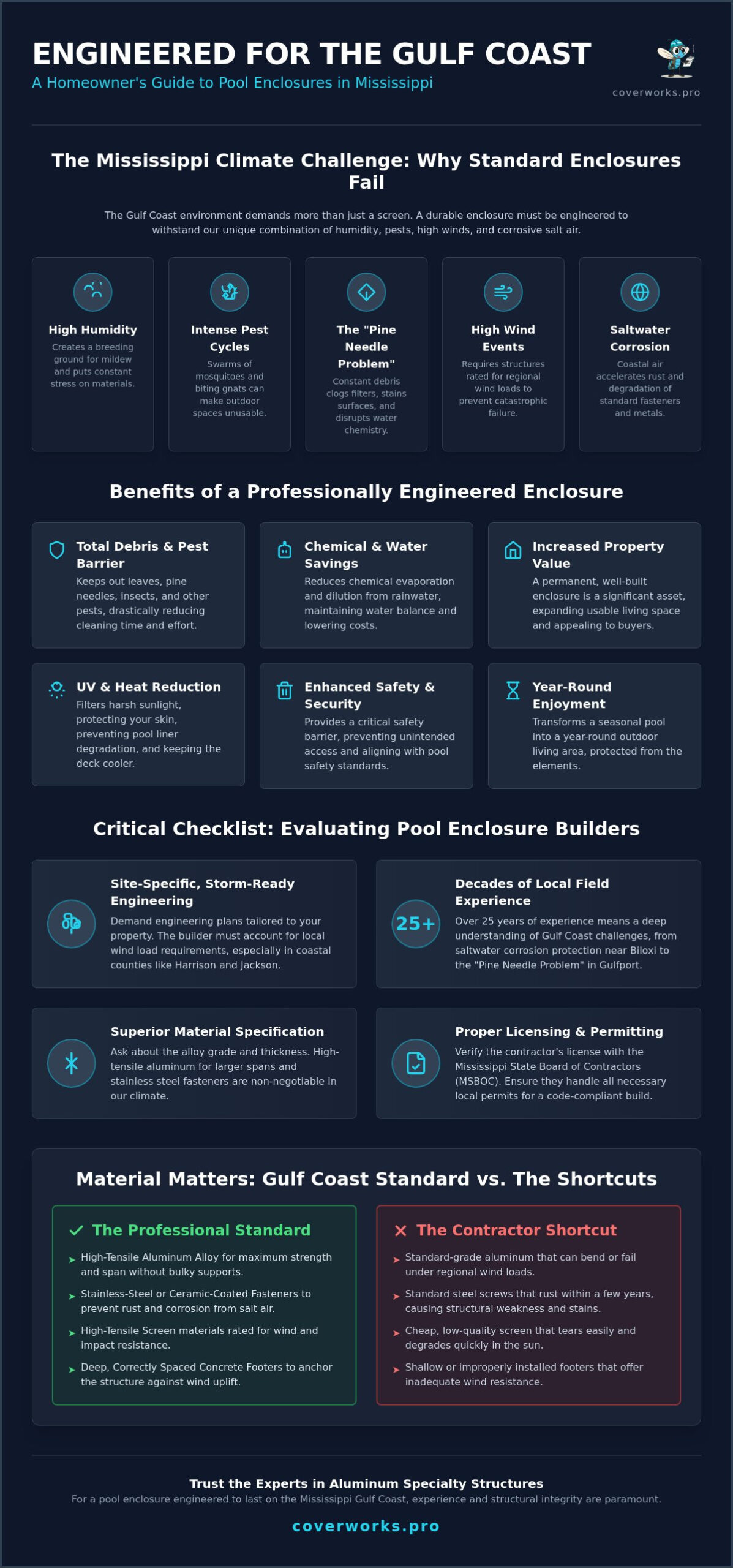
    • Learn how a professionally engineered enclosure manages Mississippi’s high humidity and pest cycles while extending the life of your pool’s chemicals and liner.
    • Discover the critical questions you must ask pool enclosure builders Mississippi to ensure your structure is rated for regional wind loads and local building codes.
    • Explore the aesthetic and functional benefits of Mansard roof styles and how advanced materials like Lexan can create a more versatile, year-round outdoor space.
    • Understand the specialized engineering and permitting steps required to build a durable, hurricane-resistant structure on the Gulf Coast.
    • See why over 20 years of local field experience is essential for choosing a contractor who prioritizes structural integrity and saltwater corrosion protection.

    Why Mississippi Homeowners Invest in Professional Pool Enclosures

    Owning a backyard pool in the Magnolia State offers a refreshing escape from the summer heat, but it also presents a unique set of maintenance challenges. From the sweltering humidity of the Pine Belt to the salt air along the Gulf Coast, the environment is constantly working against your investment. Mississippi homeowners often find that without a structural barrier, their swimming season is cut short by swarms of biting gnats or the relentless accumulation of organic debris. Partnering with experienced pool enclosure builders Mississippi allows you to reclaim your outdoor space by installing a precision-engineered shield that addresses these regional pains directly. Whether you’re located in the coastal communities of Gulfport and Biloxi or further inland, the need for a durable solution is universal.

    Beyond simple pest control, a professional enclosure acts as a defensive layer for your pool’s infrastructure. High UV exposure in the Deep South doesn’t just affect your skin; it aggressively degrades pool liners and causes expensive chemicals to evaporate at an accelerated rate. By filtering out direct sunlight, these structures help maintain water chemistry balance and prevent the premature fading of decorative concrete decks. This structural integrity is especially vital during high-wind events that are common in our region. Additionally, a permanent aluminum structure provides a critical safety barrier that aligns with recognized pool safety standards, giving families peace of mind while securing the property.

    Combating the Mississippi Climate

    The “Pine Needle Problem” is a specific frustration for residents in communities like Gulfport and Biloxi, where towering pines drop thin, acidic debris that can clog filtration systems and stain pool surfaces. A custom screen enclosure creates a physical block against this debris, along with the heavy seasonal rainfall that often dilutes pool chemicals. This protection ensures that the water remains crystal clear even after a typical afternoon thunderstorm. It’s about moving from a state of constant cleaning to a lifestyle of immediate enjoyment.

    Lifestyle and Property Value Improvements

    A well-designed enclosure creates a seamless transition between your indoor living room and the pool deck, effectively expanding your home’s usable square footage. In the Mississippi real estate market, these permanent aluminum structures offer a strong return on investment because they represent a maintenance-free lifestyle to potential buyers. Instead of spending your weekends skimming leaves and fighting mosquitoes, you can maximize your actual swimming hours. This shift from a seasonal hobby to a year-round outdoor living space is a significant enhancement to both your daily comfort and your property’s long-term marketability.

    Key Criteria for Evaluating Pool Enclosure Builders in Mississippi

    Selecting the right contractor is the difference between a structure that lasts for decades and one that fails during its first tropical storm. You need to look beyond the lowest price and evaluate the technical expertise of the team. Established pool enclosure builders Mississippi residents rely on should demonstrate a deep understanding of local soil conditions, moisture levels, and wind patterns. Before you sign a contract or pay a deposit, it’s essential to verify a contractor’s license to ensure they’re legally authorized to perform specialized aluminum work in the state. This step protects you from fly-by-night operations that often appear after major storm events.

    Experience in the field matters because the Gulf Coast presents structural challenges that inland builders might overlook. A company with over 25 years of field experience knows that saltwater corrosion near Biloxi or Gulfport requires specific stainless-steel fasteners and high-tensile aluminum alloys. Standard materials often degrade quickly in our salty, humid air. High-tensile aluminum provides the structural integrity needed for larger spans without requiring bulky, unsightly support beams. When you’re comparing quotes, ask specifically about the alloy grade and the thickness of the aluminum extrusions being used for your project. For a deeper understanding of how these structures are engineered to meet 2026 building codes and ASCE 7-22 wind load requirements, review this comprehensive guide to screen enclosures for pools that covers everything from material selection to Gulf Coast compliance standards.

    Storm-Ready Engineering Standards

    Mississippi’s building codes vary significantly between coastal counties like Harrison and Jackson and those further north. Your builder must provide site-specific engineering, especially for custom roof designs or large-scale enclosures. A “Master Craftsman” approach ensures that every structural attachment to your home is permit-compliant and designed to distribute wind loads safely. Proper engineering prevents the structure from pulling away from your house during a high-wind event. If you’re unsure about the requirements for your specific location, you can consult with a specialist to review the necessary wind-load ratings for your zip code.

    The “Same-Day Quote” Advantage

    In the construction industry, “contractor ghosting” is a common frustration for homeowners. Modern, reliable builders use digital measurement tools and satellite imaging to provide accurate estimates quickly, sometimes even on the same day. Fast communication is usually a reliable preview of how the builder will handle the actual construction phase. A comprehensive project proposal should include more than just a price; it needs to be a roadmap for the project. Look for these details in your estimate:

    • Wind load ratings specific to your local municipality.
    • Detailed material specifications for both the aluminum frame and the screen mesh.
    • A clear explanation of the permitting process and expected lead times.
    • Proof of current workers’ compensation and general liability insurance.

    By prioritizing builders who use technology to remain transparent and efficient, you can avoid the delays and hidden costs that often plague outdoor construction projects.

    Customizing Your Enclosure: Roof Styles and Deck Integration

    A high-quality pool enclosure is more than a simple screen box; it’s a custom-engineered extension of your home’s architecture. When you work with the right pool enclosure builders Mississippi homeowners trust, the design phase focuses on how the structure will interact with your existing roofline and outdoor living habits. Customization allows you to solve specific environmental problems, such as trapped heat or excessive UV glare, while creating a visually stunning space. Whether you’re in the historic districts of Natchez or the modern developments of Madison, your enclosure should complement your home’s aesthetic rather than detract from it. For homeowners who want to go further, exploring custom pool cage design options engineered specifically for Gulf Coast homes can reveal how site-specific structural planning and architectural inspiration work together to create a truly exceptional outdoor space.

    Mansard vs. Gable Roof Designs

    The Mansard roof is often considered the gold standard for pool enclosures because of its sophisticated four-sided hip design. It features a flat top and sloped sides, which creates a sense of immense interior volume and prevents that “caged-in” feeling. In contrast, a Gable roof offers a classic A-frame appearance that works well for homes with similar rooflines in communities like Biloxi or Gulfport. With over 25 years of field experience, we find that selecting the right pitch is critical for both aesthetics and structural performance.

    Design Feature Mansard Roof Style Gable (A-Frame) Style
    Interior Volume High; flat top creates a massive open feel. Moderate; sloped sides meet at a center peak.
    Storm Resistance Superior aerodynamics with a four-sided hip. Strong structural integrity for standard loads.
    Architecture Match Modern, Mediterranean, or Contemporary homes. Traditional, Ranch, or Steep-pitched homes.
    Debris Management Effective for general wind-blown leaves. Excellent for shedding heavy pine needles.

    Deck Resurfacing and Kool Deck Integration

    Experienced pool enclosure builders Mississippi residents hire understand that the deck is the foundation of the entire project. Integrating your aluminum structure with professional decorative concrete or Kool Deck resurfacing is a logical step that many homeowners overlook. Kool Deck is essential for the Mississippi climate because it significantly lowers the surface temperature of your pool deck. This makes it comfortable for bare feet even in direct sunlight. Our team ensures the structural attachment points of the enclosure are perfectly aligned with the newly resurfaced deck to provide a clean, finished look.

    For those seeking maximum comfort, upgrading from standard screen to advanced materials like Lexan and twin-wall polycarbonate roofs provides a significant advantage. These specialized roof panels offer superior thermal control, blocking the intense solar heat gain that makes Mississippi summers so oppressive. By integrating these solid or translucent panels, you create a climate-controlled environment that remains comfortable even during the hottest July afternoons. This level of customization transforms a standard screen room into a versatile glass room or hybrid space that functions effectively throughout the year.

    Finding the Best Pool Enclosure Builders in Mississippi: A Homeowner’s Guide

    Starting a major home improvement project can feel overwhelming, but a systematic approach ensures that your vision translates perfectly to your backyard. Professional pool enclosure builders Mississippi homeowners trust act as project managers who handle everything from the initial site survey to the final inspection. The process begins with a detailed consultation where we define your specific goals for shade, pest protection, and budget. It isn’t just about picking a style; it’s about evaluating how the sun hits your deck in the afternoon and where the prevailing winds originate during storm season. This data informs the custom blueprint that will eventually become your new outdoor sanctuary.

    Once the design is finalized, the focus shifts to the technical “red tape” that often stalls DIY projects. Because Mississippi is a “home rule” state, building codes and permit requirements change frequently between municipalities like Gulfport and Biloxi. A seasoned contractor understands these local nuances and prepares the necessary engineering documents to secure approvals quickly. This phase is critical for ensuring your structure is legally compliant and fully insured. To get your project moving without the typical industry delays, you should request a professional site inspection and estimate to establish a clear timeline for your build.

    From Blueprint to Backyard

    The transition from a 2D drawing to a physical structure requires precision material procurement. We use high-tensile aluminum extrusions and specialized mesh that are specifically rated for the Gulf Coast’s high-wind zones. During the construction phase, you can expect a methodical installation. Most projects follow a logical sequence: foundation preparation, frame assembly, structural attachment to the home, and finally, the tensioning of the screen panels. While we prioritize a fast turnaround to minimize disruption to your home life, we never sacrifice the “Master Craftsman” precision required for a permanent, storm-rated structure.

    The Importance of Rescreening Services

    Even the most durable aluminum frames eventually require maintenance to remain effective. Identifying when you need a pool enclosure rescreen is vital for maintaining the structural longevity of the entire system. In high-humidity areas, screen mesh can become brittle or pull away from the spline channels after several years of UV exposure. Professional rescreening doesn’t just improve the look of your enclosure; it restores the structural tension that helps the frame resist wind pressure. To keep your enclosure in peak condition, we recommend these maintenance tips:

    • Wash the aluminum frame with mild soap and water twice a year to remove salt and pollen.
    • Inspect the door hardware and self-closing latches monthly to ensure they meet safety standards.
    • Clear debris from the gutter systems to prevent water weight from stressing the structural beams.
    • Check the spline channels for any loose mesh that could catch the wind during a storm.

    By staying proactive with maintenance and choosing a builder who handles the entire lifecycle of the structure, you ensure your investment remains a source of relaxation rather than a list of chores.

    CoverWorks Inc.: Mississippi’s Expert for Custom Pool Enclosures

    Choosing a contractor for your outdoor project is a significant decision that impacts your property’s value and your family’s safety. CoverWorks Inc. has established itself as a leader among pool enclosure builders Mississippi residents trust by combining high-level engineering with personalized customer service. With over 25 years of field experience across Mississippi, Louisiana, and Florida, we’ve built a reputation for structures that don’t just look beautiful but also withstand the rigors of our coastal environment. From the saltwater air in Biloxi to the heavy pine debris in Slidell, we design every project with regional challenges in mind.

    Our expertise extends beyond simple screen rooms. We specialize in high-performance aluminum solutions, including custom Mansard roofs, insulated patio covers, and sophisticated glass rooms. We understand that a pool enclosure is a permanent addition to your home’s footprint. That’s why we prioritize structural integrity and building code compliance in every community we serve, including Gulfport, Mandeville, and New Orleans. We never recommend shortcuts that compromise safety, ensuring that your investment is protected against the high-wind loads common to the Deep South.

    Why Homeowners Choose CoverWorks Inc.

    Our “Master Craftsman” approach means we handle every detail of the construction process. We don’t just install a frame and leave; we provide a comprehensive suite of services that includes pool enclosure rescreening and decorative concrete resurfacing. This holistic method ensures that your new structure integrates perfectly with your existing pool deck. Our regional familiarity allows us to select materials that resist corrosion and UV degradation, providing a durable result that stands the test of time. We take personal responsibility for the quality of the structures we leave behind, treating your backyard as if it were our own.

    Start Your Transformation Today

    We’ve eliminated the frustration of the traditional construction bidding process. By leveraging modern technology, we can often provide a same-day quote for your project, allowing you to move from the planning phase to construction without unnecessary delays. Whether you’re interested in the sleek lines of a new pergola, the protection of a Lexan roof, or a complete pool enclosure, our team is ready to guide you through the possibilities. You can view our extensive portfolio of completed projects in communities like Metairie, Kenner, and Slidell to see the quality of our workmanship firsthand. Your vision for a maintenance-free, pest-free outdoor lifestyle is within reach. Get a same-day quote from CoverWorks Inc. to begin your backyard transformation with a team that values precision and reliability.

    Transform Your Backyard with Confidence

    Investing in a custom pool enclosure is about more than just keeping bugs away; it’s a strategic enhancement to your home’s longevity and your family’s quality of life. By choosing pool enclosure builders Mississippi homeowners trust for their technical precision, you ensure your structure is engineered to handle the unique wind loads and humidity of the Gulf Coast. Whether you opt for a sophisticated Mansard roof design or integrate advanced Lexan panels for thermal control, the result is a seamless, maintenance-free environment that maximizes your outdoor enjoyment throughout every season.

    CoverWorks Inc. brings over 20 years of regional experience to every project, specializing in storm-ready engineering and master-crafted aluminum structures across Mississippi, Louisiana, and Alabama. We’re committed to helping you navigate the complexities of local building codes and site-specific design with transparency and speed. Your vision for a pest-free, debris-free sanctuary is just a consultation away. Get Your Same-Day Quote from CoverWorks Inc. and take the first step toward a more comfortable, valuable outdoor living space today.

    Frequently Asked Questions

    How much does a pool enclosure cost in Mississippi?

    The total investment for a pool enclosure depends on the square footage of the deck, the height of the structure, and the specific materials chosen, such as standard screen or insulated roof panels. Because every project is custom-engineered to meet local wind-load requirements, pricing varies based on these structural specifications. We recommend a professional site inspection to provide an accurate estimate that accounts for your home’s unique architecture and soil conditions.

    Can a pool enclosure withstand a hurricane?

    Yes, when built by professional pool enclosure builders Mississippi residents trust for high-wind engineering. We utilize heavy-gauge aluminum extrusions and site-specific structural attachments designed to meet or exceed regional building codes. With over 25 years of field experience, we ensure every structure is built to withstand the pressure of tropical storms and high-wind events common along the Gulf Coast.

    Do I need a permit for a pool cage in Mississippi?

    Most municipalities in Mississippi require a building permit for any permanent aluminum structure. Permit requirements are enforced at the local level, and they often include proof of engineered wind-load ratings. Our team handles the entire permitting process, ensuring that your enclosure is fully compliant with local safety standards and that all necessary inspections are passed before the project is finalized.

    What is the best screen material for Mississippi pests?

    For homeowners concerned about gnats and “no-see-ums,” a 20×20 tiny mesh is the most effective choice. This tighter weave prevents the smallest local pests from entering while still allowing for adequate airflow. If you have pets or live in an area prone to falling debris, high-tensile polyester mesh is a durable alternative that offers superior tear resistance compared to standard fiberglass screen. To explore all of your mesh and material options in detail, our complete guide to screen enclosures for pools covers the full range of high-performance options available for Gulf Coast homeowners in 2026.

    How long does it take to install a custom pool enclosure?

    The physical construction phase typically takes between three and five days once the materials are delivered to your site. However, the total project timeline includes the design, engineering, and permitting phases, which can take several weeks depending on the local building department’s workload. We manage every step of this process to ensure your backyard transformation remains on schedule and meets our high craftsmanship standards.

  • Cost of Pool Enclosure in Louisiana: 2026 Price & Buying Guide

    Cost of Pool Enclosure in Louisiana: 2026 Price & Buying Guide

    You finally get the kids to bed and step out for a quiet evening swim, only to find the water choked with oak leaves and a swarm of mosquitoes waiting for their next meal. It’s a frustrating cycle that many homeowners from Metairie to Mandeville know all too well. While a pool should be a place of relaxation, the reality of Louisiana’s environment often means more time spent cleaning than swimming. If you’re tired of the constant upkeep and the anxiety that comes with every storm season, you’ve likely started researching the cost of pool enclosure Louisiana projects to reclaim your backyard.

    We agree that your outdoor space should feel like a sanctuary, not a second job. In this guide, we’ll explain the specific factors that drive the price of a professional installation, including the site-specific engineering required to meet 160 MPH wind load standards. You’ll learn how different roof styles and material choices impact both your initial budget and your long-term savings on chemicals and heating. We’ll also provide a clear look at local permitting requirements and why choosing a contractor with deep Gulf Coast experience is the only way to ensure your structure stands the test of time.

    Key Takeaways

    • Understand why site-specific engineering and parish wind-load codes are the primary drivers for the cost of pool enclosure Louisiana projects.
    • Learn why the Mansard roof style is the preferred choice for Gulf Coast homeowners seeking maximum structural integrity and easy debris management.
    • Discover how selecting the right mesh, such as Phifer TuffScreen or specialized fine mesh, protects your investment from heavy storms and local pests.
    • Find out how to navigate the complex permitting processes in communities like New Orleans and Mandeville by choosing experienced specialty contractors.
    • Gain insights into the long-term ROI of a custom enclosure, from lower pool heating expenses to a significant reduction in weekly maintenance.

    Understanding the Cost of Pool Enclosure in Louisiana

    When you start researching the cost of pool enclosure Louisiana projects, it’s vital to distinguish between a basic, light-duty screen room and a site-engineered aluminum structure. A professional enclosure is a custom addition designed to integrate with your home’s existing architecture while providing a permanent barrier against pests and debris. Because our region faces unique environmental pressures, every structure we build must adhere to the Louisiana State Uniform Construction Code. This ensures that your investment isn’t just a seasonal upgrade but a durable structural addition that enhances your property for decades.

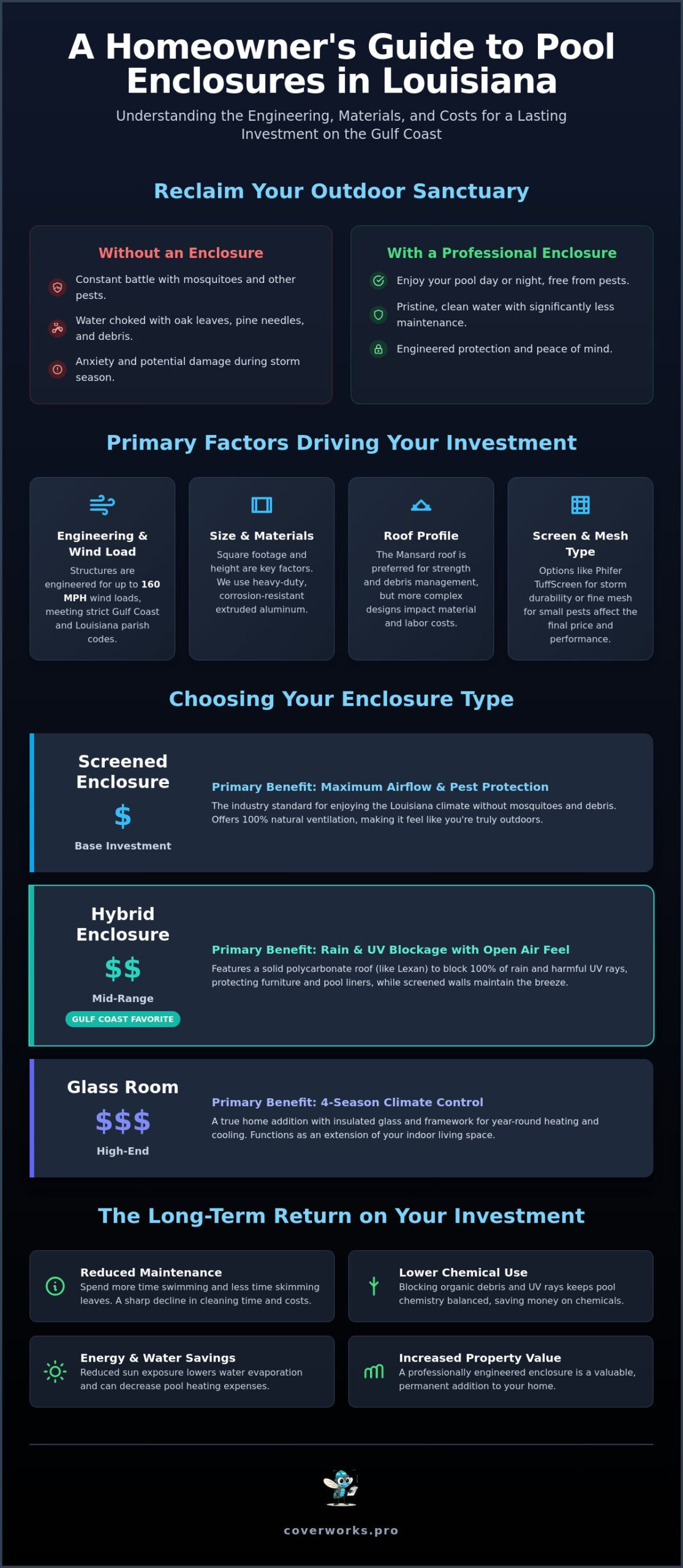
    Pricing for these structures isn’t uniform across the state. Geography plays a massive role because wind-load requirements vary significantly from parish to parish. For instance, a project in Metairie or Kenner may require different engineering specifications than one in Slidell or Mandeville. In coastal and high-wind zones, enclosures are often engineered to withstand wind loads of up to 160 MPH. This necessitates heavier aluminum extrusions and reinforced bracing, which are critical for long-term safety but do impact the initial material investment.

    Beyond the structural frame, these enclosures serve as a key component of swimming pool safety regulations by providing a secure, lockable perimeter. While the upfront cost is a consideration, the long-term ROI is found in reduced maintenance. By blocking oak leaves and pine needles, you’ll see a sharp decline in the time and money spent on professional cleaning and pool chemicals. Additionally, the shade provided by the mesh helps maintain water temperature and reduces evaporation during our intense summer months.

    Primary Factors Driving Your Total Investment

    Several variables determine the total cost of pool enclosure Louisiana homeowners should budget for. The square footage and the vertical height of the structure are the most direct drivers, as larger volumes require more aluminum and labor. We prioritize heavy-duty extruded aluminum because it offers the structural integrity needed to survive Gulf Coast storms without the risk of rust or corrosion. Other factors include:

    • Roof Profile: Complex designs like the Mansard require more material and precise labor than simple slant roofs.
    • Site Accessibility: Ease of entry for our crews and equipment in tighter urban lots can influence labor hours.
    • Engineering Standards: Meeting 160 MPH wind codes requires additional structural supports and heavier gauges.

    Screened Enclosures vs. Glass Rooms

    Choosing between a glass room vs screen enclosure depends on how you plan to use the space. A screened enclosure is the industry standard for those who want maximum airflow and total protection from mosquitoes. If you want a fully climate-controlled space that functions as a year-round room addition, a glass room is the appropriate choice. For many, a hybrid system using polycarbonate roofing provides the perfect middle ground.

    Enclosure Type Primary Benefit Ventilation Relative Cost
    Screened Enclosure Mosquito & Debris Protection 100% Airflow Base Investment
    Hybrid (Poly Roof) Rain & UV Blockage Wall Ventilation Mid-Range
    Glass Room 4-Season Climate Control Conditioned Air High-End

    At CoverWorks Inc., we often recommend Lexan or twin-wall polycarbonate roofs for clients who want to block 100% of rain and harmful UV rays while keeping screened walls to enjoy the evening breeze. This hybrid approach offers excellent protection for your pool liner and patio furniture while maintaining the open-air feel that makes Gulf Coast living so enjoyable.

    Engineering Roof Styles and the Cost of Pool Enclosure in Louisiana

    Designing a structure that remains standing after a major Gulf Coast storm requires more than just high-quality materials; it demands precise, site-specific engineering. Every project we undertake must adhere to the Louisiana State Uniform Construction Code. This regulatory framework ensures that residential structures are built to handle the intense wind pressures typical of our hurricane season. Because requirements change as you move from inland parishes to coastal zones, site-specific engineering drawings are a non-negotiable part of the cost of pool enclosure Louisiana homeowners must consider. These blueprints account for how the enclosure attaches to your specific home and ensure the frame can withstand wind loads reaching up to 160 MPH.

    The gauge of the aluminum used is another critical factor in performance and price. While some contractors might use thinner, non-structural material to lower their bid, we rely exclusively on heavy-gauge extruded aluminum. This material provides the necessary rigidity to prevent the frame from twisting or buckling under extreme pressure. While engineering fees and premium materials represent an upfront investment, they provide the peace of mind that your enclosure won’t become a liability when the weather turns. If you aren’t sure which specifications your specific parish requires, a professional site assessment can clarify the necessary standards for your property.

    The Mansard Roof: The Best Value for Storm-Prone Areas

    The Mansard roof is widely considered the gold standard for pool enclosures across Slidell and Mandeville. Its design features a flat top section with four sloping sides that meet the vertical walls. This specific geometry is highly effective at shedding wind lift, which is the primary force that tries to pull an enclosure off the ground during a storm. Beyond its structural strength, the Mansard style creates a sense of immense interior space and height. Because it involves more complex angles and additional aluminum beams, it does require more labor and material than simpler designs, but the durability it offers is unmatched.

    Gable and Slant Roofs: Budget-Friendly Alternatives

    For homeowners looking to match the existing lines of their house, a Gable roof is a popular choice. It features two sloping sides that meet at a center ridge, mimicking the peak of a traditional Southern home. This style is excellent for water runoff but can be more susceptible to wind pressure than a Mansard. In tighter urban spaces, such as the historic courtyards of New Orleans or smaller lots in Metairie, a Slant or Studio roof is often the most practical solution. These roofs slope in a single direction away from the house. While they are often the most budget-friendly option due to their simple design, they must still be built with heavy-duty bracing to meet local safety codes.

    Customization Options: Mesh Types and Deck Integration

    While the structural frame provides the foundation, your choice of finishing touches significantly influences the final cost of pool enclosure Louisiana projects. Most homeowners choose between bronze or white powder-coated finishes for their aluminum frame. Bronze is a popular choice for its ability to blend into the surrounding landscape, while white offers a crisp, clean aesthetic that complements many traditional Southern homes. These finishes aren’t just for looks; they provide a durable layer of protection against the humid Gulf Coast air, preventing the oxidation that often plagues lesser materials.

    The mesh you select is your primary defense against pests and debris. A standard 18/14 fiberglass mesh works well for many, but coastal Louisiana presents unique challenges. If you live near the wetlands or in communities like Slidell and Mandeville, you know the frustration of “no-see-ums.” These tiny biting gnats can fly right through standard screens. Upgrading to a specialized fine mesh is a worthwhile investment for being able to enjoy your pool at dusk without becoming a target for local insects. For a deeper look at how the right mesh and structural design work together, our comprehensive guide on screen enclosures for pools covers the latest 2026 building code updates and ASCE 7-22 wind load requirements in detail. This level of customization ensures that your outdoor space remains the sanctuary you intended it to be.

    Customizing your space doesn’t mean compromising on safety or legal requirements. Every component we install must adhere to the rigorous standards set by the International Code Council, which provides the framework for Louisiana’s mandatory building codes. This ensures that even with high-performance mesh upgrades or custom deck finishes, your structure remains legally compliant and structurally sound. We prioritize these standards to guarantee that your investment is built to last through many hurricane seasons.

    High-Performance Screen Mesh Upgrades

    For families with active dogs or cats, Pet Screen is a game-changer. It’s made from vinyl-coated polyester and is seven times stronger than standard mesh, easily resisting tears from claws and paws. We also offer UV-rated mesh that acts as a sunblock for your backyard, protecting your pool liner and expensive patio furniture from sun damage and fading. If your priority is the view, ClearView technology uses thinner, stronger strands to maximize your visibility of the landscape while keeping the bugs out.

    Total Transformation: Kool Deck and Decorative Concrete

    Many clients find that the best time to address their pool deck is during the enclosure installation. Bundling Decorative Concrete & Kool Deck Resurfacing into your project is often more cost-effective than hiring separate crews later. Kool Deck is essential for our 100-degree summers because it significantly lowers the surface temperature of the concrete, keeping it comfortable for bare feet. Beyond comfort, these finishes provide a slip-resistant texture that serves as a critical safety upgrade for any family pool area.

    Custom Pool Enclosure Installation in Louisiana: The 2026 Buying Guide

    The Installation Process: Permits to Final Inspection

    The transition from choosing a design to seeing it standing in your backyard is a multi-step process that requires careful coordination. While homeowners often focus on the visual result, the logistical side significantly affects the total cost of pool enclosure Louisiana projects. This is where the value of hiring experienced screen room contractors becomes clear. A professional team doesn’t just build; they manage the complex web of parish regulations and site-specific hurdles that can stall a project if handled incorrectly.

    In New Orleans, for example, permit fees for pool-related construction involve a $60 base fee plus $5 per $1,000 of the work’s cost. If your property sits within a local historic district, you’ll face a 50% surcharge. Navigating these costs and the associated paperwork in Slidell or Mandeville requires local knowledge. We’ve spent over 20 years building relationships with local building departments to ensure our clients’ projects move through the system without unnecessary delays. This proactive approach prevents the administrative bottlenecks that often plague less experienced builders.

    Timeline expectations vary based on the complexity of the engineering, but most projects follow a logical, steady path. From the initial engineering phase to the final screw, a standard installation can take several weeks of coordination. This includes time for the parish to review the plans and for the custom aluminum extrusions to be prepared. We believe in doing it right the first time, which means we never rush the engineering or permitting phases. Structural integrity is our top priority, and that begins with a foundation of legal and technical compliance.

    Step 1: Engineering and HOA Approvals

    Before the first piece of aluminum arrives at your home, we must secure the proper legal authorizations. CoverWorks Inc. handles all parish permits and HOA documentation on your behalf, which removes a massive burden from the homeowner. This phase involves drafting detailed blueprints that prove the structure meets the wind-load requirements for your specific area. Local regulations also dictate structure height and setbacks from property lines. Ensuring these details are perfect during the drafting phase prevents costly corrections during the final inspection.

    Step 2: Structural Construction and Safety

    Once permits are in hand, the physical build begins. Our crews take great care to protect your pool and surrounding landscaping during the construction phase. Precision assembly is the hallmark of a Master Craftsman installation. We focus on correct structural attachment to your home’s existing roofline or fascia to prevent future leaks and ensure long-term stability. The process concludes with a rigorous final walk-through where we verify door closures, check screen tension, and ensure every fastener is secure. If you’re ready to begin your backyard transformation, contact us today for a same-day quote.

    Why CoverWorks Inc. is the Leader in Louisiana Pool Enclosures

    With over 20 years of field experience across the Gulf Coast, including Louisiana, Mississippi, and Alabama, we understand that every backyard project is a significant investment. When calculating the cost of pool enclosure Louisiana residents often worry about hidden fees or long-term durability. CoverWorks Inc. eliminates that uncertainty by specializing in heavy-duty storm engineering and premium structural designs. Our team doesn’t just build structures; we create engineered solutions that protect your home and enhance your lifestyle for decades.

    Our same-day quote advantage is a cornerstone of our service model. We respect the homeowner’s time and provide clear, accurate pricing without the weeks of waiting often associated with custom construction. This efficiency is backed by a deep commitment to building code compliance and structural integrity. We never recommend shortcuts that compromise safety. Instead, we focus on precision attachment methods and high-grade materials that ensure your enclosure remains a permanent, beautiful part of your property.

    Local Expertise for Gulf Coast Challenges

    Living near the water in communities like Biloxi, Gulfport, or New Orleans requires a specific understanding of environmental stressors. We specialize in corrosion protection to combat the effects of saltwater air, ensuring your aluminum frame remains pristine. Our structures are engineered to withstand Florida-level wind loads, which is essential for the unpredictable weather patterns of the Northshore and surrounding parishes. This local knowledge allows us to design enclosures that perfectly match the architectural styles of Mandeville and Slidell while providing superior protection.

    The Long-Term Value of Your Investment

    A high-quality aluminum structure is an investment that pays dividends in property resale value. Real estate professionals often note that a well-maintained pool enclosure is a major selling point for Louisiana homes, as it offers a maintenance-free outdoor sanctuary. Beyond the financial ROI, there is the simple peace of mind that comes with a structure designed for a 20+ year lifespan. If you’re ready to transform your backyard into a bug-free, storm-ready oasis, it’s time to speak with a professional who understands the unique demands of our region.

    Get Your Same-Day Pool Enclosure Quote from CoverWorks Inc. and start building your custom outdoor sanctuary today.

    Secure Your Maintenance-Free Backyard Sanctuary

    Investing in a custom aluminum structure is about more than just aesthetics. It’s about engineering a space that stands firm against 160 MPH wind loads. As we’ve explored, the cost of pool enclosure Louisiana projects is influenced by site-specific factors like parish permitting fees and your choice of structural roof profiles. By selecting a high-performance Mansard design and specialized mesh, you ensure that your pool remains a low-maintenance retreat rather than a source of constant cleaning. These structures provide a permanent solution to regional challenges like mosquitoes and heavy debris.

    At CoverWorks Inc., we bring over 20 years of local experience and a commitment to structural integrity to every build from New Orleans to the Northshore. We include site-specific engineering with our projects and specialize in Mansard roof designs that offer maximum storm resistance. Our team handles the technical blueprints and permit navigation so you can focus on enjoying your bug-free outdoor living area. Don’t let another season of oak leaves and pine needles keep you indoors.

    Request Your Same-Day Quote for a Custom Louisiana Pool Enclosure and take the first step toward a durable, maintenance-free lifestyle. We look forward to helping you build a structure that lasts for decades.

    Frequently Asked Questions

    What is the average cost of a pool enclosure in Louisiana?

    While specific pricing depends on your backyard’s dimensions, the cost of pool enclosure Louisiana homeowners invest in is primarily driven by the structural requirements of your specific parish. Engineering for high-wind zones requires heavier aluminum beams and specialized fasteners, which influences the final budget. We provide custom quotes that account for these site-specific variables to ensure your structure is both legal and durable.

    Do I need a building permit for a pool cage in New Orleans or Slidell?

    Yes, every permanent aluminum structure in Louisiana requires a building permit and must meet local wind-load engineering standards. In areas like New Orleans, permit fees are based on the total value of the work, and specific historic district surcharges may apply. We handle the entire permitting process, including the drafting of site-specific engineering plans, to ensure your project meets all local safety codes.

    How much wind can a CoverWorks Inc. pool enclosure withstand?

    Our enclosures are designed and engineered to withstand wind speeds of up to 160 MPH. This level of structural integrity is essential for Gulf Coast communities that face frequent hurricane-force winds. We use heavy-gauge extruded aluminum and reinforced bracing to ensure the frame doesn’t twist or fail when the weather turns severe.

    Does a pool enclosure increase my home’s property value?

    A professionally installed aluminum enclosure is a significant asset that increases a home’s marketability and resale value. Real estate experts recognize these structures as a premium feature because they extend the usable living space and lower the buyer’s future maintenance costs. By keeping out organic debris and UV rays, the enclosure also preserves the lifespan of the pool’s interior finish.

    How long does a pool enclosure installation typically take?

    The physical construction phase on your property usually takes between one and two weeks. However, the total project timeline includes several weeks of pre-construction work, such as securing parish permits and custom material fabrication. We maintain a steady, logical workflow to move your project from the initial engineering phase to the final inspection as efficiently as possible.

    Can I install a screen enclosure on my existing pool deck?

    In most cases, we can utilize your existing concrete deck if it meets the structural thickness required for heavy-duty anchoring. During our initial site assessment, we’ll verify the integrity of your current deck to ensure it can support the wind-load demands of the new frame. If the deck requires resurfacing or expansion, we can integrate those services into the total project plan.

    What is the best roof style for a pool enclosure in a hurricane zone?

    The Mansard roof is the gold standard for storm resistance due to its aerodynamic, sloped design. This geometry is highly effective at shedding wind lift, which is the primary force that causes structural failure during Gulf Coast storms. While other styles like Gable or Slant roofs are available, the Mansard offers the best combination of structural strength and interior volume.

    Does CoverWorks Inc. offer same-day quotes for Louisiana homeowners?

    Yes, CoverWorks Inc. provides same-day quotes to help you understand the cost of pool enclosure Louisiana projects without the typical weeks of waiting for a contractor callback. We respect your time and provide clear, accurate pricing based on your specific backyard dimensions and local building code requirements.