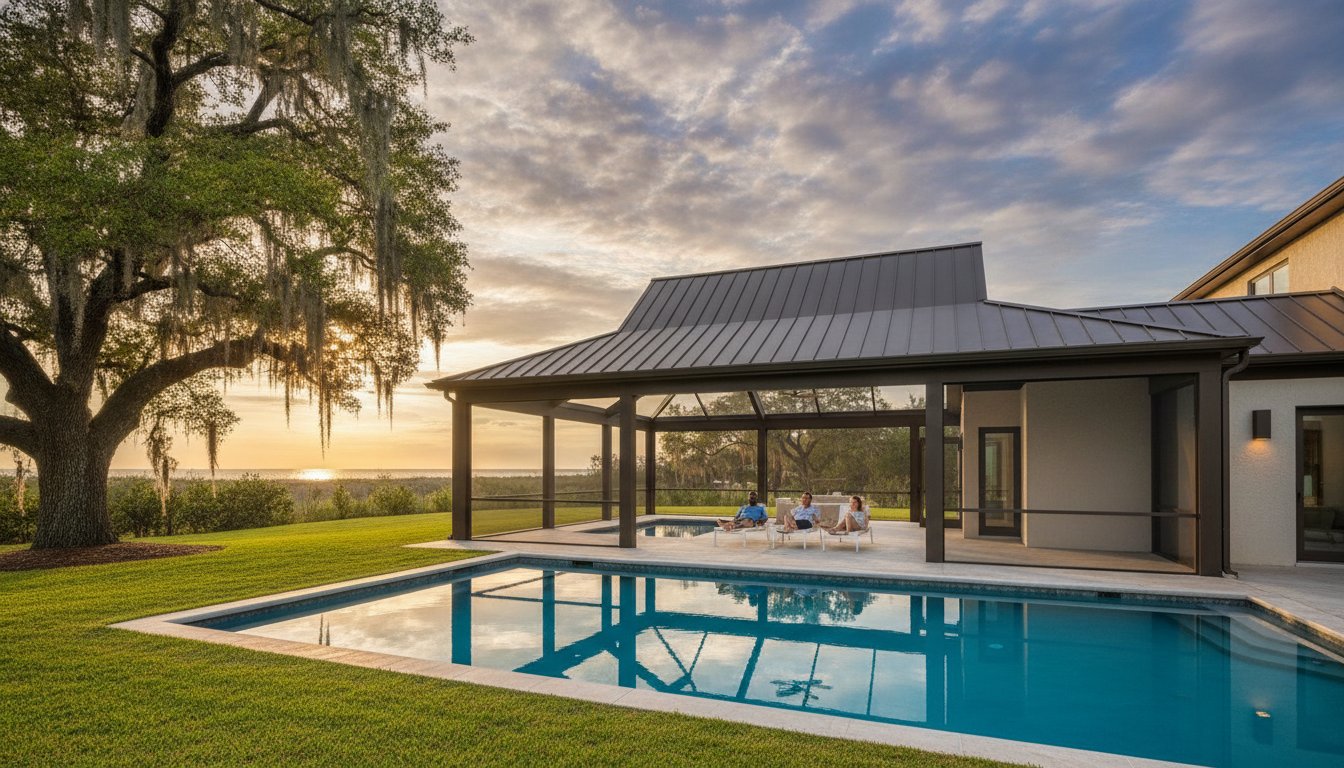
A pool enclosure along the Gulf Coast isn’t just a luxury; it’s an engineered safety structure that must endure some of the most punishing environmental conditions in the country. You’ve likely seen the aftermath of a storm where substandard screens were shredded or entire frames collapsed because they weren’t built for local wind loads. It’s stressful to invest in your home only to worry that salt air will eat through the fasteners or that a hurricane will turn your patio into a debris field. Partnering with experienced gulf coast pool enclosure specialists ensures your project is designed for survival, not just aesthetics.
We understand the technical demands of the 9th Edition of the Florida Building Code and the specific windstorm requirements for coastal Mississippi and Louisiana. You’ll learn how expert engineering and regional specialization protect your outdoor investment against the unique challenges of the Gulf Coast climate. We’re going to break down the importance of site-specific wind load calculations, corrosion-resistant materials, and the permitting process that keeps your property compliant and secure.
Key Takeaways
- Understand why High-Velocity Hurricane Zone (HVHZ) standards are essential for structures built to withstand extreme wind-driven rain and coastal salt spray.
- Discover the technical benefits of using 6063-T6 structural aluminum and specialized bracing to prevent corrosion and structural failure during high-wind events.
- Learn why gulf coast pool enclosure specialists recommend Mansard roof designs as the gold standard for superior aerodynamic strength and modern aesthetic appeal.
- Identify the critical state-specific licensing and insurance requirements you must verify to protect your property and ensure full building code compliance.
- See how 25 years of local expertise in custom engineering helps maintain property value through durable, site-specific aluminum construction across the Gulf Coast.
The Essential Role of Gulf Coast Pool Enclosure Specialists
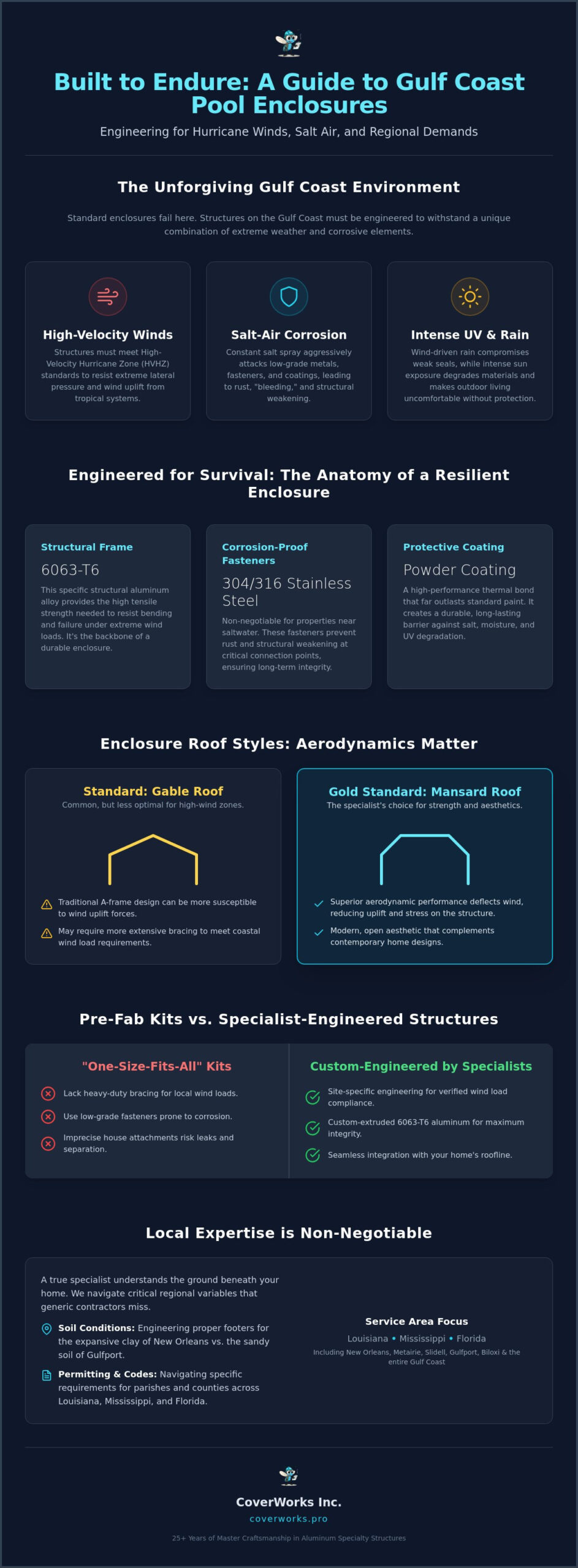
A true professional in this field understands that the Gulf Coast environment is a laboratory for structural stress. To be classified among elite gulf coast pool enclosure specialists, a contractor must be deeply versed in High-Velocity Hurricane Zone (HVHZ) standards. These aren’t just suggestions; they’re rigorous engineering requirements designed to keep aluminum structures anchored when wind speeds climb. While an inland enclosure might focus on keeping leaves out, a coastal structure must incorporate Hurricane-proof building methods to withstand the lateral pressure and uplift of a tropical system.
Standard screen enclosures often fail because they treat the Gulf Coast like any other region. Salt spray acts as a constant abrasive, eating through low-grade fasteners and weakening the finish on standard kits. Wind-driven rain can push through poorly designed seals, while high-velocity gusts can bow frames that lack specialized bracing. Beyond structural survival, these enclosures provide a massive lifestyle upgrade. They offer 24/7 protection from the aggressive mosquitoes common in Southern Louisiana and Mississippi, while significantly reducing UV exposure for swimmers. This creates a “Total Backyard Transformation,” turning a simple pool into a year-round outdoor living room.
Why Regional Expertise Matters
Foundational stability varies wildly between New Orleans and Biloxi. In Metairie, we deal with soft, expansive clay that requires specific footer depths to prevent shifting. Moving toward the Mississippi coast, the soil becomes sandier, demanding different anchoring techniques. Local gulf coast pool enclosure specialists must navigate these geological differences while managing the specific permitting requirements of various parishes and counties. For instance, the structural demands in Slidell might differ slightly from those in Gulfport. You can find more detail on these regional variations in our guide on screen enclosures for pools.
The Problem with “One-Size-Fits-All” Kits
Pre-fabricated kits often prioritize low cost over longevity, frequently lacking the heavy-duty bracing required for local wind loads. We utilize custom-extruded aluminum with a 6063-T6 temper to ensure every beam and upright has the structural integrity to last for decades. A major failure point for generic enclosures is the house attachment. Without precise engineering, these connections can become sources of roof leaks or structural separation. A specialist designs every attachment point to integrate seamlessly with your existing roofline, ensuring the enclosure remains a permanent, safe addition to your home.
Engineering for the Gulf: Wind Loads and Corrosion Protection
Engineering a structure for the Gulf Coast requires a deep understanding of aerodynamics and material science. Wind load is the pressure exerted by wind on a structure, calculated in pounds per square foot. In our region, wind doesn’t just push against the side of a screen; it creates significant uplift, essentially trying to peel the roof off the enclosure. To counter these forces, gulf coast pool enclosure specialists utilize 6063-T6 structural aluminum alloy. This specific temper provides the tensile strength necessary to maintain structural integrity under the extreme pressures of the 2026 building cycle. Every project we undertake includes site-specific engineering stamps to ensure compliance with the latest safety standards and insurance requirements.
Battling Salt-Air Corrosion
Living near the water means dealing with a constant salt-heavy mist that can devastate inferior materials. While standard paint might look good initially, it often flakes and peels when exposed to the brine. We prioritize high-performance powder coating, which creates a thermal bond with the aluminum for superior longevity. For properties within five miles of the coast, 304 or 316 stainless steel fasteners are non-negotiable to prevent “bleeding” and structural weakening. Implementing Coastal corrosion protection strategies is the only way to ensure your investment doesn’t rust away. We often recommend pairing these structures with Kool Deck resurfacing to protect your concrete slab from salt degradation while keeping the surface cool under the summer sun.
Hurricane-Ready Bracing Systems
The “cage” of your enclosure relies on a network of K-braces and gusset plates to manage lateral movement during a storm. These components distribute the force of the wind across the entire frame rather than letting it concentrate on a single joint. We also use high-strength mesh secured with internal splines to prevent screen blowouts, which can lead to a dangerous pressure imbalance inside the structure. If you’re planning a new build, exploring custom pool cage design options can help you balance these technical requirements with your home’s unique architecture. If you’re ready to see how these engineering principles apply to your backyard, you can always reach out to CoverWorks Inc. for a professional assessment.
Comparing Enclosure Styles: Mansard vs. Gable Roofs
Choosing the right roof profile is a critical decision that impacts both the durability and the maintenance schedule of your structure. As gulf coast pool enclosure specialists, we evaluate your home’s existing architecture alongside regional wind patterns to recommend the most stable geometry. While aesthetics play a role, the way wind interacts with the roof surface determines whether your enclosure survives a tropical event or suffers structural fatigue. Every angle is calculated to minimize resistance and maximize structural lifespan.
The Mansard roof is widely regarded as the gold standard for high-wind environments. Its four-sloped design allows wind to glide over the structure from any direction, significantly reducing the lateral pressure that can plague less aerodynamic shapes. For a detailed breakdown of how this design balances hurricane-rated engineering with architectural style, our guide on mansard roof pool enclosures covers the full anatomy of this premier construction approach. In contrast, a Gable roof features two slopes meeting at a central ridge, offering a classic vaulted feel that integrates perfectly with traditional home styles. For modern architectures or tighter footprints, a Slant or Shed roof provides a clean, single-slope transition that works well with contemporary home lines.
Geometry also dictates how much time you’ll spend cleaning. Steeper pitches, typical of Mansard and Gable designs, allow oak leaves and pine needles to slide off more easily during a rainstorm. Flat or low-slope sections tend to trap organic debris. This trapped material holds moisture against the mesh, which can lead to premature screen failure or frame staining if not cleared regularly. Understanding these maintenance trade-offs is a vital part of the design process.
The Mansard Roof Advantage
This design creates a sense of luxury and openness while providing the highest level of structural rigidity. Because the load is distributed across four sloping sides, the frame is naturally more resistant to twisting and lateral sway. This aerodynamic efficiency is why we often recommend Mansard roof pool enclosures for coastal properties where wind gusts are most frequent and severe. It offers a sophisticated silhouette that complements high-end custom homes across the Gulf South.
Custom Engineering for Complex Attachments
Integrating an enclosure with a two-story home or a complex roofline requires master-level precision. We use specialized flashing and custom-height walls to ensure a watertight seal where the aluminum meets your home’s fascia. Many homeowners now opt for a hybrid approach, combining insulated patio covers for deep shade with a screen enclosure for mosquito-free swimming. This configuration requires heavy-duty gutter systems designed to handle the torrential downpours typical of New Orleans and Gulfport, preventing water from backing up into your living space.
How to Vet Your Pool Enclosure Contractor
Selecting a contractor for a coastal project is fundamentally different from hiring someone for an inland renovation. Because these structures must withstand extreme pressures, your chosen gulf coast pool enclosure specialists should possess state-specific residential specialty licenses. In Louisiana, this involves registration with the State Licensing Board for Contractors, while in Mississippi, the Board of Contractors oversees these requirements. Don’t simply take their word for it; verify their standing and ensure they carry both active general liability and workers’ compensation insurance. This protects you from financial liability if an accident occurs on your property during the installation of your pool enclosure or screen system.
Experience is best measured by history and local performance. Ask to see a portfolio of structures that successfully weathered specific regional events like Hurricane Zeta in 2020 or Hurricane Ida in 2021. If a builder’s cages survived these high-wind events in communities like Gulfport or Slidell, it’s a strong indicator of their engineering competence. During your initial consultation, pay attention to the depth of the “same-day quote” process. A professional estimate should provide more than just a final price; it should include technical details regarding wind load ratings, aluminum alloy grades, and the specific anchoring methods they intend to use for your foundation.
Questions to Ask Before Signing
- Do you handle all permitting and engineering stamps? Local requirements in Metairie can differ significantly from those in Biloxi. Your contractor should manage the entire process with the local parish or county office to ensure legal compliance.
- What is the specific wind rating of the mesh and frame? You need to ensure the quoted materials meet the 2026 building code requirements for your specific distance from the shoreline.
- How do you handle structural attachment? Ask for a detailed explanation of how they will flash and seal the connection to your existing roofline to prevent future leaks and wood rot.
Red Flags in Coastal Construction
Be wary of any contractor who suggests skipping the permitting or engineering phase to save money. This is a major safety risk and can lead to insurance claim denials if a storm causes damage later. Another warning sign is a quote that lacks specificity regarding materials. If the contract doesn’t explicitly state the use of 6063-T6 aluminum or stainless steel fasteners, they might be cutting corners with inferior components that will fail in the salt air. For more guidance on selecting a local expert, read our guide on pool enclosure builders Mississippi.
The CoverWorks Approach: Master Craftsmanship Since 2000
Since our founding in 2000, CoverWorks Inc. has established a 25-year legacy as the premier gulf coast pool enclosure specialists. We don’t just build screens; we engineer aluminum structures that define the outdoor lifestyle of our region. Our work stretches from the Northshore of New Orleans and Metairie across the Mississippi coast to the Alabama state line. This deep regional familiarity allows us to anticipate the specific structural repairs and wind load requirements unique to each community we serve. Whether we are designing a complex custom Mansard roof or restoring a storm-damaged frame, our focus remains on structural integrity and building code compliance.
We respect that your time is valuable. This is why we maintain a “Same-Day Quote” commitment for most projects. When we visit your property in Slidell, Gulfport, or Biloxi, you receive a professional assessment that includes the technical specifications necessary for a durable build. This efficiency doesn’t sacrifice precision. We treat every project as a consultation with a seasoned professional, ensuring you understand the engineering behind your investment before the first beam is set. Our goal is to move you from a state of functional need to a vision of improved comfort and style.
Beyond the Screen: Comprehensive Outdoor Living
A truly functional backyard often requires more than just mesh. We specialize in integrating Lexan and twin-wall polycarbonate roofs into our designs. These systems provide weather-proof sections that allow for outdoor furniture and electronics protection while still maintaining a bright, airy feel. To complete the aesthetic overhaul, we offer decorative concrete and Kool Deck resurfacing. These finishes protect your slab from the elements while providing a slip-resistant, cool surface for your family. For existing structures, our professional rescreening services are vital to keeping aging enclosures hurricane-ready by replacing brittle mesh and worn fasteners before the next storm season arrives.
Start Your Project with Confidence
Our process is methodical and transparent. It begins with an initial expert consultation and site inspection to determine the best engineering path for your home. Once the design is finalized and permits are secured, our experienced crews begin construction with a focus on precision craftsmanship. We conclude every project with a rigorous final inspection to ensure every bolt and brace meets our high standards. This attention to detail is the best insurance against future storm damage. We take personal responsibility for the quality of every structure we leave behind, acting as your reliable guide from the first quote to the final walkthrough.
Protect Your Home with Engineered Precision
Protecting your pool area against the relentless Gulf Coast environment requires more than just a standard screen. It demands a commitment to site-specific engineering, high-grade 6063-T6 aluminum, and a deep understanding of evolving building codes. By choosing gulf coast pool enclosure specialists, you’re ensuring that your structure is built to withstand extreme wind loads and salt-air corrosion while significantly enhancing your property’s value.
With over 25 years of master craftsmanship, CoverWorks Inc. provides hurricane-proven engineering that homeowners across Louisiana, Mississippi, and Alabama have relied on for decades. We take pride in our regional expertise and our ability to handle complex structural attachments that others might avoid. Our team is fully licensed and dedicated to delivering a finished product that balances structural integrity with functional beauty.
You don’t have to choose between structural safety and aesthetic style when you have a reliable guide to lead the way. We look forward to helping you transform your backyard into a durable, mosquito-free sanctuary that stands the test of time and the elements.
Frequently Asked Questions
How long does a pool enclosure typically last on the Gulf Coast?
A high-quality aluminum enclosure typically lasts 20 to 25 years when built with the correct materials for our environment. While the 6063-T6 aluminum frame is designed for decades of service, the screen mesh and fasteners may require maintenance sooner. Using 316 stainless steel fasteners and high-performance powder coatings helps prevent the salt-air corrosion that often shortens the lifespan of lesser structures.
Will a pool enclosure significantly increase my home value in Louisiana?
Yes, a professionally engineered enclosure increases home value by creating a bug-free, semi-conditioned outdoor living space. In markets like New Orleans and Metairie, buyers prioritize homes with reduced pool maintenance and year-round mosquito protection. It’s often viewed as a premium “outdoor room” that enhances the overall square footage and curb appeal of your property.
What is the maximum wind speed a custom pool cage can withstand?
Custom pool cages are engineered to meet specific regional wind loads, which typically range from 130 to 150 mph along the coast. As gulf coast pool enclosure specialists, we design every structure to meet or exceed the 2026 building code requirements for your specific location. The exact wind rating is determined by site-specific engineering stamps that account for your home’s proximity to the shoreline.
Do I need a building permit for a pool enclosure in Mississippi?
Yes, you must obtain a building permit for any permanent aluminum structure in Mississippi coastal counties like Gulfport and Biloxi. These permits ensure the design meets local wind speed requirements and safety standards. We manage the entire permitting and engineering process for our clients to ensure the structure is fully compliant with local law and insurance requirements.
Can an existing pool enclosure be reinforced for better hurricane protection?
Existing enclosures can often be reinforced by adding K-braces, gusset plates, or upgrading to high-strength stainless steel fasteners. This is an effective way to improve the structural integrity of an older cage without a full replacement. We can inspect your current frame to see if the foundation and aluminum members are suitable for these hurricane-ready structural upgrades.
How often should I schedule a professional rescreening for my pool cage?
Professional rescreening is generally recommended every 7 to 10 years to maintain the safety of the structure. Constant UV exposure makes older mesh brittle, which increases the risk of blowouts during a tropical storm. Regular rescreening by gulf coast pool enclosure specialists ensures the splines remain tight and the mesh can properly manage the wind pressure exerted on the frame.