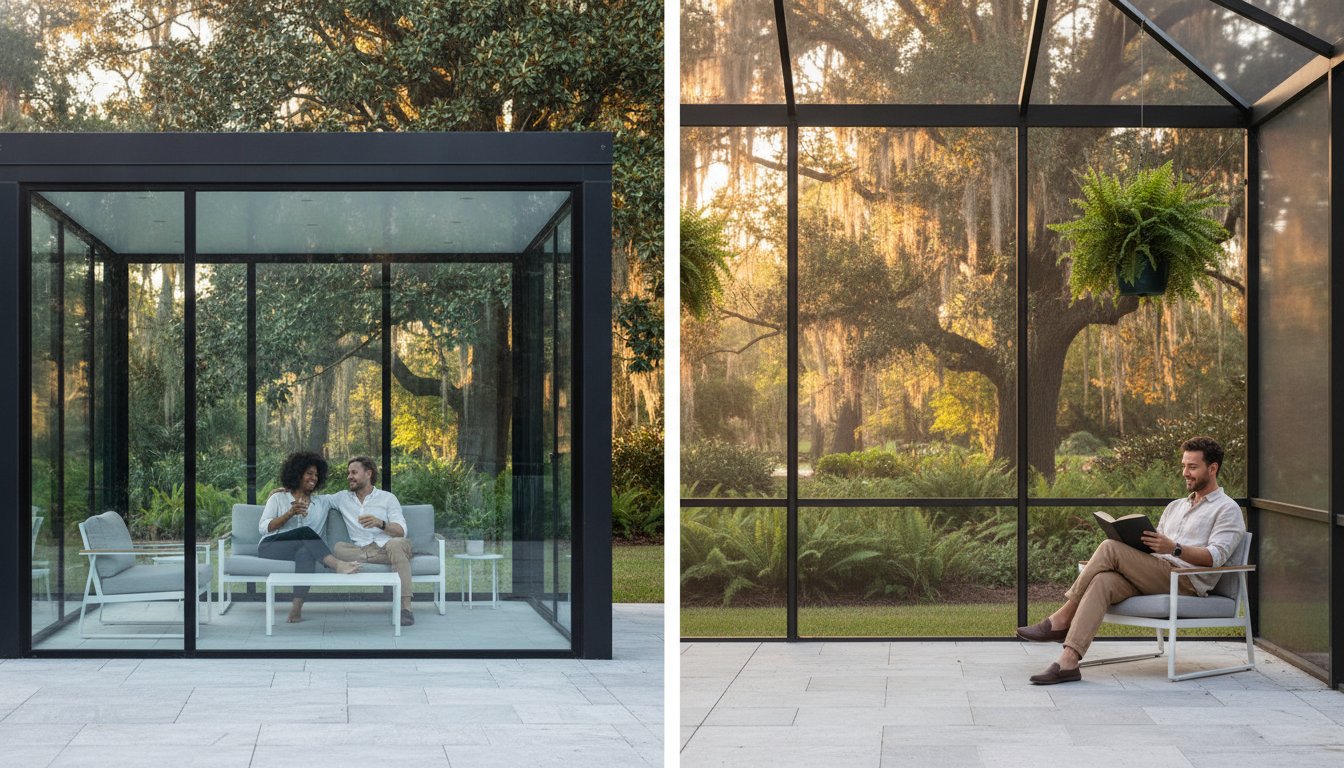
What if your outdoor patio didn’t have to be a no-go zone for nine months of the year? Most Gulf Coast homeowners know the frustration of retreating indoors because the humidity is stifling or the yellow flies have become relentless. It’s a common struggle to keep outdoor furniture clean when spring pollen coats every surface in sight. When you’re evaluating a glass room vs screen enclosure, you’re really deciding how much control you want over your environment and how you intend to use your square footage.
We understand that your home is a sanctuary that should offer comfort regardless of the weather. You’ll discover the critical differences in climate control, maintenance, and long-term cost to help you decide which custom aluminum structure fits your lifestyle. This article compares how these options handle the unique challenges of our region, from 140 mph wind load requirements to the persistent coastal heat. We’ll provide the clarity you need to choose a low-maintenance space that survives the elements and increases your home’s value for years to come.
Key Takeaways
- Understand the fundamental trade-off between a glass room vs screen enclosure, balancing total climate control against the benefit of natural coastal breezes.
- Learn how insulated glass systems manage intense humidity and heat, effectively turning your patio into a functional, four-season extension of your home.
- Discover why precision-engineered aluminum is the superior choice for structural integrity and meeting local wind load requirements during storm season.
- Evaluate the return on investment for each option, from the budget-friendly entry point of screening to the increased appraisal value of glass-enclosed living space.
- Identify how professional craftsmanship and custom aluminum engineering ensure your new outdoor space remains a durable, high-performing asset for decades.
Understanding the Basics: Glass Rooms vs. Screen Enclosures
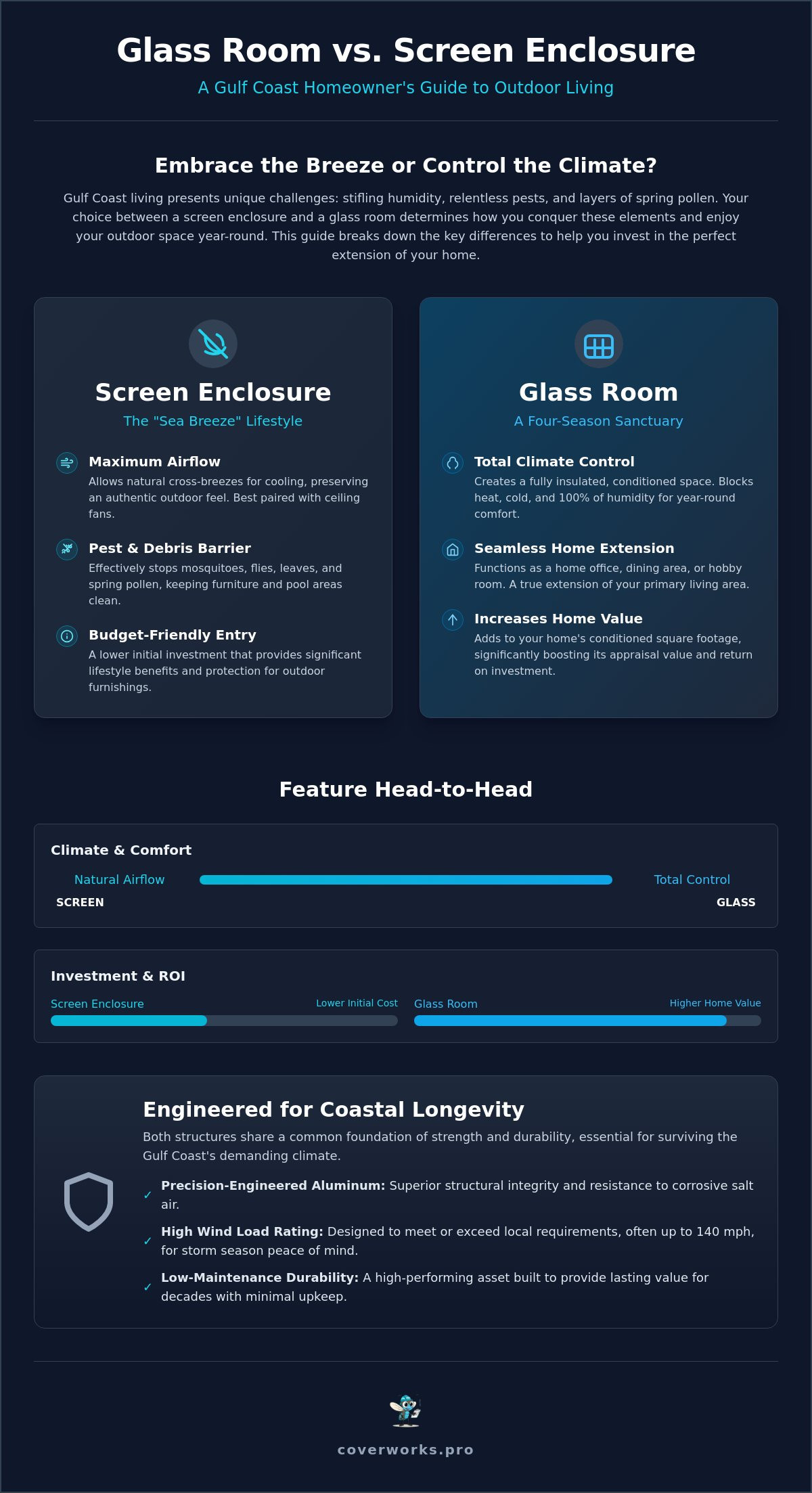
Deciding between a glass room vs screen enclosure starts with a simple question: how do you want to feel when you step outside? Both structures provide a dedicated space for relaxation, yet they offer fundamentally different experiences of the Gulf Coast climate. In regions like Louisiana and Mississippi, where humidity is often a constant factor, the choice hinges on whether you want to embrace the breeze or control your environment entirely.
Custom aluminum framing serves as the backbone for both options. We use this material for its exceptional structural integrity and resistance to the corrosive salt air prevalent along the coast. While the frame provides the necessary strength to meet local building codes, the infill—either high-grade mesh or tempered glass—defines how you’ll use the space every day. Homeowners in our region typically choose based on their specific needs for pest protection, airflow, and year-round usability.
What Defines a Custom Screen Enclosure?
A custom screen enclosure is designed for maximum ventilation. It utilizes precision-engineered aluminum extrusions to hold durable, high-grade mesh in place. This creates a reliable barrier that stops mosquitoes and yellow flies while allowing air to circulate freely. It’s an ideal solution for those who prioritize the authentic “sea breeze” lifestyle and want to protect their patio or pool area without losing the outdoor feel. These structures offer a lower cost of entry while effectively keeping leaves, debris, and spring pollen off your outdoor furniture.
The Anatomy of a Custom Glass Room
A glass room, often categorized as a Sunroom, functions as a seamless extension of your home’s primary living area. These structures incorporate tempered glass panes and can be paired with insulated or non-insulated roofs to suit your specific goals. Unlike a traditional stick-built addition, which requires intensive interior remodeling and lengthy construction timelines, a custom glass room offers a more efficient path to a conditioned space. It allows you to enjoy your backyard view in total comfort, even when the outdoor temperature climbs into the nineties.
In Louisiana and Alabama, glass rooms are frequently used as quiet home offices, secondary dining areas, or bright hobby rooms. They provide a sanctuary from the Deep South humidity while maintaining a strong visual connection to the outdoors. Whether you choose the breathability of a screen or the total enclosure of glass, both options are built to provide aesthetic harmony and lasting durability for your home.
Climate Control and Comfort: Managing Gulf Coast Heat
Managing the relentless heat of the Gulf Coast requires a strategic approach to outdoor design. In regions like Alabama and Mississippi, humidity levels frequently exceed 70 percent, creating a “sauna effect” that can make a standard patio unbearable during the summer months. When evaluating a glass room vs screen enclosure, you’re choosing between two different philosophies of comfort: embracing the natural movement of air or creating a fully insulated barrier against the elements.
Both structures help mitigate solar heat gain, protecting your expensive patio furniture from the fading effects of direct UV rays. However, their thermal performance differs significantly. A screen enclosure relies on constant airflow to keep temperatures manageable, whereas a glass room uses high-performance glazing to reflect heat away from the living space. This choice becomes especially apparent during seasonal shifts, from the sudden cold snaps of January to the triple-digit heatwaves of July. Pairing your new enclosure with a surface treated by decorative concrete resurfacing contractors can further reduce heat absorption on your patio floor, making the entire outdoor area more comfortable underfoot.
If you’re unsure which level of protection suits your home’s orientation, viewing our custom outdoor solutions can help you visualize how each structure performs in real-world conditions.
The Screen Advantage: Maximum Airflow
The primary benefit of a screen enclosure is its ability to facilitate natural ventilation. By allowing cross-breezes to pass through the mesh, these structures prevent heat from becoming trapped under the roof. To maximize this effect, we recommend installing high-efficiency ceiling fans. These fans work in tandem with the open-air design to create a consistent cooling effect on your skin. The limitation is that screens offer no protection against ambient humidity. On those heavy, still afternoons in August, the air inside a screen room will feel just as thick as the air outside.
The Glass Advantage: Total Environmental Control
For homeowners who want to ignore the forecast entirely, a glass room provides total environmental control. These spaces can be integrated into your home’s HVAC system or equipped with independent cooling units for year-round use. This is a game-changer during the “Yellow Season” in Alabama, when pine pollen blankets everything in sight. A glass enclosure keeps your interior furniture pristine and allergen-free. Beyond temperature, glass offers superior sound dampening. It creates a quiet retreat that shields you from the noise of neighborhood traffic or lawnmowers, making it a more versatile space for relaxation or remote work regardless of what’s happening in the yard next door.
Engineering for Longevity: Durability in Coastal Regions
The environment along the Gulf Coast is uniquely demanding. High humidity, salt-laden air, and seasonal hurricanes require materials that won’t degrade under pressure. When comparing a glass room vs screen enclosure, the structural frame remains the most critical component for longevity. We utilize heavy-gauge aluminum for these structures because it offers a combination of strength and corrosion resistance that other materials simply cannot match.
Maintenance requirements vary between the two systems. Screen rooms eventually require rescreening to keep them looking sharp and functioning properly. Depending on the size of the enclosure, rescreening costs in 2026 can range from $1,500 for small porches to $8,000 for large pool cages. Glass rooms require regular cleaning to maintain clarity, but the tempered glass panes are designed to last for decades without the need for periodic replacement. The choice of roof design also plays a role in overall durability. A Mansard roof offers a classic look and excellent structural stability, while a gable roof provides extra height and efficient water runoff during heavy tropical downpours.
Aluminum vs. Wood: Why the Gulf Coast Demands Metal
Wood may look traditional, but it’s often a poor choice for our climate. In the high-moisture environments of Mississippi and Alabama, wood is prone to rot, warping, and termite infestations. Choosing powder-coated aluminum eliminates these concerns entirely. It provides a permanent, baked-on finish that doesn’t require the constant sanding or staining associated with traditional wood decks. This makes aluminum the superior choice for homeowners who value a low-maintenance lifestyle and a structure that maintains its aesthetic harmony for years.
Resilience Against Coastal Storms
Surviving storm season requires precision engineering and site-specific planning. Coastal structures must often withstand baseline winds of 140 mph, with some areas requiring ratings over 175 mph to meet rigorous building codes. Screen enclosures are frequently built with a “sacrificial design” where the mesh may blow out during a hurricane to relieve wind pressure and protect the more expensive aluminum frame. In contrast, aluminum outdoor room additions featuring impact-rated glass offer a solid barrier against wind and debris. Professional installation is essential for these projects. Unlike DIY kits, custom-engineered structures are anchored deeply into the foundation to ensure they remain stable when the weather turns severe.
Investment and ROI: Assessing Cost vs. Lifestyle Value
Determining the financial return on your home improvement project involves more than just looking at the initial quote. When weighing a glass room vs screen enclosure, you’re essentially choosing between a lifestyle enhancement and a structural investment that impacts your home’s appraisal value. Industry data shows that screen enclosures can recoup up to 70% of the build cost in added home equity. This makes them a highly efficient choice for homeowners looking to boost curb appeal and functionality without a massive capital outlay.
In contrast, a glass enclosure often provides a higher total return because appraisers frequently count these spaces as livable square footage. This distinction is vital for long-term resale value. While a screen room offers a seasonal retreat, a glass room adds a permanent, conditioned room to your floor plan. If you’re ready to start planning your project, you can view our custom aluminum structures to see which option fits your budget and long-term goals.
Cost Factors for Screen Enclosures
The entry point for a screen enclosure depends on several variables, including the type of mesh and the roof configuration. Choosing an insulated roof over a non-insulated patio cover can slightly increase the initial investment but provides significantly better thermal protection. If you’re looking for expert guidance on these choices, it’s helpful to consult with screen room contractors Alabama who understand local building codes. These professionals can explain how different aluminum extrusions impact both the safety and the final value of your project.
The Value Proposition of Glass Rooms
The higher initial investment for glass is balanced by the utility of year round outdoor glass rooms. These spaces act as true four-season rooms, allowing you to host dinners or work from home regardless of the outdoor humidity or temperature. Energy efficiency is another factor to consider. Insulated glass options help maintain a consistent temperature, reducing the strain on your home’s HVAC system when the room is integrated into the rest of the house.
Many homeowners ask if they can start with a screen and upgrade to glass later. While this is technically possible, it’s more cost-effective to engineer the structure for glass from the beginning. A frame designed for glass requires specific load-bearing capabilities that a standard screen frame might lack. Deciding between a glass room vs screen enclosure often comes down to your five-year plan for the property. Planning for your ultimate goal now prevents the need for expensive structural modifications down the road. Completing complementary upgrades at the same time, such as working with expert decorative concrete resurfacing contractors to refresh your patio floor, can also maximize the overall value of your investment.
The CoverWorks Inc. Approach: Custom Aluminum Excellence
Selecting between a glass room vs screen enclosure is a significant decision for your property. It requires a partner with deep regional roots who understands the specific environmental demands of the Gulf Coast. CoverWorks Inc. has spent over 20 years perfecting aluminum construction across Louisiana, Mississippi, and Alabama. We don’t just assemble pre-fabricated kits; we engineer custom structures that become a permanent, high-performing part of your home’s footprint. This localized experience allows us to anticipate challenges that generic contractors might overlook. Homeowners throughout the region who want to explore the latest construction trends and find qualified professionals can review our guide to enclosed patio builders Louisiana homeowners trust for hurricane-rated, climate-controlled additions.
Our team prioritizes efficiency and clear communication from the very first interaction. We understand that once you’ve decided to enhance your home, you want to see progress without unnecessary delays. That’s why CoverWorks Inc. offers same-day quotes and maintains professional installation timelines that respect your daily schedule. Every joint, fastener, and seal is handled with the pride of a master craftsman to deliver a durable result that provides aesthetic harmony with your existing architecture. We use high-strength fasteners and precise leveling techniques to ensure the structural integrity of your addition survives the test of time.
Why Choose a Master Craftsman for Your Project?
Regional familiarity is a major advantage when building in our unique climate. Building codes on the Gulf Coast are strict for a reason, and CoverWorks Inc. navigates these requirements daily. We ensure every custom project is fully compliant and structurally sound from the foundation up. We move beyond the “one-size-fits-all” approach, offering bespoke designs that account for your specific backyard layout, drainage needs, and sun exposure. Our methodical process includes site-specific engineering and a thorough final walkthrough to ensure every detail meets our standards for functional beauty and precision.
Ready to Transform Your Outdoor Space?
Starting your project is a straightforward, logical process. A free consultation allows us to assess your lifestyle goals and provide the professional guidance needed to choose the best option between a glass room vs screen enclosure. You can view our extensive regional portfolio to see how we’ve helped your neighbors reclaim their patios from the heat and insects. If you’re ready to move from a functional need to a vision of improved comfort, get your same-day quote from CoverWorks Inc. today and begin the process of creating a reliable, year-round sanctuary for your family.
Build Your Ideal Coastal Sanctuary
Choosing between a glass room vs screen enclosure is the final step in reclaiming your home’s outdoor potential. This decision ultimately rests on whether you prioritize the natural cross-breezes of a screen system or the total environmental mastery of a climate-controlled glass room. Both structures offer a permanent solution to the insects and humidity that often make Gulf Coast patios unusable. Your home deserves a space that functions perfectly regardless of the forecast.
CoverWorks Inc. brings over 20 years of regional experience to every custom project. We understand that a home in Louisiana, Mississippi, or Alabama requires more than just a standard addition; it needs a precision-engineered structure built for our specific coastal climate. By choosing a master craftsman, you ensure your new space is as durable as it is beautiful. We take personal responsibility for the quality of the structures we leave behind in our local community.
Request Your Same-Day Quote for a Custom Room Addition from CoverWorks Inc. and take the first step toward your home’s transformation. We’re ready to help you design a custom aluminum space that fits your lifestyle and enhances your property’s value. Let’s build a sanctuary that you and your family can enjoy for years to come.
Common Questions About Gulf Coast Outdoor Spaces
Which is better for resale value: a glass room or a screen enclosure?
A glass room generally offers higher resale value because it is often appraised as livable square footage. While a screen enclosure adds significant lifestyle appeal and curb appeal, it doesn’t typically impact the home’s appraised square footage in the same way. Both structures provide a solid return on investment by making the property more attractive to potential buyers who prioritize year-round outdoor living and pest protection.
Can I turn my existing screen enclosure into a glass room later?
You can often convert a screen room to glass, but it requires the original frame to be engineered for the weight of glass panes. Many standard screen enclosures use lighter aluminum extrusions that aren’t designed to support tempered glass. If you think you might want to upgrade your glass room vs screen enclosure choice later, it’s best to specify a glass-ready frame during the initial installation to avoid expensive structural reinforcements.
How do glass rooms and screen enclosures handle hurricane-force winds?
Both structures are engineered to meet local wind load requirements, which can range from 140 mph to over 175 mph on the Gulf Coast. Screen enclosures use a sacrificial design where the mesh may blow out to relieve pressure on the frame. Glass rooms use impact-rated glass and heavy-duty anchors to create a solid barrier against wind and debris. Professional installation ensures these structures are secured properly to the foundation.
What is the maintenance difference between glass and screen?
Screen enclosures require periodic rescreening, while glass rooms require regular cleaning. Mesh can tear or become loose over 10 to 15 years, necessitating a professional rescreening service. Glass is a permanent material that doesn’t degrade, but it does show water spots and dust more clearly than mesh. Both utilize powder-coated aluminum frames that are virtually maintenance-free and resistant to the salt air corrosion common in Alabama and Mississippi.
How much does a custom glass room addition typically cost?
The cost of a custom glass room depends on several factors, including the total square footage, the type of glass used, and the complexity of the roof system. Insulated glass and specialized roof panels will increase the initial investment compared to non-insulated options. Because every project is custom-designed for a specific home, the best way to determine the cost is to request a site-specific estimate that accounts for your local building codes.
Will a screen enclosure keep out pollen during the spring?
A standard screen enclosure will not keep out fine pine pollen during the spring “yellow season.” While the mesh stops larger debris like leaves and twigs, pollen particles are small enough to pass through the openings. If you suffer from severe seasonal allergies or want to keep your furniture perfectly clean, a glass room is the superior choice. It creates a sealed environment that blocks allergens entirely, keeping your interior pristine.
Do I need a permit for a glass room in Louisiana or Mississippi?
Yes, you typically need a building permit for a glass room in Louisiana and Mississippi. Local municipalities require these permits to ensure the structure meets safety standards, including wind load ratings and setback requirements. Navigating the permitting process is part of a professional installation service. We handle the technical documentation and inspections to ensure your new addition is fully compliant with regional regulations and homeowner association rules.
Are aluminum structures hotter than wood-framed outdoor rooms?
Aluminum structures aren’t necessarily hotter than wood-framed rooms, especially when using insulated components. While metal conducts heat, our insulated patio covers and glass room roofs use high-density foam cores to provide a thermal barrier. This technology prevents the sun’s heat from radiating through the ceiling. In a glass room vs screen enclosure comparison, both can remain comfortable when paired with proper insulation and smart ventilation strategies like ceiling fans.
Leave a Reply