Tag: Polycarbonate Roofing

  • Polycarbonate Patio Roofing Installers: A Guide to Natural Light and Durability

    Polycarbonate Patio Roofing Installers: A Guide to Natural Light and Durability

    Why spend thousands on a patio cover only to find yourself sitting in a dark, gloomy cave while the sun shines just a few feet away? Many homeowners in storm-prone areas like New Orleans and Gulfport settle for solid aluminum because they don’t think polycarbonate patio roofing installers can provide a structure that survives a hurricane. It’s a valid concern; nobody wants a roof that looks like cheap plastic, yellows in the heat, or cracks under the pressure of a coastal storm.

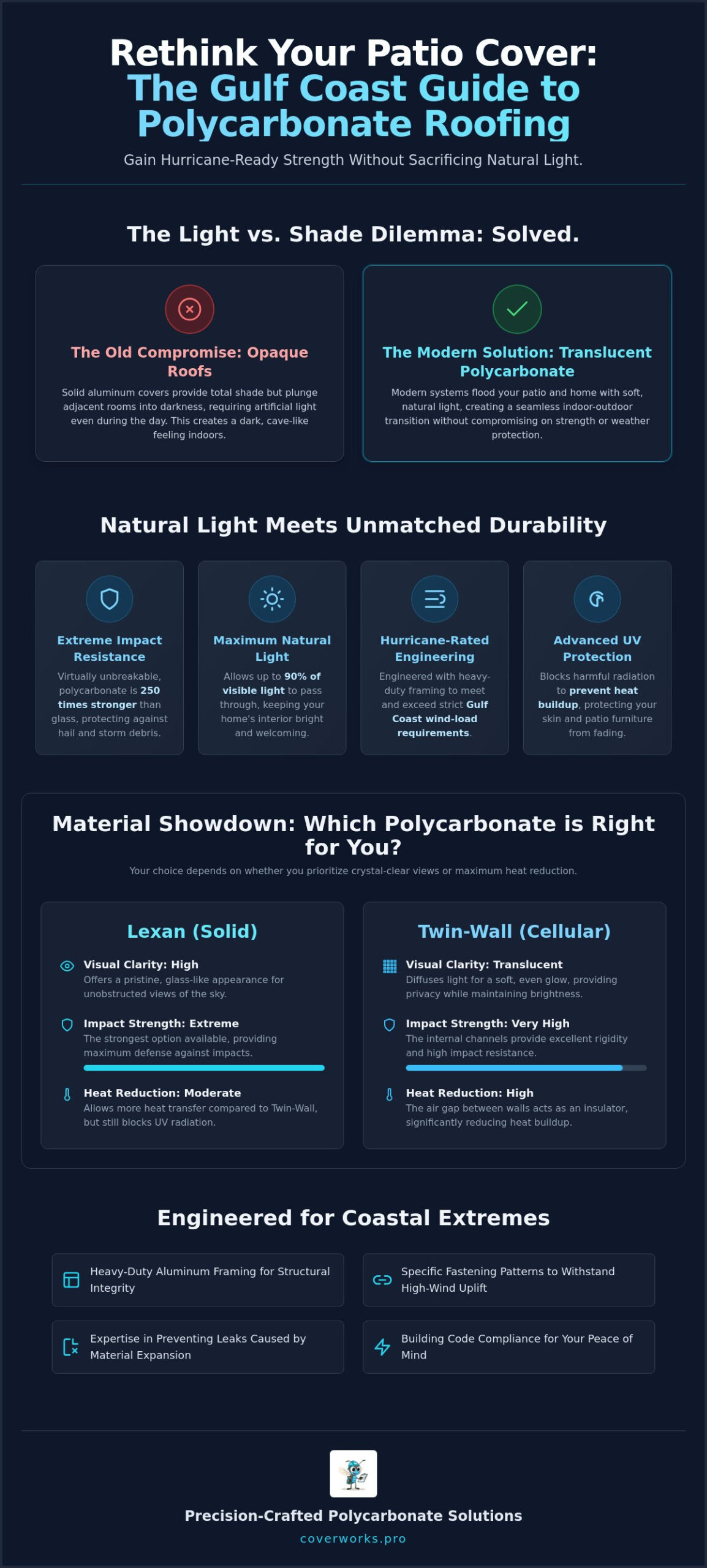
    You don’t have to sacrifice natural light for structural integrity. In this guide, you’ll discover how modern Lexan and twin-wall systems provide 250 times the impact resistance of glass while meeting strict local building codes for high-wind loads. We’ll break down the engineering behind these bright, airy structures and show you how to achieve a maintenance-free outdoor space that stays beautiful and clear through every Gulf Coast summer.

    Key Takeaways

    • Translucent roofing systems solve the problem of dark interior rooms by flooding your patio with light, so you don’t have to choose between shade and brightness.
    • Premium Lexan offers extreme impact resistance and clarity, while twin-wall polycarbonate provides superior insulation to keep your outdoor space cooler in the high heat.
    • Engineering for the Gulf Coast requires heavy-duty aluminum framing and specific fastening patterns to remain compliant with strict regional wind-load requirements.
    • Expert polycarbonate patio roofing installers understand how these materials expand and contract, preventing leaks and structural failure during intense storm seasons.
    • A focus on building code compliance and proper structural attachment protects your investment and ensures your new patio cover survives the next major weather event.

    Natural Light Meets Durability: Why Choose Polycarbonate Patio Roofing?

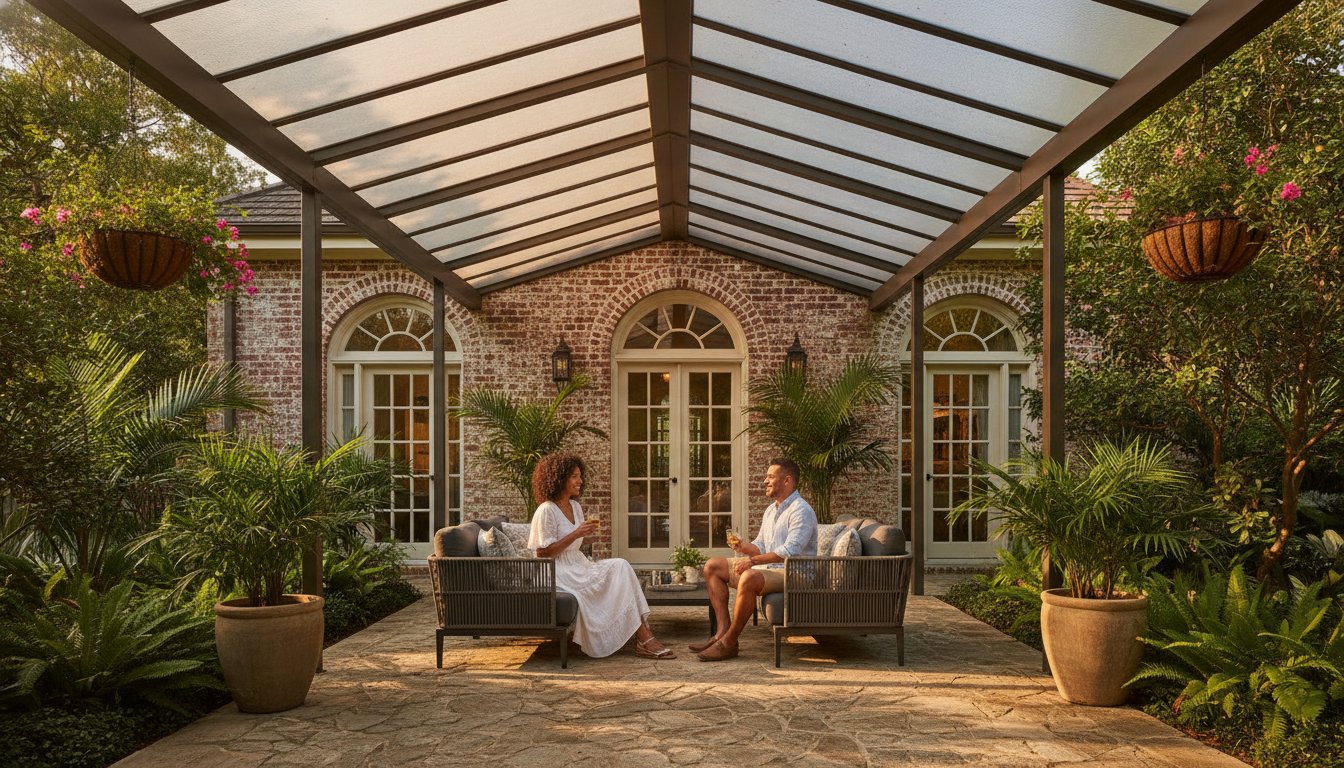
    Polycarbonate is a high-performance thermoplastic that has revolutionized the way we design outdoor spaces. For decades, homeowners in regions like New Orleans and Biloxi faced a frustrating compromise. You could install a solid cover for maximum shade, which often turned the patio and the adjacent living room into a dark, shadowy cave. Alternatively, you could leave the space open and deal with the blistering Gulf Coast heat and UV exposure. Modern polycarbonate patio roofing installers now offer a middle ground that provides the best of both worlds: a translucent shield that blocks the heat while flooding the area with soft, natural light.

    As we move through 2026, the trend in high-end residential design has shifted toward creating seamless transitions between indoor and outdoor environments. Homeowners want the aesthetic of a glass solarium but need a material that can withstand high-wind events and accidental impacts. Polycarbonate is roughly 250 times stronger than glass and significantly lighter, making it the ideal choice for structural longevity without the fragility of traditional glazing. It’s a durable solution that doesn’t just cover a space; it enhances the way you use it.

    Translucent Patio Roofing Systems vs. Traditional Aluminum

    While aluminum patio covers are excellent for providing total shade and weather protection, they are completely opaque. This opacity can be a drawback if your patio is located directly outside your kitchen or living room windows. A solid roof will inevitably cut off the natural light entering your home, forcing you to use artificial lighting even in the middle of the day. Translucent panels allow up to 90% of visible light to pass through. This keeps your home’s interior bright while providing a modern, sleek aesthetic that complements contemporary architecture across the Gulf Coast.

    The Lifestyle Benefit: Brightening Your Outdoor Living Space

    Choosing professional polycarbonate patio roofing installers means you’re investing in daily comfort. Many people worry that a translucent roof will create a “greenhouse effect,” trapping heat underneath. Quality systems use advanced UV-filtering technology to reflect infrared radiation while allowing visible light to pass. This prevents heat buildup and protects your skin and patio furniture from the damaging effects of the sun. You get an airy, open feel that makes the patio feel like a natural extension of your home rather than a closed-in addition. The psychological boost of increased natural light is significant; it creates a more inviting atmosphere for morning coffee or evening gatherings with family.

    Selecting the Right Material: Lexan vs. Twin-Wall Polycarbonate

    Expert polycarbonate patio roofing installers will tell you that the choice between solid and cellular panels is the most important design decision you’ll make. While both materials offer the durability needed for the Gulf Coast, they serve different aesthetic and thermal purposes. Your choice depends on whether you value crystal-clear views or maximum heat reduction. To help clarify the differences, we’ve outlined the performance characteristics of each material below.

    Feature Lexan (Solid) Twin-Wall (Cellular)
    Visual Clarity High (Glass-like) Translucent (Diffused)
    Impact Strength Extreme (Unbreakable) Very High
    Heat Reduction Moderate High (Thermal Break)
    Weight Heavier Ultra-Lightweight

    Lexan Solid Sheets: The Glass-Like Aesthetic

    Lexan solid sheets are the gold standard for homeowners in Metairie and Slidell who want an unobstructed view of the sky. These panels provide the clarity of glass but with a structural toughness that glass cannot achieve. As a Master Craftsman, I always emphasize that Lexan requires specialized installation techniques. Because it’s a thermoplastic, it expands and contracts significantly as the temperature changes throughout the day. We use oversized fastening points and specific gaskets to ensure the roof remains water-tight and silent during these shifts. You can read more about these specific engineering requirements in our guide to Lexan patio cover benefits.

    Twin-Wall Polycarbonate: Superior Thermal Insulation

    Twin-wall polycarbonate features a fluted, multi-layered structure that creates a natural thermal barrier. This internal air gap is incredibly effective at blocking heat transfer, making it a functional choice for patios that face the direct afternoon sun. The flutes also diffuse incoming sunlight, eliminating the harsh glare and creating a soft, even glow across your outdoor furniture. If your primary goal is temperature control, it’s worth comparing these systems to insulated patio covers to find the right balance for your home. If you’re unsure which material fits your layout, you can consult with our design specialists for a custom recommendation.

    Engineering for the Gulf Coast: Wind Loads and Hurricane Protection

    Along the Gulf Coast, a patio cover is far more than a decorative addition. It’s a structural extension of your home that must be engineered to survive the unique pressures of our environment. Professional polycarbonate patio roofing installers recognize that while the panels themselves are impact-resistant, the entire system is only as strong as its framing and attachment points. In high-wind regions like New Orleans and the surrounding parishes, these structures must withstand wind speeds that can exceed 140 mph. This requires the use of heavy-duty, aircraft-grade aluminum extrusions rather than the flimsy, lightweight kits often found at big-box retailers.

    One of the most critical factors in coastal engineering is managing uplift. During a hurricane or severe thunderstorm, wind can catch the underside of a patio roof, effectively turning it into a giant sail. If the structure isn’t properly anchored to the foundation and the house fascia, the upward force can rip the entire cover away, potentially causing severe damage to the main residence. We utilize specialized fastening systems and specific spacing for structural rafters to ensure that the polycarbonate panels remain locked in place, even when facing extreme atmospheric pressure. With over 25 years of experience, CoverWorks Inc. builds every project to meet or exceed the International Building Code (IBC) and specific local municipal requirements.

    Meeting Local Building Codes in Louisiana and Mississippi

    Permitting and code compliance are non-negotiable for any permanent structural addition. Cities such as Slidell, Metairie, and New Orleans have rigorous standards for wind-load certification. Many DIY kits fail to meet these standards because they lack the necessary engineering seals and structural calculations required by local building departments. A custom-engineered aluminum design ensures that your project is not only safe but also fully insurable. We provide the necessary documentation to show that your patio cover is built to the specific wind-zone requirements of your exact community.

    Corrosion Resistance and Saltwater Protection

    For our clients in Gulfport, Biloxi, and other coastal areas, saltwater corrosion is a constant threat. Traditional wood structures rot and warp in our high humidity, while steel eventually rusts when exposed to salt spray. High-grade aluminum is the superior choice for these environments because it naturally resists oxidation. To ensure long-term integrity, polycarbonate patio roofing installers must also use stainless steel fasteners. These components won’t bleed rust stains onto your patio or weaken over time due to salt exposure. This combination of polycarbonate and aluminum creates a virtually maintenance-free space that remains structurally sound for decades without the need for constant painting or repairs. For homeowners who want to understand how aluminum performs on its own, our guide on the durability of non-insulated aluminum patio covers provides a detailed breakdown of how these systems handle Gulf Coast wind loads and humidity.
    Polycarbonate Patio Roofing Installers: A Guide to Natural Light and Durability

    What to Look for in Polycarbonate Patio Roofing Installers

    Hiring polycarbonate patio roofing installers requires more than a quick search for the lowest bid. This material is unique; it behaves differently than shingles, metal, or wood. Polycarbonate expands and contracts significantly as temperatures fluctuate. If a contractor treats it like a standard metal roof, the result is often buckled panels, failed seals, and frustrating leaks. You need a team with a physical local presence and a documented history of their structures surviving Gulf Coast storm seasons. A Master Craftsman never skips the legal engineering steps, as these are the only way to guarantee your project meets the safety standards required for your specific parish or county.

    When vetting potential contractors, ask about their experience with comprehensive outdoor solutions. A specialist who understands the nuances of light-transmitting roofs should also be well-versed in insulated patio cover installation. This level of expertise ensures they can recommend the right balance of natural light and heat reduction for your home’s orientation. If you’re ready to discuss your project with a team that prioritizes structural compliance, you can request a professional site inspection to get started.

    Experience with Custom Aluminum Framing

    The frame is the skeleton of your patio structure. It must be perfectly square and leveled to allow the polycarbonate panels to sit and move correctly. While a general roofer might be skilled at laying shingles, an aluminum specialty contractor understands how to manage structural load paths specifically for these lightweight systems. In the context of a patio-to-house attachment, structural integrity means the ability of the structure to safely transfer wind and weight loads directly into the foundation without putting undue stress on your home’s existing walls or rafters.

    Permitting and Structural Attachment Expertise

    The most common point of failure for any patio cover is the house attachment, often referred to as the ledger board. If this connection isn’t engineered correctly, it can compromise the exterior of your home. Professional polycarbonate patio roofing installers use high-grade flashings and industrial sealants to ensure water-tight seals at the roofline, preventing rot and moisture intrusion. It’s also vital to verify that your contractor carries full liability insurance and local licensing. This is a standard requirement for reputable screen room contractors and specialty builders, providing you with peace of mind that the work is being performed by qualified professionals who respect local building codes.

    The CoverWorks Difference: Precision-Crafted Polycarbonate Solutions

    Choosing the right polycarbonate patio roofing installers is the difference between a structure that lasts a few summers and one that stands for decades. At CoverWorks Inc., we bring over 25 years of field experience to every project across Louisiana, Mississippi, and Alabama. We don’t believe in one-size-fits-all kits. Instead, we combine premium materials like Lexan and twin-wall polycarbonate with site-specific engineering that accounts for the unique wind loads and soil conditions of the Gulf Coast. Our reputation is built on technical precision and a deep understanding of how aluminum and thermoplastics perform in high-humidity, storm-prone environments.

    We respect your time and your investment. That’s why we offer same-day quotes and maintain a streamlined installation process that minimizes disruption to your daily life. Our goal is to move you from a vision of a brighter patio to a fully realized, code-compliant reality as efficiently as possible. By positioning ourselves as a local authority on high-wind aluminum structures, we ensure that every roof we install is as safe as it is beautiful.

    Custom Design and Fast Installation Across the Gulf Coast

    Our process begins with a thorough site visit where we assess your existing home structure and your specific light requirements. We serve communities throughout the region, including Metairie, Slidell, Gulfport, and Biloxi. Because we specialize in aluminum craftsmanship, we can seamlessly integrate polycarbonate roofing into various outdoor structures. This includes:

    • Custom carports that protect vehicles while maintaining a bright driveway.
    • Pergolas with translucent overlays for year-round utility.
    • Glass rooms and screen enclosures that require high-impact roof panels.

    Once the design is finalized and the permits are secured, our professional crews handle the installation with a focus on water-tight seals and structural load paths. We manage the project from the first bolt to the final municipal inspection.

    Our 25-Year Legacy of Precision Craftsmanship

    The “Master Craftsman” approach isn’t just a slogan; it’s a commitment to durability and style. We’ve seen how poorly installed roofs fail during tropical events, and we refuse to take shortcuts that compromise safety. Our regional expertise allows us to select the right gauges of aluminum and the correct thermal gaskets for every job. We build structures that are designed to be permanent assets to your property. If you’re ready to transform your outdoor living space with a roof that balances natural light and structural strength, contact CoverWorks Inc. for a free estimate on your polycarbonate patio project.

    Build a Brighter, Storm-Ready Outdoor Living Space

    Integrating natural light into your home shouldn’t mean compromising on safety during hurricane season. Choosing high-performance Lexan or twin-wall systems allows you to enjoy a bright, airy patio while maintaining the structural integrity required for the Gulf Coast climate. The success of these projects depends entirely on the expertise of your polycarbonate patio roofing installers, who must account for thermal expansion and rigorous building codes to prevent structural failure.

    CoverWorks Inc. brings over 25 years of local Gulf Coast experience to every project. We prioritize hurricane-ready engineering standards and A+ rated precision craftsmanship to ensure your investment lasts for decades. Whether you’re in New Orleans, Gulfport, or Biloxi, we provide the regional expertise needed for a seamless transformation that enhances your lifestyle and your property value. It’s time to stop settling for dark outdoor spaces and start enjoying the benefits of modern, durable translucent roofing.

    Request Your Free, Same-Day Quote from CoverWorks Inc.

    We look forward to helping you design a patio space that stays bright, cool, and secure for years to come.

    Frequently Asked Questions

    Can polycarbonate patio roofing survive a hurricane?

    Yes, a polycarbonate roof can survive a hurricane if it is designed and installed by professional polycarbonate patio roofing installers to meet regional wind-load requirements. Polycarbonate is 250 times stronger than glass, making it virtually unbreakable during hail or high-wind events. The structural integrity depends on the heavy-duty aluminum framing and the specific fastening patterns used to prevent the panels from lifting during a storm.

    How much natural light does a polycarbonate roof actually let in?

    Solid polycarbonate panels allow over 90% of visible light to pass through, while twin-wall panels transmit about 81% of light. This high level of transmission ensures that your patio remains bright and airy even on overcast days. It also prevents the adjacent rooms inside your home from becoming dark, which is a common complaint with solid aluminum covers that block all natural light.

    Does polycarbonate roofing turn yellow or brittle over time?

    Modern, high-quality polycarbonate panels are engineered with integrated UV inhibitors that specifically prevent yellowing and brittleness. While older or lower-grade plastics might degrade in the sun, the Lexan and twin-wall systems we use are designed for the intense UV exposure found along the Gulf Coast. These materials maintain their clarity and structural strength for decades without the maintenance headaches of traditional alternatives.

    Is a polycarbonate roof louder than a metal roof when it rains?

    Rain noise on a polycarbonate roof is typically softer than the loud drumming sound produced by a non-insulated aluminum patio cover. The material is a thermoplastic, which naturally absorbs more impact energy than rigid metal sheets. Twin-wall panels are even quieter because the air channels inside the fluted structure act as a sound barrier, dampening the rhythmic sound of heavy Louisiana downpours.

    How do I clean and maintain my polycarbonate patio roof?

    You can maintain your roof by simply rinsing it with a garden hose and using a soft cloth with mild dish soap for any stubborn debris. It’s important to avoid using abrasive chemicals, stiff brushes, or squeegees, as these can scratch the protective UV coating. Because the aluminum frame won’t rust and the panels won’t rot, this is one of the most low-maintenance roofing options available.

    What is the difference between Lexan and standard polycarbonate?

    Lexan is a specific brand of high-performance solid polycarbonate that is widely recognized for its superior clarity and impact resistance. While “polycarbonate” refers to the general category of thermoplastic, Lexan is often the preferred choice for residential projects where a glass-like aesthetic is the goal. It offers higher consistency and durability than generic sheets found at local hardware stores.

    Do I need a permit to install a polycarbonate patio cover in Louisiana?

    Most municipalities in Louisiana and Mississippi require a building permit for a permanent patio structure to ensure it meets local wind-load safety standards. Reputable polycarbonate patio roofing installers will manage the entire permitting process for you, including providing the necessary engineering seals for cities like Metairie or Slidell. This ensures your structure is safe, legal, and compliant with your homeowner’s insurance policy.

    Can polycarbonate roofing be installed over an existing pergola?

    Polycarbonate roofing can be installed over an existing pergola provided the original frame is structurally sound and meets current building codes. However, many older wooden pergolas aren’t built to handle the specific uplift forces of a solid roof during a storm. We evaluate your existing structure to determine if it can be safely retrofitted or if a new aluminum frame is required for safety.
  • Lexan Patio Cover Benefits: The Ultimate Guide for Gulf Coast Homeowners

    Lexan Patio Cover Benefits: The Ultimate Guide for Gulf Coast Homeowners

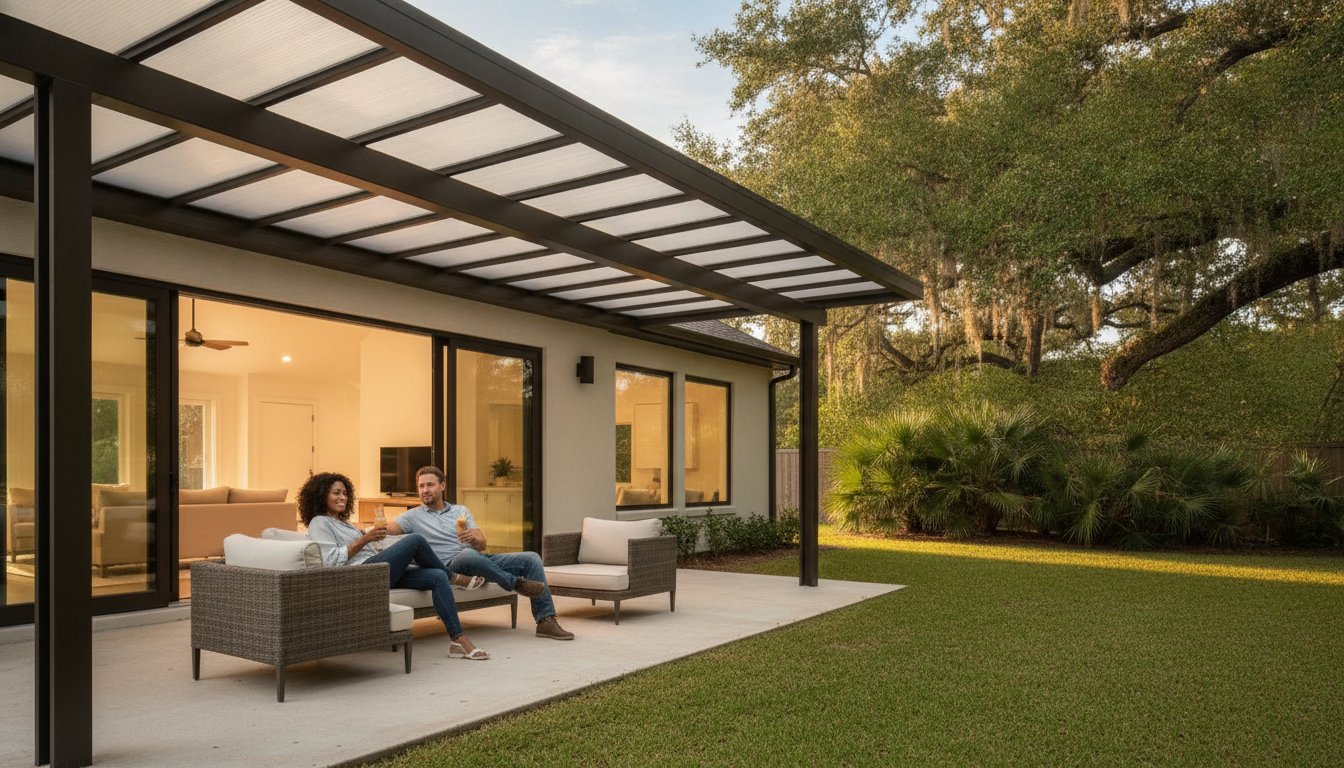
    What if you could shade your patio without plunging your home into total darkness? Most homeowners along the Gulf Coast, from New Orleans to Gulfport, deal with a frustrating trade-off: they install a solid roof for relief from the sun, only to find their indoor living areas turned into gloomy, shadow-filled spaces. Understanding the lexan patio cover benefits allows you to break this cycle. These engineered systems use advanced polycarbonate technology to filter natural light while rejecting the intense infrared heat that makes Southern summers so challenging. It’s the most effective way to stay dry and protected without sacrificing the airy, bright feel of your home.

    We’ll explore how twin-wall construction provides a thermal barrier that manages humidity more effectively than traditional glass or fiberglass. You’ll also learn about the structural engineering required to meet strict wind load standards in coastal Louisiana and Mississippi. Whether you’re concerned about hail durability or simply want a modern aesthetic that lasts for decades, this guide provides the technical insights needed to make an informed decision for your outdoor space. From custom aluminum framing to integrated UV protection, discover why Lexan is the gold standard for high-performance outdoor living.

    Key Takeaways

    • Understand why Lexan is the premium standard for impact resistance, offering a virtually unbreakable roofing solution that far outperforms standard plastic panels.
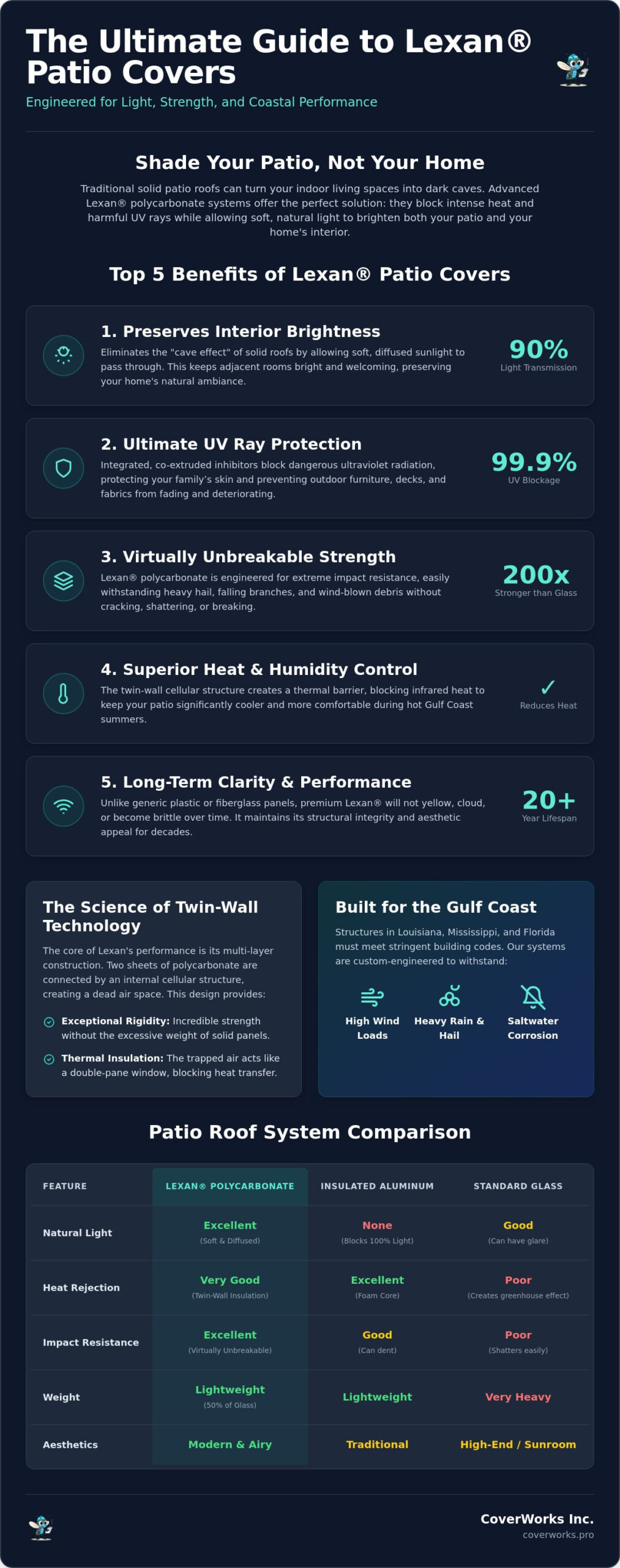
    • Explore the primary lexan patio cover benefits, specifically how these systems block 99.9% of harmful UV rays while keeping your home’s interior bright and naturally lit.
    • Learn how the unique twin-wall cellular structure provides essential thermal insulation to manage the intense Gulf Coast heat and humidity.
    • Discover why custom engineering is critical for meeting local building codes and ensuring your structure can withstand high wind loads in Louisiana and Mississippi.
    • Compare polycarbonate systems with insulated aluminum roofs to determine which material best fits your vision for a modern, airy outdoor living space.

    What is a Lexan Patio Cover? High-Performance Roofing Explained

    A Lexan patio cover isn’t just a basic plastic roof; it’s a sophisticated architectural system designed for maximum durability. Lexan is a premium brand of Polycarbonate resin that has become the gold standard in the construction industry for its extreme impact resistance. Unlike the old corrugated fiberglass panels that many homeowners in New Orleans or Metairie remember from decades ago, these modern systems won’t yellow, crack, or become brittle under the harsh Southern sun. One of the primary lexan patio cover benefits is its ability to filter natural light. It allows a soft, diffused glow to reach your patio and the interior of your home, effectively eliminating the dark, cave-like feel created by solid aluminum or wood covers.

    Lexan vs. Generic Polycarbonate: What Is the Difference?

    While many contractors use the terms interchangeably, Lexan represents a specific high-grade resin with superior clarity and longevity. Generic polycarbonate often lacks the sophisticated, co-extruded UV inhibitors found in Lexan-based systems. These inhibitors are integrated directly into the material during manufacturing, ensuring the panels stay clear for decades rather than just a few seasons. Because it’s a premium product, it often carries a more robust structural warranty against breakage from hail or falling debris. For homeowners in Slidell or Mandeville who deal with frequent summer storms, this brand-name reliability provides peace of mind that generic alternatives simply can’t match.

    The Science of Twin-Wall Technology

    The secret to the performance of these roofs lies in the twin-wall structure. Instead of a single solid sheet, the panels consist of two layers of material connected by a cellular core. This design creates a dead air space between the walls that acts as a powerful thermal barrier. It works similarly to a double-pane window, significantly reducing the amount of heat transferred to the area below. This structure also provides incredible rigidity without adding excessive bulk. In fact, Lexan is 200x stronger than glass while weighing only half as much. This incredible weight-to-strength ratio allows us to design sleeker, more modern structures that can still withstand the heavy wind loads required by building codes across the Gulf Coast, from Kenner to Biloxi. Understanding these lexan patio cover benefits helps you see why this material is the professional’s choice for a high-end, long-lasting outdoor living space.

    The Top 5 Benefits of Lexan Patio Covers for Your Home

    Choosing a patio cover involves more than just picking a roof for shade. It’s about how you’ll experience your outdoor space every day. The specific lexan patio cover benefits go beyond mere shelter, offering a high-performance solution that enhances your home’s value and your daily comfort. For homeowners in cities like New Orleans and Gulfport, where the sun is relentless and storms are frequent, these systems provide a level of versatility that solid covers simply can’t match. They transform a standard patio into a bright, protected sanctuary that feels like a natural extension of your indoor living area.

    Protecting Your Interior Light Levels

    One of the biggest complaints we hear from homeowners in Metairie and Kenner is the “cave effect” caused by solid aluminum or wood patio roofs. While these structures provide shade, they often turn the adjacent indoor rooms into dark, gloomy spaces. Lexan eliminates this problem by allowing high levels of natural light transmission. This diffused light creates a soft, shadow-free environment that’s perfect for reading or dining without the harsh glare of direct sun. It also ensures that your indoor plants near patio doors continue to thrive, receiving the light they need while you stay cool under the cover.

    While the light comes through, the danger stays out. These panels block 99.9% of harmful UV rays. This is critical for protecting your family’s skin and preventing your outdoor furniture, rugs, and cushions from fading or becoming brittle. It’s the best of both worlds: the brightness of an open sky with the safety of a high-tech barrier.

    Durability Against the Elements

    Lexan impact resistance is defined by its ability to withstand heavy hail and wind-blown debris without shattering, making it a superior choice for coastal safety. This virtually unbreakable quality is why LEXAN™ polycarbonate is the preferred material for high-exposure areas in Slidell and Mandeville. Unlike budget plastics that cloud or become brittle over time, these panels maintain their structural integrity and clarity for decades. Maintenance is remarkably simple; usually, a quick rinse with a garden hose is all it takes to keep the structure looking new. There’s no need for the constant painting or staining required by wood structures.

    Heat management is another area where lexan patio cover benefits really shine. The twin-wall design, often combined with specialized heat-shield coatings, significantly reduces solar heat gain. You get the visual openness of a glass roof without the “greenhouse” temperature spike that makes most glass rooms unbearable in the Louisiana humidity. Finally, the modern look of these covers is undeniable. They offer a sleek, low-profile aesthetic that pairs perfectly with our custom aluminum framing. If you’re ready to see how these benefits apply to your specific backyard, you can request a professional design consultation to explore your options.

    Built for the Gulf Coast: Heat, Humidity, and Hurricane Resistance

    Living on the Gulf Coast means your home must withstand some of the most demanding environmental conditions in the country. Between the relentless humidity of New Orleans and the high wind speeds of Biloxi, standard construction materials often fail within a few years. One of the greatest lexan patio cover benefits is the material’s natural resistance to corrosion and moisture. When we pair high-grade Lexan with a structural aluminum frame, we create a system that won’t rust, rot, or harbor mold. This combination is specifically engineered to handle the unique stressors of the Deep South, ensuring your investment remains structurally sound even as the barometer rises.

    Managing the Southern Heat

    Many homeowners worry that a translucent roof will create a “greenhouse effect,” trapping heat on their patio. Modern Lexan technology actually solves this problem through advanced light management. These panels are designed with a low Solar Heat Gain Coefficient (SHGC), which is a technical way of saying they let in visible light while reflecting a significant portion of the infrared heat. Instead of the air becoming stagnant and hot, the diffused light keeps the area bright while the twin-wall core acts as an insulator. To maximize comfort during a humid Metairie afternoon, we often recommend integrating outdoor-rated ceiling fans into the aluminum support beams. This creates consistent airflow that, when combined with the heat-reflective properties of the roof, keeps the space significantly cooler than an open deck.

    Engineering for Storm Season

    In our region, a patio cover must be more than just a sunshade; it has to be a hurricane-resistant structure. We design every project to meet or exceed local building codes, including the strict wind load requirements found in the 9th Edition of the Florida Building Code. This involves precise calculations for uplift and shear forces. We often utilize structural styles like the Mansard roof, which uses multiple angles to deflect wind and provide superior rigidity. Professional engineering is non-negotiable here. A DIY kit might look fine on a calm day, but it lacks the heavy-duty anchoring and structural attachments needed to prevent panels from blowing out during a storm. By prioritizing code compliance and structural integrity, we ensure that the lexan patio cover benefits include long-term safety for your family and your property. Whether you’re in Mandeville, Slidell, or Kenner, your outdoor living space should be a place of refuge, not a liability when the weather turns.

    Lexan Patio Cover Benefits: The Ultimate Guide for Gulf Coast Homeowners

    Choosing Your Style: Lexan vs. Insulated vs. Glass Rooms

    Selecting the right roof system for your home in New Orleans or Biloxi depends entirely on how you intend to use your outdoor space. While we have detailed the specific lexan patio cover benefits regarding light transmission, other systems serve different functional needs. For instance, homeowners who want maximum shade and a more “indoor” feel often lean toward insulated aluminum roof panels. These are constructed from high-density foam sandwiched between aluminum skins, providing the best possible heat rejection. They are also the ideal choice if you plan to convert your patio into a screened-in room or a finished sunroom later.

    Feature Lexan Polycarbonate Insulated Aluminum Glass Room
    Natural Light High (Diffused) None (Total Shade) High (Direct)
    Heat Block Excellent (Reflective) Maximum (Insulated) Variable (High Gain)
    Impact Resistance Extreme (Hurricane Grade) High (Structural) Moderate (Glass Risk)
    Best Use Case Modern Patios / Gardens Future Screen Rooms Year-Round Living

    For those seeking a more traditional and cost-effective solution, non-insulated aluminum patio covers remain a rugged, durable option. These “pan roofs” are built to last for decades and require almost zero maintenance, though they don’t offer the thermal insulation or light-filtering properties of other systems. If your primary goal is to keep a vehicle or a utility area dry, this is often the most practical choice. It provides a permanent, structural alternative to temporary carports that often fail during high winds in Mandeville or Slidell.

    Finally, glass rooms represent the high-end, four-season solution. These structures allow for full climate control, meaning you can enjoy your view even when the Louisiana humidity is at its peak. However, glass is significantly heavier and requires a more substantial foundation and framing system. When comparing these options, remember that lexan patio cover benefits include a middle ground: you get the visual clarity of glass without the immense weight or the risk of shattering during a storm.

    When to Choose a Translucent Lexan Roof

    North-facing patios are often the best candidates for Lexan systems. Because these areas receive less direct sunlight, a solid roof can make the back of your house feel dark and uninviting even in the middle of the day. A translucent roof keeps these areas bright and usable year-round. This system is also the perfect choice for homeowners with extensive container gardens. Your ferns, tropicals, and seasonal flowers will receive the filtered light they need to thrive without being scorched by direct UV rays. From an architectural standpoint, the clean lines of polycarbonate panels complement modern and minimalist home designs better than traditional corrugated materials.

    Comparison of Maintenance and Longevity

    Longevity is a major factor when building in the Gulf Coast’s salt air and high humidity. Aluminum structures, whether paired with Lexan or insulated panels, easily offer a 20 plus year lifespan. This far exceeds wood, which inevitably rots, warps, or attracts termites in our climate. If you’re weighing your material options more broadly, our detailed breakdown of aluminum vs wood pergola maintenance reveals the true long-term costs of each choice for Gulf Coast homeowners. Maintenance for Lexan is also considerably lower than glass. While glass requires frequent cleaning to stay streak-free, Lexan’s specialized coatings help shed dirt and debris. Most homeowners find that a simple rinse with a garden hose once or twice a year is sufficient. If you’re struggling to decide which material fits your backyard best, you can get a free estimate and professional site evaluation from our team to compare these systems in person.

    The CoverWorks Difference: Custom Engineering and Local Expertise

    Over the last 25 years, CoverWorks Inc. has established itself as the premier aluminum specialty contractor for Louisiana, Mississippi, and Alabama. We’ve seen firsthand how generic, one-size-fits-all patio kits fail when faced with a Gulf Coast hurricane or the relentless humidity of a New Orleans summer. Our approach is fundamentally different. We treat every project as a bespoke engineering challenge. By choosing a custom-built solution, you maximize the lexan patio cover benefits by ensuring the structure is perfectly integrated with your home’s existing architecture and local soil conditions. Our team takes pride in delivering results that aren’t just aesthetically pleasing but are structurally superior to anything found in a big-box store.

    Our Design and Engineering Process

    Our process begins with site-specific engineering. We don’t just guess at wind loads; we calculate them based on your specific location, whether you’re in the High-Velocity Hurricane Zones of Florida or the coastal plains of Biloxi. Every aluminum component is fabricated with precision to ensure a seamless fit that prevents leaks and structural rattling. We handle everything from the initial design and permitting to material procurement and final installation. This end-to-end management ensures that your Lexan and Twin-Wall Polycarbonate roof meets all local building codes, providing a permanent solution rather than a temporary fix. We never recommend shortcuts that compromise safety; instead, we prioritize structural integrity and long-term durability in every Metairie and Kenner backyard we transform.

    Start Your Outdoor Transformation Today

    We understand the local climate because we live here. We know the difference between a Mandeville thunderstorm and a Slidell tropical depression. This regional familiarity allows us to recommend the exact specifications needed for your outdoor living space to thrive. We invite you to explore our gallery of pool enclosures and patio covers to see the level of craftsmanship we bring to every jobsite. Our team is dedicated to providing efficient service, often offering fast installations and same-day quotes to help you start your project without delay. We value your time and expectations, moving through the consultation and construction phases with methodical precision.

    If you’re ready to experience the full range of lexan patio cover benefits, it’s time to consult with a master craftsman. We take personal responsibility for every structure we leave behind, ensuring it adds beauty and functional value to your property for decades. Contact CoverWorks for a same-day quote on your Lexan patio cover.

    Transform Your Backyard with a High-Performance Patio Cover

    Investing in a custom outdoor structure is about more than just adding shade; it’s about enhancing your lifestyle and protecting your property. By choosing a system that prioritizes natural light and structural durability, you eliminate the “cave effect” of solid roofs while gaining a space that stays cool in the Louisiana humidity. The primary lexan patio cover benefits include 99.9 percent UV protection and a virtually unbreakable roof that stands up to the heavy hail and high winds common across the Gulf Coast region.

    With over 25 years of field experience, CoverWorks Inc. provides the local expertise needed to navigate complex building codes in cities like New Orleans, Gulfport, and Biloxi. We ensure every project is site-engineered for the specific wind loads required in Louisiana, Mississippi, and Alabama. Our commitment to precision craftsmanship means you get a permanent structure that won’t rust, rot, or harbor mold. Take the first step toward a brighter, more comfortable outdoor living space by contacting our team of master craftsmen today.

    Request Your Same-Day Quote from CoverWorks Inc. We look forward to helping you build a structure that provides lasting beauty and reliable protection for your home.

    Frequently Asked Questions

    Do Lexan patio covers turn yellow over time?

    High-quality Lexan panels don’t turn yellow because they feature co-extruded UV-absorbing layers. This technology protects the polycarbonate from the sun’s harsh rays, ensuring the material remains clear and structurally sound for decades. Unlike cheap, old-school plastic panels that become brittle and discolored, professional-grade Lexan maintains its aesthetic appeal even in the intense sunlight and high humidity of New Orleans or Biloxi. It’s a permanent solution designed for long-term clarity.

    Are Lexan patio covers noisy when it rains?

    Lexan patio covers are surprisingly quiet due to their twin-wall cellular structure. The dead air space between the layers acts as an acoustic insulator, dampening the sound of rainfall significantly more than single-sheet plastic or metal roofs. Most homeowners find the sound of rain on these panels to be a soft, muted patter rather than a loud or distracting noise. It provides a peaceful environment even during a heavy Metairie downpour.

    How much heat does a polycarbonate patio roof actually block?

    These roofs block a substantial portion of solar heat while allowing visible light to pass through. By utilizing specialized heat-shield coatings, Lexan panels can reflect infrared radiation, which is responsible for heat gain. This allows you to enjoy the full range of lexan patio cover benefits, such as a bright outdoor space that stays noticeably cooler. It creates a comfortable environment for dining or lounging without the temperature spikes seen under glass.

    Can a Lexan roof withstand heavy hail and falling branches?

    Lexan is virtually unbreakable and can easily withstand heavy hail and falling branches. The material is engineered to be 200 times stronger than glass and 30 times stronger than acrylic. This extreme impact resistance makes it a reliable choice for homeowners in storm-prone areas like Mandeville and Slidell. You won’t have to worry about shattering or dangerous shards during the frequent summer storms that roll through the Gulf Coast.

    Is Lexan better than glass for a patio cover?

    Lexan is often a superior choice for patio covers because it’s half the weight of glass and significantly more impact-resistant. It doesn’t require the massive structural foundations that glass rooms demand, making the installation process more efficient and cost-effective. Additionally, Lexan provides better UV protection and light diffusion. This prevents the “greenhouse effect” that often makes glass enclosures uncomfortably hot during a typical Louisiana summer afternoon.

    How do you clean and maintain a Lexan patio roof?

    Maintenance is remarkably simple and usually only requires a rinse with a garden hose once or twice a year. For more stubborn dirt, you can use a soft cloth or sponge with mild dish soap and lukewarm water. It’s important to avoid using abrasive cleaners or squeegees, as these can scratch the protective UV coating. Regular cleaning ensures the panels stay clear and continue to provide the light-filtering benefits you expect from a premium structure.

    Are Lexan patio covers hurricane-rated for the Gulf Coast?

    Yes, Lexan patio covers can be hurricane-rated when they’re custom-engineered for your specific location. At CoverWorks Inc., we design our structures to meet strict Gulf Coast wind load requirements, including the 9th Edition of the Florida Building Code. Proper anchoring and structural attachment are critical to ensuring the panels remain secure during high-velocity wind events. We prioritize code compliance to ensure your structure is safe and durable for years to come.

    Can I add a ceiling fan to a Lexan patio cover?

    You can easily add a ceiling fan to a Lexan patio cover by mounting it to the structural aluminum support beams. We integrate internal wiring channels into the frame to provide a clean, professional finish without exposed cables. Adding a fan is a great way to maximize the lexan patio cover benefits by increasing airflow. This keeps your outdoor living space comfortable and usable even when the humidity is at its peak in Kenner or Gulfport.