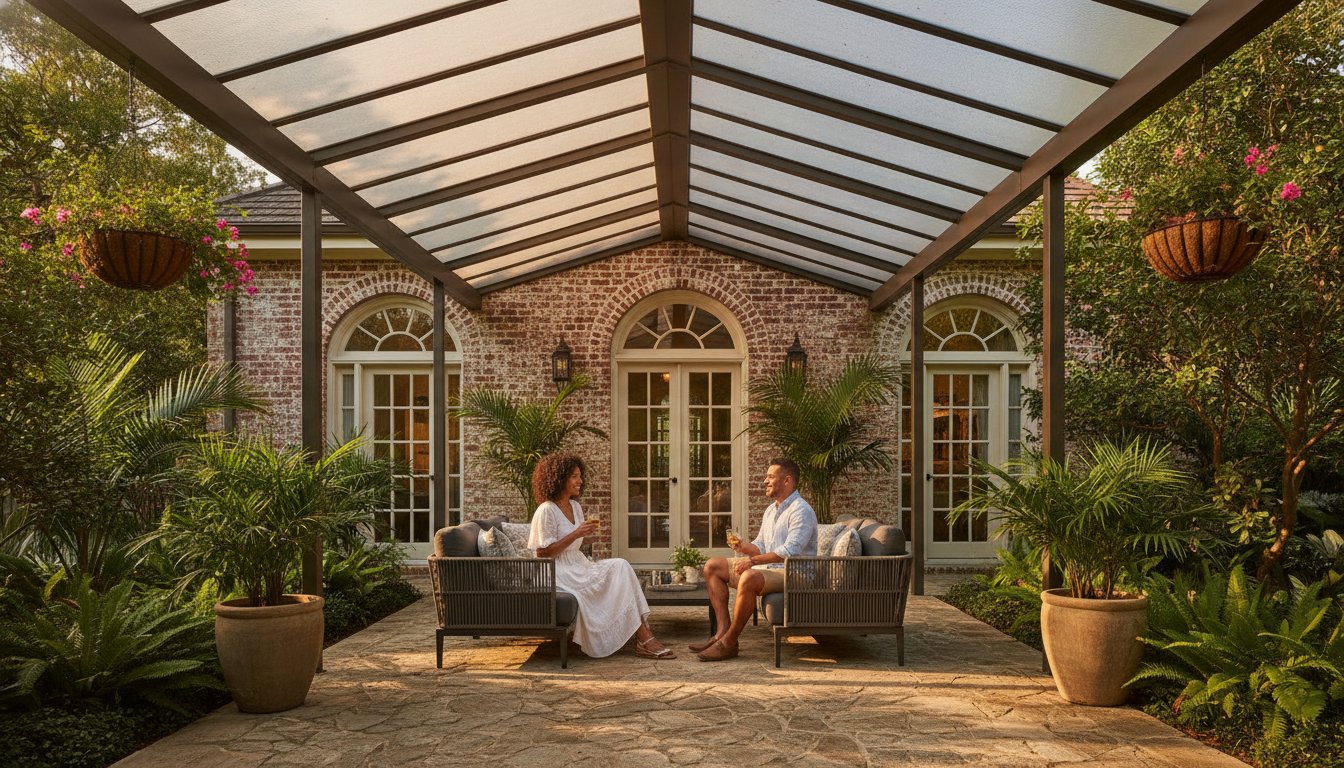
Why spend thousands on a patio cover only to find yourself sitting in a dark, gloomy cave while the sun shines just a few feet away? Many homeowners in storm-prone areas like New Orleans and Gulfport settle for solid aluminum because they don’t think polycarbonate patio roofing installers can provide a structure that survives a hurricane. It’s a valid concern; nobody wants a roof that looks like cheap plastic, yellows in the heat, or cracks under the pressure of a coastal storm.
You don’t have to sacrifice natural light for structural integrity. In this guide, you’ll discover how modern Lexan and twin-wall systems provide 250 times the impact resistance of glass while meeting strict local building codes for high-wind loads. We’ll break down the engineering behind these bright, airy structures and show you how to achieve a maintenance-free outdoor space that stays beautiful and clear through every Gulf Coast summer.
Key Takeaways
- Translucent roofing systems solve the problem of dark interior rooms by flooding your patio with light, so you don’t have to choose between shade and brightness.
- Premium Lexan offers extreme impact resistance and clarity, while twin-wall polycarbonate provides superior insulation to keep your outdoor space cooler in the high heat.
- Engineering for the Gulf Coast requires heavy-duty aluminum framing and specific fastening patterns to remain compliant with strict regional wind-load requirements.
- Expert polycarbonate patio roofing installers understand how these materials expand and contract, preventing leaks and structural failure during intense storm seasons.
- A focus on building code compliance and proper structural attachment protects your investment and ensures your new patio cover survives the next major weather event.
Natural Light Meets Durability: Why Choose Polycarbonate Patio Roofing?
Polycarbonate is a high-performance thermoplastic that has revolutionized the way we design outdoor spaces. For decades, homeowners in regions like New Orleans and Biloxi faced a frustrating compromise. You could install a solid cover for maximum shade, which often turned the patio and the adjacent living room into a dark, shadowy cave. Alternatively, you could leave the space open and deal with the blistering Gulf Coast heat and UV exposure. Modern polycarbonate patio roofing installers now offer a middle ground that provides the best of both worlds: a translucent shield that blocks the heat while flooding the area with soft, natural light.
As we move through 2026, the trend in high-end residential design has shifted toward creating seamless transitions between indoor and outdoor environments. Homeowners want the aesthetic of a glass solarium but need a material that can withstand high-wind events and accidental impacts. Polycarbonate is roughly 250 times stronger than glass and significantly lighter, making it the ideal choice for structural longevity without the fragility of traditional glazing. It’s a durable solution that doesn’t just cover a space; it enhances the way you use it.
Translucent Patio Roofing Systems vs. Traditional Aluminum
While aluminum patio covers are excellent for providing total shade and weather protection, they are completely opaque. This opacity can be a drawback if your patio is located directly outside your kitchen or living room windows. A solid roof will inevitably cut off the natural light entering your home, forcing you to use artificial lighting even in the middle of the day. Translucent panels allow up to 90% of visible light to pass through. This keeps your home’s interior bright while providing a modern, sleek aesthetic that complements contemporary architecture across the Gulf Coast.
The Lifestyle Benefit: Brightening Your Outdoor Living Space
Choosing professional polycarbonate patio roofing installers means you’re investing in daily comfort. Many people worry that a translucent roof will create a “greenhouse effect,” trapping heat underneath. Quality systems use advanced UV-filtering technology to reflect infrared radiation while allowing visible light to pass. This prevents heat buildup and protects your skin and patio furniture from the damaging effects of the sun. You get an airy, open feel that makes the patio feel like a natural extension of your home rather than a closed-in addition. The psychological boost of increased natural light is significant; it creates a more inviting atmosphere for morning coffee or evening gatherings with family.
Selecting the Right Material: Lexan vs. Twin-Wall Polycarbonate
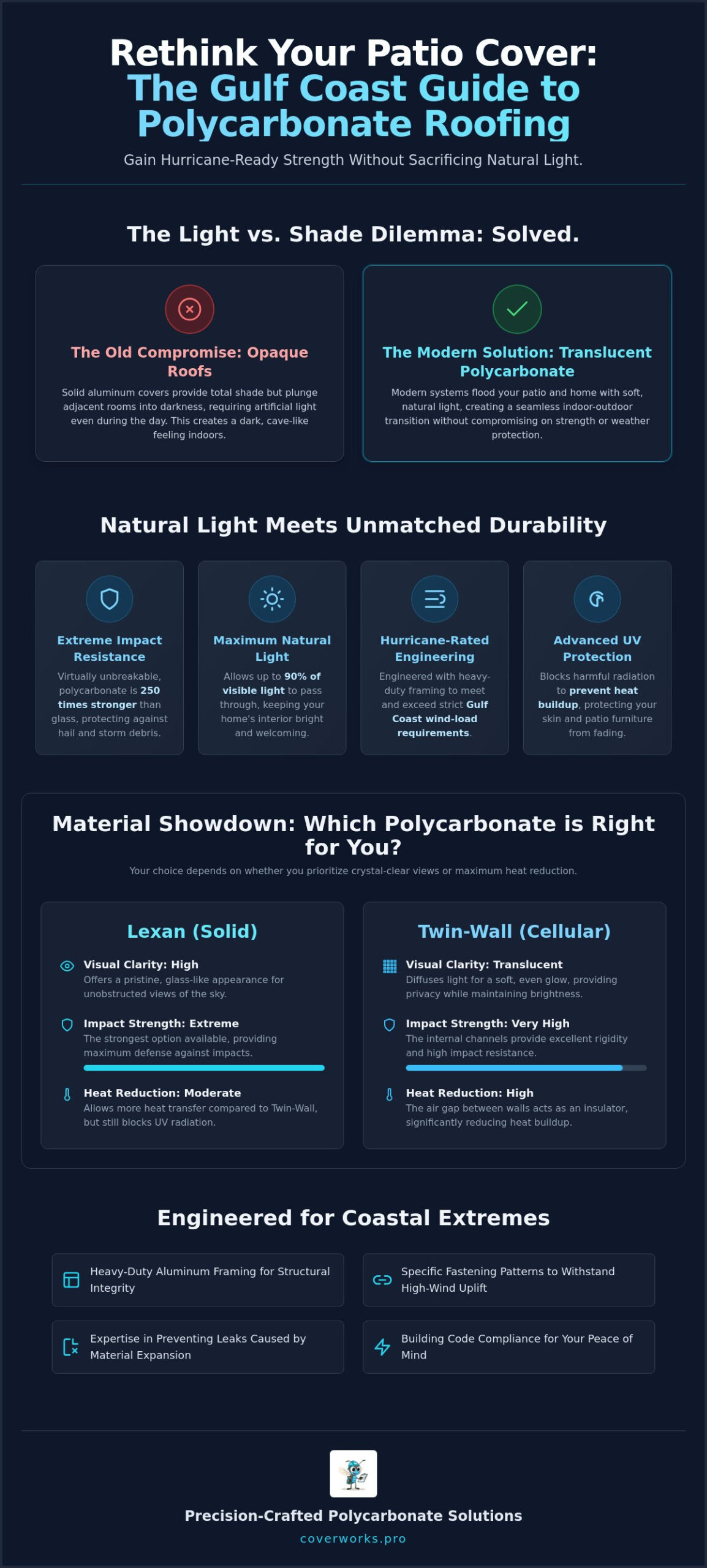
Expert polycarbonate patio roofing installers will tell you that the choice between solid and cellular panels is the most important design decision you’ll make. While both materials offer the durability needed for the Gulf Coast, they serve different aesthetic and thermal purposes. Your choice depends on whether you value crystal-clear views or maximum heat reduction. To help clarify the differences, we’ve outlined the performance characteristics of each material below.
| Feature | Lexan (Solid) | Twin-Wall (Cellular) |
|---|---|---|
| Visual Clarity | High (Glass-like) | Translucent (Diffused) |
| Impact Strength | Extreme (Unbreakable) | Very High |
| Heat Reduction | Moderate | High (Thermal Break) |
| Weight | Heavier | Ultra-Lightweight |
Lexan Solid Sheets: The Glass-Like Aesthetic
Lexan solid sheets are the gold standard for homeowners in Metairie and Slidell who want an unobstructed view of the sky. These panels provide the clarity of glass but with a structural toughness that glass cannot achieve. As a Master Craftsman, I always emphasize that Lexan requires specialized installation techniques. Because it’s a thermoplastic, it expands and contracts significantly as the temperature changes throughout the day. We use oversized fastening points and specific gaskets to ensure the roof remains water-tight and silent during these shifts. You can read more about these specific engineering requirements in our guide to Lexan patio cover benefits.
Twin-Wall Polycarbonate: Superior Thermal Insulation
Twin-wall polycarbonate features a fluted, multi-layered structure that creates a natural thermal barrier. This internal air gap is incredibly effective at blocking heat transfer, making it a functional choice for patios that face the direct afternoon sun. The flutes also diffuse incoming sunlight, eliminating the harsh glare and creating a soft, even glow across your outdoor furniture. If your primary goal is temperature control, it’s worth comparing these systems to insulated patio covers to find the right balance for your home. If you’re unsure which material fits your layout, you can consult with our design specialists for a custom recommendation.
Engineering for the Gulf Coast: Wind Loads and Hurricane Protection
Along the Gulf Coast, a patio cover is far more than a decorative addition. It’s a structural extension of your home that must be engineered to survive the unique pressures of our environment. Professional polycarbonate patio roofing installers recognize that while the panels themselves are impact-resistant, the entire system is only as strong as its framing and attachment points. In high-wind regions like New Orleans and the surrounding parishes, these structures must withstand wind speeds that can exceed 140 mph. This requires the use of heavy-duty, aircraft-grade aluminum extrusions rather than the flimsy, lightweight kits often found at big-box retailers.
One of the most critical factors in coastal engineering is managing uplift. During a hurricane or severe thunderstorm, wind can catch the underside of a patio roof, effectively turning it into a giant sail. If the structure isn’t properly anchored to the foundation and the house fascia, the upward force can rip the entire cover away, potentially causing severe damage to the main residence. We utilize specialized fastening systems and specific spacing for structural rafters to ensure that the polycarbonate panels remain locked in place, even when facing extreme atmospheric pressure. With over 25 years of experience, CoverWorks Inc. builds every project to meet or exceed the International Building Code (IBC) and specific local municipal requirements.
Meeting Local Building Codes in Louisiana and Mississippi
Permitting and code compliance are non-negotiable for any permanent structural addition. Cities such as Slidell, Metairie, and New Orleans have rigorous standards for wind-load certification. Many DIY kits fail to meet these standards because they lack the necessary engineering seals and structural calculations required by local building departments. A custom-engineered aluminum design ensures that your project is not only safe but also fully insurable. We provide the necessary documentation to show that your patio cover is built to the specific wind-zone requirements of your exact community.
Corrosion Resistance and Saltwater Protection
For our clients in Gulfport, Biloxi, and other coastal areas, saltwater corrosion is a constant threat. Traditional wood structures rot and warp in our high humidity, while steel eventually rusts when exposed to salt spray. High-grade aluminum is the superior choice for these environments because it naturally resists oxidation. To ensure long-term integrity, polycarbonate patio roofing installers must also use stainless steel fasteners. These components won’t bleed rust stains onto your patio or weaken over time due to salt exposure. This combination of polycarbonate and aluminum creates a virtually maintenance-free space that remains structurally sound for decades without the need for constant painting or repairs. For homeowners who want to understand how aluminum performs on its own, our guide on the durability of non-insulated aluminum patio covers provides a detailed breakdown of how these systems handle Gulf Coast wind loads and humidity.
What to Look for in Polycarbonate Patio Roofing Installers
Hiring polycarbonate patio roofing installers requires more than a quick search for the lowest bid. This material is unique; it behaves differently than shingles, metal, or wood. Polycarbonate expands and contracts significantly as temperatures fluctuate. If a contractor treats it like a standard metal roof, the result is often buckled panels, failed seals, and frustrating leaks. You need a team with a physical local presence and a documented history of their structures surviving Gulf Coast storm seasons. A Master Craftsman never skips the legal engineering steps, as these are the only way to guarantee your project meets the safety standards required for your specific parish or county.
When vetting potential contractors, ask about their experience with comprehensive outdoor solutions. A specialist who understands the nuances of light-transmitting roofs should also be well-versed in insulated patio cover installation. This level of expertise ensures they can recommend the right balance of natural light and heat reduction for your home’s orientation. If you’re ready to discuss your project with a team that prioritizes structural compliance, you can request a professional site inspection to get started.
Experience with Custom Aluminum Framing
The frame is the skeleton of your patio structure. It must be perfectly square and leveled to allow the polycarbonate panels to sit and move correctly. While a general roofer might be skilled at laying shingles, an aluminum specialty contractor understands how to manage structural load paths specifically for these lightweight systems. In the context of a patio-to-house attachment, structural integrity means the ability of the structure to safely transfer wind and weight loads directly into the foundation without putting undue stress on your home’s existing walls or rafters.
Permitting and Structural Attachment Expertise
The most common point of failure for any patio cover is the house attachment, often referred to as the ledger board. If this connection isn’t engineered correctly, it can compromise the exterior of your home. Professional polycarbonate patio roofing installers use high-grade flashings and industrial sealants to ensure water-tight seals at the roofline, preventing rot and moisture intrusion. It’s also vital to verify that your contractor carries full liability insurance and local licensing. This is a standard requirement for reputable screen room contractors and specialty builders, providing you with peace of mind that the work is being performed by qualified professionals who respect local building codes.
The CoverWorks Difference: Precision-Crafted Polycarbonate Solutions
Choosing the right polycarbonate patio roofing installers is the difference between a structure that lasts a few summers and one that stands for decades. At CoverWorks Inc., we bring over 25 years of field experience to every project across Louisiana, Mississippi, and Alabama. We don’t believe in one-size-fits-all kits. Instead, we combine premium materials like Lexan and twin-wall polycarbonate with site-specific engineering that accounts for the unique wind loads and soil conditions of the Gulf Coast. Our reputation is built on technical precision and a deep understanding of how aluminum and thermoplastics perform in high-humidity, storm-prone environments.
We respect your time and your investment. That’s why we offer same-day quotes and maintain a streamlined installation process that minimizes disruption to your daily life. Our goal is to move you from a vision of a brighter patio to a fully realized, code-compliant reality as efficiently as possible. By positioning ourselves as a local authority on high-wind aluminum structures, we ensure that every roof we install is as safe as it is beautiful.
Custom Design and Fast Installation Across the Gulf Coast
Our process begins with a thorough site visit where we assess your existing home structure and your specific light requirements. We serve communities throughout the region, including Metairie, Slidell, Gulfport, and Biloxi. Because we specialize in aluminum craftsmanship, we can seamlessly integrate polycarbonate roofing into various outdoor structures. This includes:
- Custom carports that protect vehicles while maintaining a bright driveway.
- Pergolas with translucent overlays for year-round utility.
- Glass rooms and screen enclosures that require high-impact roof panels.
Once the design is finalized and the permits are secured, our professional crews handle the installation with a focus on water-tight seals and structural load paths. We manage the project from the first bolt to the final municipal inspection.
Our 25-Year Legacy of Precision Craftsmanship
The “Master Craftsman” approach isn’t just a slogan; it’s a commitment to durability and style. We’ve seen how poorly installed roofs fail during tropical events, and we refuse to take shortcuts that compromise safety. Our regional expertise allows us to select the right gauges of aluminum and the correct thermal gaskets for every job. We build structures that are designed to be permanent assets to your property. If you’re ready to transform your outdoor living space with a roof that balances natural light and structural strength, contact CoverWorks Inc. for a free estimate on your polycarbonate patio project.
Build a Brighter, Storm-Ready Outdoor Living Space
Integrating natural light into your home shouldn’t mean compromising on safety during hurricane season. Choosing high-performance Lexan or twin-wall systems allows you to enjoy a bright, airy patio while maintaining the structural integrity required for the Gulf Coast climate. The success of these projects depends entirely on the expertise of your polycarbonate patio roofing installers, who must account for thermal expansion and rigorous building codes to prevent structural failure.
CoverWorks Inc. brings over 25 years of local Gulf Coast experience to every project. We prioritize hurricane-ready engineering standards and A+ rated precision craftsmanship to ensure your investment lasts for decades. Whether you’re in New Orleans, Gulfport, or Biloxi, we provide the regional expertise needed for a seamless transformation that enhances your lifestyle and your property value. It’s time to stop settling for dark outdoor spaces and start enjoying the benefits of modern, durable translucent roofing.
Request Your Free, Same-Day Quote from CoverWorks Inc.
We look forward to helping you design a patio space that stays bright, cool, and secure for years to come.
Frequently Asked Questions
Can polycarbonate patio roofing survive a hurricane?
Yes, a polycarbonate roof can survive a hurricane if it is designed and installed by professional polycarbonate patio roofing installers to meet regional wind-load requirements. Polycarbonate is 250 times stronger than glass, making it virtually unbreakable during hail or high-wind events. The structural integrity depends on the heavy-duty aluminum framing and the specific fastening patterns used to prevent the panels from lifting during a storm.
How much natural light does a polycarbonate roof actually let in?
Solid polycarbonate panels allow over 90% of visible light to pass through, while twin-wall panels transmit about 81% of light. This high level of transmission ensures that your patio remains bright and airy even on overcast days. It also prevents the adjacent rooms inside your home from becoming dark, which is a common complaint with solid aluminum covers that block all natural light.
Does polycarbonate roofing turn yellow or brittle over time?
Modern, high-quality polycarbonate panels are engineered with integrated UV inhibitors that specifically prevent yellowing and brittleness. While older or lower-grade plastics might degrade in the sun, the Lexan and twin-wall systems we use are designed for the intense UV exposure found along the Gulf Coast. These materials maintain their clarity and structural strength for decades without the maintenance headaches of traditional alternatives.
Is a polycarbonate roof louder than a metal roof when it rains?
Rain noise on a polycarbonate roof is typically softer than the loud drumming sound produced by a non-insulated aluminum patio cover. The material is a thermoplastic, which naturally absorbs more impact energy than rigid metal sheets. Twin-wall panels are even quieter because the air channels inside the fluted structure act as a sound barrier, dampening the rhythmic sound of heavy Louisiana downpours.
How do I clean and maintain my polycarbonate patio roof?
You can maintain your roof by simply rinsing it with a garden hose and using a soft cloth with mild dish soap for any stubborn debris. It’s important to avoid using abrasive chemicals, stiff brushes, or squeegees, as these can scratch the protective UV coating. Because the aluminum frame won’t rust and the panels won’t rot, this is one of the most low-maintenance roofing options available.
What is the difference between Lexan and standard polycarbonate?
Lexan is a specific brand of high-performance solid polycarbonate that is widely recognized for its superior clarity and impact resistance. While “polycarbonate” refers to the general category of thermoplastic, Lexan is often the preferred choice for residential projects where a glass-like aesthetic is the goal. It offers higher consistency and durability than generic sheets found at local hardware stores.
Do I need a permit to install a polycarbonate patio cover in Louisiana?
Most municipalities in Louisiana and Mississippi require a building permit for a permanent patio structure to ensure it meets local wind-load safety standards. Reputable polycarbonate patio roofing installers will manage the entire permitting process for you, including providing the necessary engineering seals for cities like Metairie or Slidell. This ensures your structure is safe, legal, and compliant with your homeowner’s insurance policy.
Can polycarbonate roofing be installed over an existing pergola?
Polycarbonate roofing can be installed over an existing pergola provided the original frame is structurally sound and meets current building codes. However, many older wooden pergolas aren’t built to handle the specific uplift forces of a solid roof during a storm. We evaluate your existing structure to determine if it can be safely retrofitted or if a new aluminum frame is required for safety.