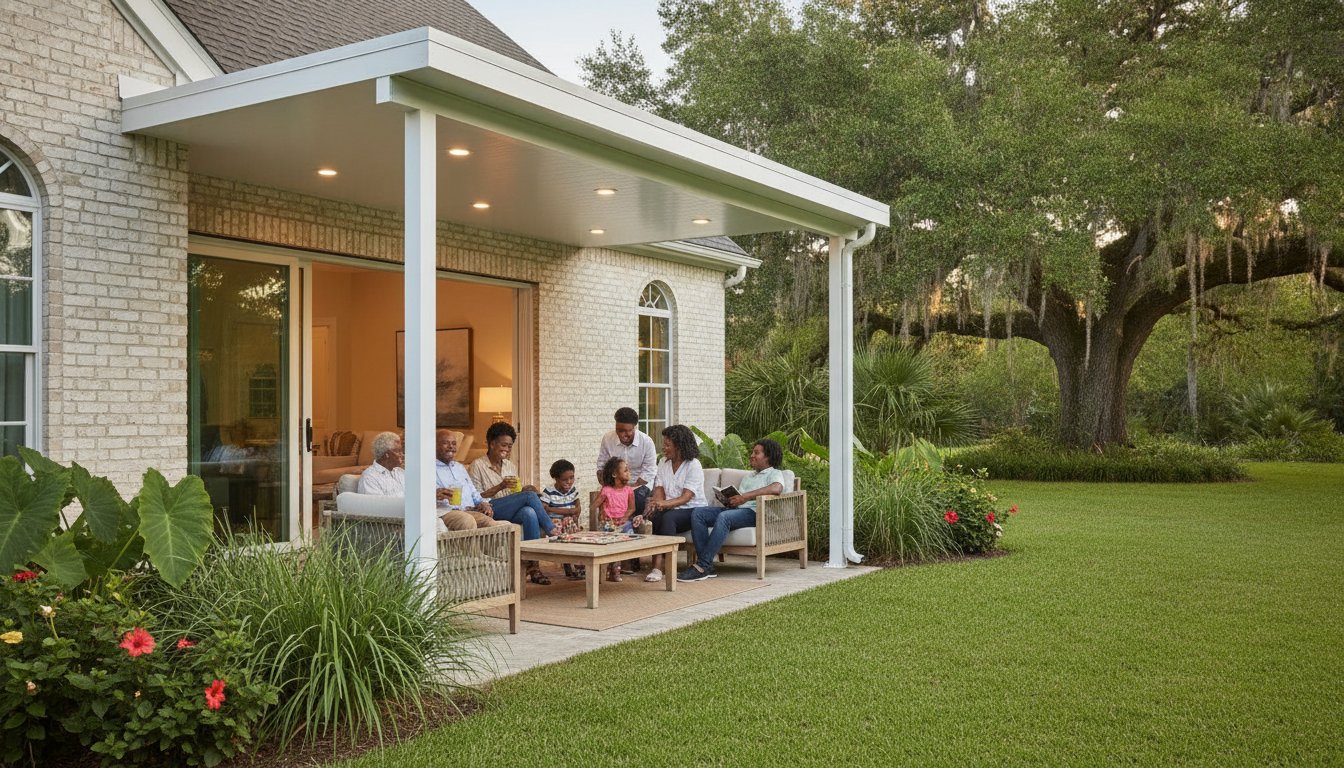
A wooden pergola might look great for the first year, but in the Gulf Coast humidity, it’s often just a countdown to rot and expensive repairs. You likely want a backyard retreat that doesn’t require a weekend of sanding and staining every single spring. We understand the frustration of watching the intense Southern heat and frequent storms take a toll on traditional structures. That’s why non-insulated aluminum patio covers have become the industry standard for homeowners who prioritize structural integrity over constant upkeep. These systems offer a streamlined, industrial-strength solution that handles our local wind loads without the high price tag of a full room addition.
In this 2026 reference guide, you’ll discover why these covers are the most durable and cost-effective shade solution for properties from New Orleans to Biloxi. We’ll break down how they protect your outdoor furniture and meet the latest 2024 International Residential Code standards for vertical loads. You will learn about the engineering that keeps these structures standing during hurricane season and why a maintenance-free finish is the smartest investment for your home’s value and your own peace of mind.
Key Takeaways
- Learn why non-insulated aluminum patio covers represent the most durable and budget-friendly shade solution for homeowners throughout the Gulf Coast.
- Understand how structural engineering and heavy-duty extruded aluminum headers protect your investment against extreme wind loads in areas like New Orleans and Biloxi.
- Compare the cost-benefit ratio of single-layer panels versus insulated systems to determine which roof profile fits your lifestyle and budget.
- Explore customization options including integrated fan beams and color-matching to ensure your new structure complements your home’s existing architecture.
- Discover why professional installation and local building code compliance are essential for maintaining the long-term safety and structural integrity of your patio cover.
What is a Non-Insulated Aluminum Patio Cover?
A non-insulated aluminum patio cover is a single-layer roof system engineered to provide reliable shade and rain protection. Unlike insulated systems that feature a foam core, these structures consist of precision-engineered, interlocking aluminum panels supported by a framework of extruded aluminum posts and headers. Within the specialty contracting industry, these are frequently called “pan roofs” or “roll-formed covers.” While the name might suggest a basic product, non-insulated aluminum patio covers are actually high-performance architectural features. They serve as a permanent structural evolution of the classic Awning, offering the rigidity needed to meet modern building codes in hurricane-prone regions.
Choosing a non-insulated system doesn’t mean sacrificing quality. In many cases, the simplicity of a single-layer roof is an advantage. These systems are lighter, putting less stress on the existing house fascia, yet they remain incredibly strong due to the temper of the aluminum alloys used. For homeowners in Metairie or Slidell, this means achieving a maintenance-free outdoor space without the significant investment required for a fully enclosed sunroom or an insulated roof system.
V-Pan vs. Flat Pan Aluminum Profiles
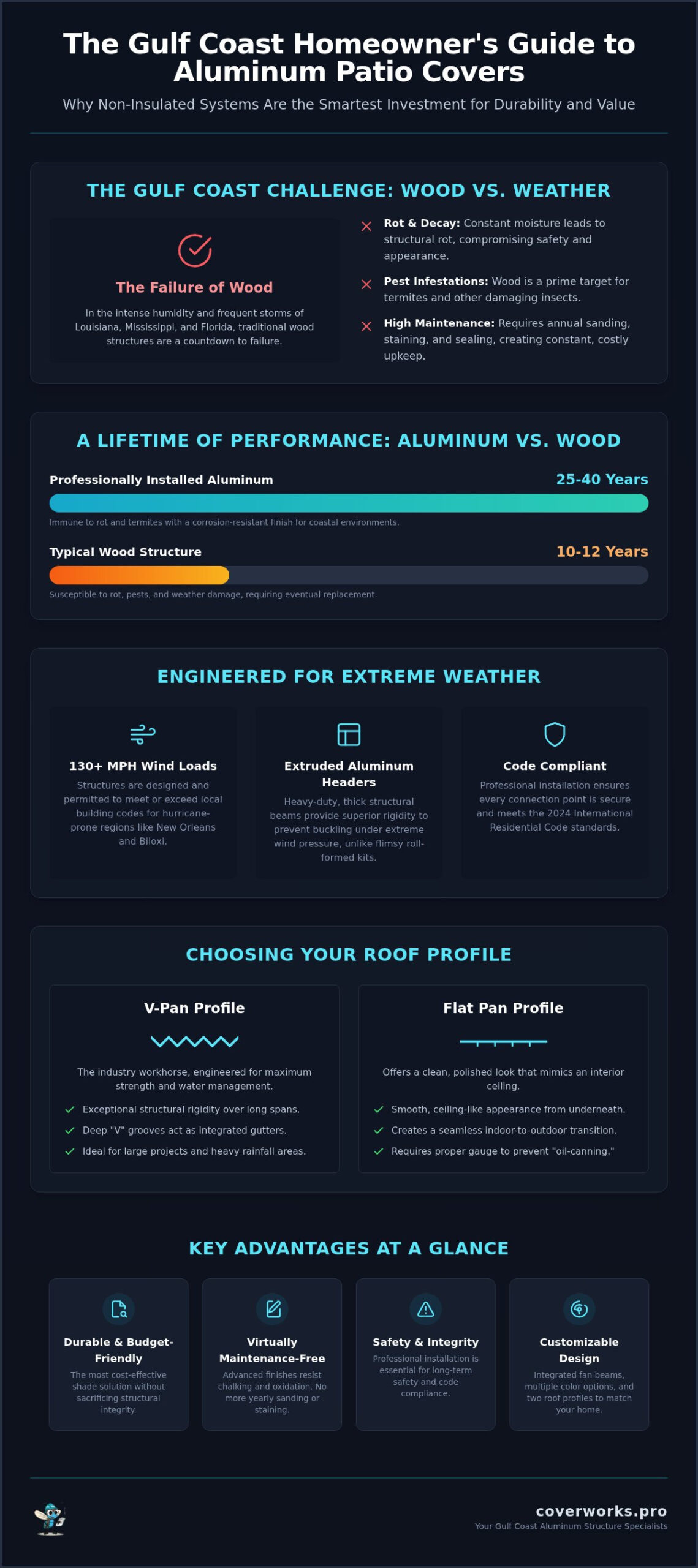
When selecting your roof style, you’ll generally choose between V-Pan and Flat Pan profiles. The V-Pan design is the workhorse of the industry. It features deep, “V” shaped grooves that serve as integrated gutters, allowing the system to manage massive volumes of water during a typical Gulf Coast thunderstorm. This profile is known for its exceptional structural rigidity over long spans, making it a favorite for larger backyard projects.
Flat Pan systems offer a different aesthetic. These panels are designed to create a smooth, ceiling-like appearance from the underside. This provides a more polished look that mimics the finished ceiling of an interior room. For many residents in New Orleans, the Flat Pan is the preferred choice for creating a seamless transition between the living room and the patio. We always ensure the gauge, or thickness, of the aluminum is sufficient to prevent the “oil-canning” or waviness that often plagues cheaper DIY kits found at big-box retailers.
Material Composition and Corrosion Resistance
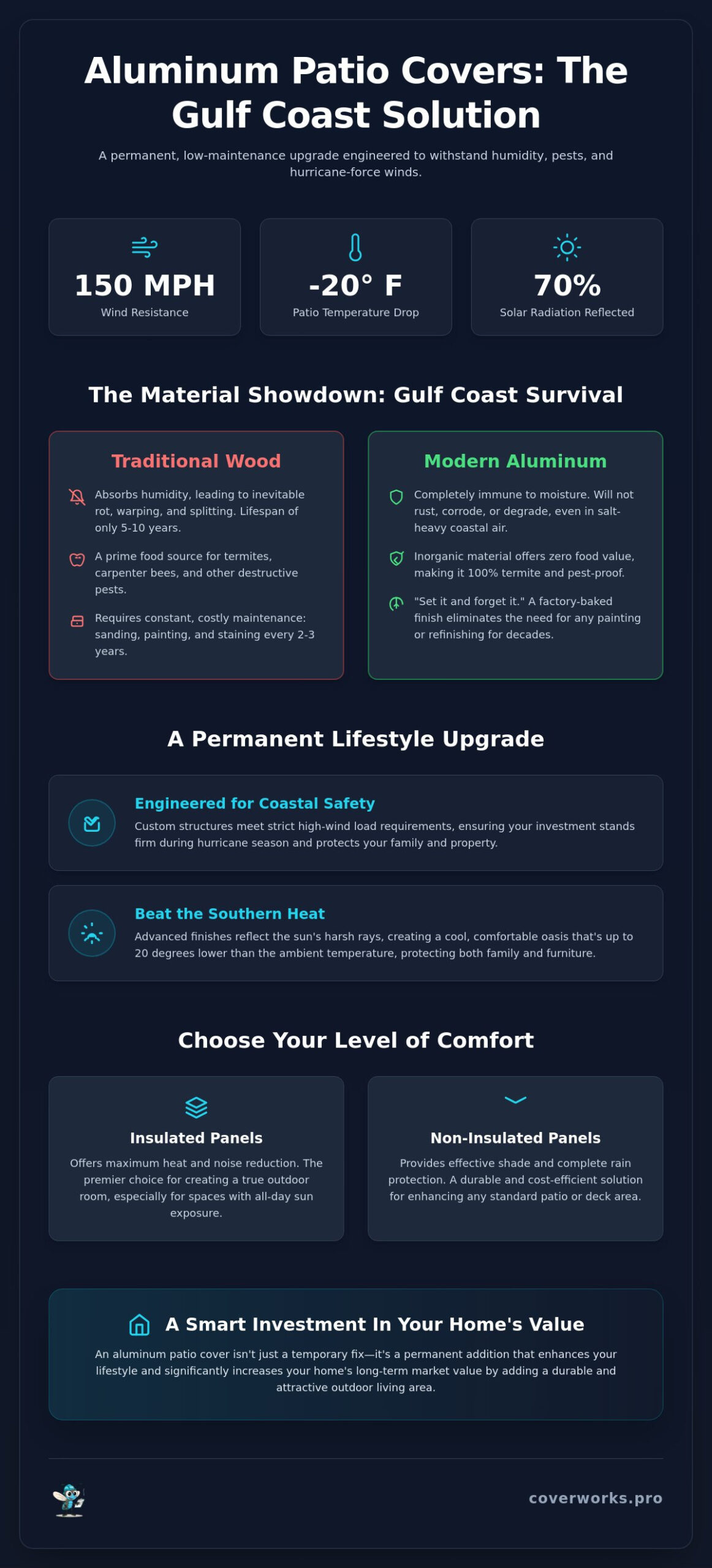
The longevity of these structures comes from the inherent properties of the aluminum itself. In the humid climate of Gulfport and Biloxi, wood is a liability. It rots, attracts termites, and requires constant painting or staining. Aluminum is naturally immune to these issues. We use high-grade alloys that are treated with advanced baked-on enamel or powder-coated finishes. These finishes are designed to resist the oxidation and chalking that can occur in high-salt environments near the coast. While a wood structure might need replacement in 10 to 12 years, a professionally installed aluminum cover has a typical lifespan of 25 to 40 years with minimal cleaning.
Engineering for the Gulf Coast: Wind Loads and Structural Integrity
Building a structure in hurricane-prone zones like New Orleans or Biloxi requires a different level of expertise than standard construction. When we install non-insulated aluminum patio covers, the primary concern isn’t just weight; it’s wind. Local building codes often require structures to withstand sustained winds of 130 mph or higher. This level of performance starts with the structural backbone of the system. We prioritize heavy-duty extruded aluminum headers over the lighter roll-formed options found in budget kits. Extruded headers are thick, structural beams that provide the necessary rigidity to prevent the roof from buckling under extreme pressure.
Because non-insulated panels are lighter than foam-filled sandwich panels, they interact with wind forces differently. While they don’t carry the same dead weight, they are more susceptible to the “sail effect” during a storm. This makes the precision of every connection point critical. Every project we undertake includes site-specific engineering and the necessary permitting to ensure the structure meets or exceeds the 2024 International Residential Code. If you’re planning a new project, it’s vital to work with a team that understands these regional requirements. You can request a professional site evaluation to see how we tailor our engineering to your specific location.
Attachment Methods: House-Mounted vs. Freestanding
The most common installation is a house-mounted system. This requires secure bolting directly into the house fascia or the wall studs behind the siding. It’s not enough to simply screw into the trim; we ensure the attachment is deep enough to reach the structural framing of your home. To protect your property, we use custom-bent aluminum flashing at the connection point. This prevents water from seeping behind the header and causing wood rot in your home’s walls. For homes with complex rooflines or weak fascia, a freestanding structure is often the safer choice. These “carport style” builds stand on their own four posts, removing all structural stress from your existing house.
Foundation and Post Anchoring
A patio cover is only as strong as its foundation. We typically require a minimum concrete slab thickness or dedicated footings to support the aluminum uprights. For maximum pull-out resistance, we prefer wet-set anchors placed during the concrete pour, though high-quality wedge anchors are used for existing slabs that meet depth requirements. These anchors are what keep the posts from lifting during a storm. In the context of Gulf Coast building codes, uplift is the aerodynamic force generated by wind moving across a roof surface that creates suction, potentially pulling the structure upward and away from its moorings.
Comparing Insulated vs. Non-Insulated Aluminum Patio Covers
Deciding between a single-layer pan and a sandwich panel often comes down to your specific goals for the space. While both systems provide excellent rain protection, the differences in construction lead to a significant price gap. Insulated panels utilize a foam core that adds both material cost and labor complexity. On the other hand, non-insulated aluminum patio covers offer a high-strength, cost-effective alternative that excels in durability without the premium price tag of a sandwich system. For homeowners in New Orleans and Biloxi, this often means being able to cover a much larger area for the same investment. To understand which engineering path is right for your property, you can explore our detailed comparison of Insulated vs. Non-Insulated Patio Roof: Which is Best for Your Gulf Coast Home?.
| Feature | Non-Insulated Pan System | Insulated Sandwich Panel |
|---|---|---|
| Cost Analysis | Budget-friendly; lower material and labor costs. | Premium investment; higher material complexity. |
| Thermal Performance | Radiant heat transfer occurs in direct sun. | High thermal break; significantly slows heat transfer. |
| Acoustic Factors | Audible “patter” during heavy rain. | Foam core dampens sound for a quieter space. |
| Structural Weight | Lightweight; minimizes stress on house fascia. | Heavier; requires robust structural attachment. |
Thermal and acoustic performance are the two primary areas where these systems diverge. Because a non-insulated roof consists of a single aluminum skin, it’ll transfer more radiant heat directly from the sun compared to a foam-filled panel. You’ll also notice a distinct sound during our heavy Gulf Coast rainstorms; the patter on the aluminum is much more audible than it is on an insulated core. For many, this sound is a nostalgic part of Southern living, but it’s a factor to consider if your patio is located directly outside a bedroom window where silence is a priority.
When to Choose Non-Insulated
These structures are the perfect choice for functional spaces like carports, boat covers, or utility sheds where absolute temperature control isn’t the priority. They’re also excellent for poolside shade where the primary goal is UV protection and a dry place to sit between swims. From a maintenance perspective, the single-component design is incredibly resilient. Because there are no internal foam layers to delaminate, these systems often outlast more complex builds in the harsh humidity of Slidell and Metairie. There are simply fewer parts that can fail, making these covers easy to clean and inspect for structural integrity after a significant weather event.
The “Heat Myth” Debunked
A common concern among homeowners is the oven effect, or the idea that a metal roof will trap heat and make the patio unbearable. This is rarely the case with open-sided structures. When we design these covers, we prioritize proper roof height to ensure that warm air can escape and cross-breezes can flow freely. If your cover is installed at the correct elevation, the temperature difference between an insulated and non-insulated roof is often negligible in an open-air environment. You can learn more about these advantages in our article on 7 Key Aluminum Patio Cover Benefits for Gulf Coast Homeowners in 2026.
Customization Options for Aluminum Patio Covers
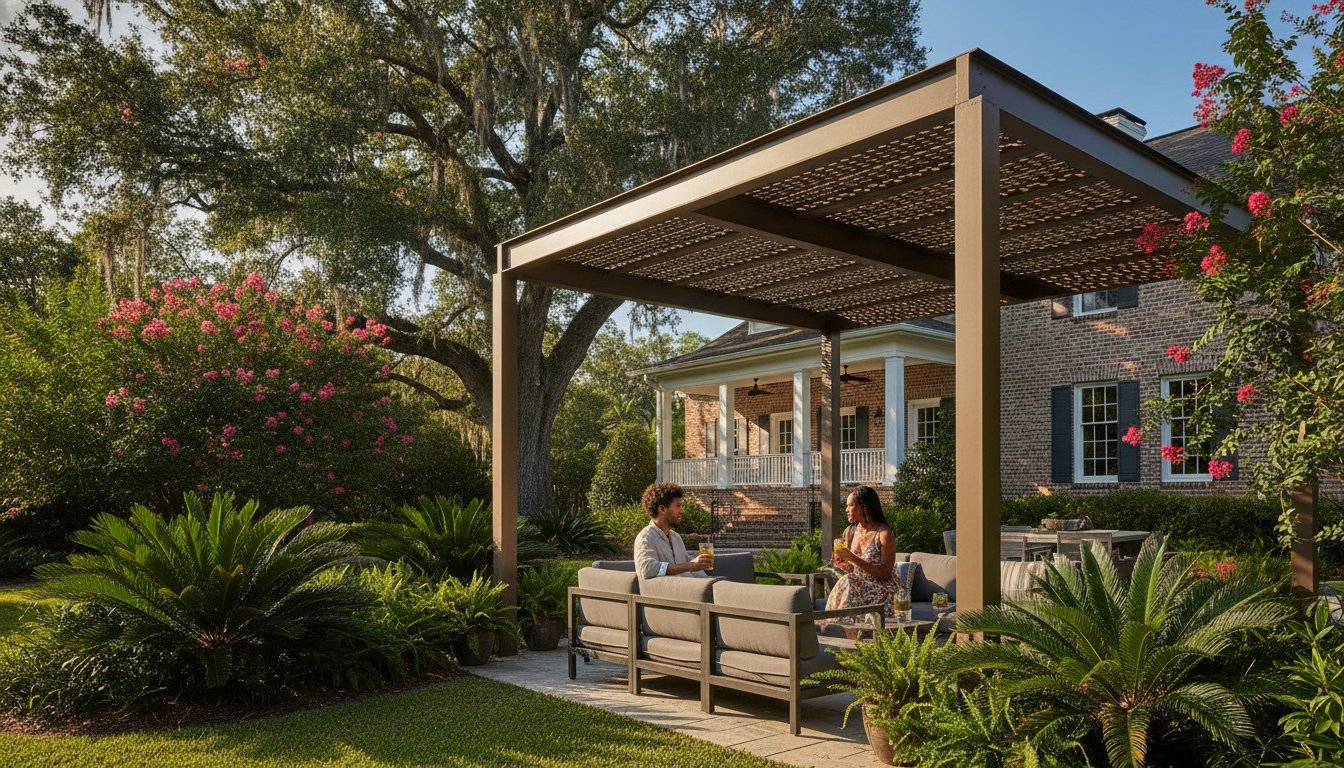
A patio cover shouldn’t look like an afterthought; it should appear as a seamless extension of your home’s original design. While the primary function of non-insulated aluminum patio covers is protection from the elements, modern engineering allows for a high degree of aesthetic customization. In 2026, we’re seeing a shift toward architectural colors like Modern Bronze, which provides an industrial warmth that complements contemporary siding and trim. Beyond color, you can opt for decorative “scalloped” edge details or heavy-duty trim packages that hide structural fasteners, giving the system a more substantial, permanent feel.
Functional customization is equally important for comfort. We often install integrated fan beams, which are specialized aluminum extrusions designed to support the weight of a ceiling fan and conceal electrical wiring. This allows you to maintain airflow on those stagnant July afternoons in Metairie or Slidell. If you’re concerned about losing natural light in the rooms adjacent to your patio, we can integrate sections of polycarbonate patio roofing. These translucent panels allow soft, filtered light to pass through while still providing a 100% waterproof seal.
Structural Add-ons: Screen Rooms and Enclosures
One of the best reasons to choose a non-insulated system is its versatility as a “starter” structure. Because the aluminum framework is designed for high wind loads, it’s often strong enough to support the addition of screen walls later. This allows you to phase your project, starting with a shade cover and eventually converting it into a full screen room or pool enclosure as your budget allows. If you eventually decide you need full climate control, you might compare this path with our Insulated Patio Cover Installation: The Ultimate Guide for Gulf Coast Homeowners to see which long-term strategy fits your property best.
Drainage and Gutter Systems
In regions like New Orleans and Gulfport, managing heavy rainfall is a structural necessity. Our non-insulated systems feature integrated “super gutters” that are far larger and more durable than standard residential gutters. We carefully plan downspout placement to ensure water is diverted away from your home’s foundation and your decorative concrete or Kool Deck surfaces. Proper water management prevents the pooling that leads to staining and structural settling. Seamless gutter integration is the #1 defense against foundation erosion.
Why Professional Installation Matters for Aluminum Structures
Attempting to install a patio cover using a generic DIY kit can be a costly mistake in high-wind regions like Mississippi and Alabama. These off-the-shelf products rarely feature the structural grade of aluminum needed to withstand a tropical storm or meet the 2024 International Residential Code. When we install non-insulated aluminum patio covers, we rely on over 25 years of field experience to ensure every fastener and anchor is placed according to exact engineering specifications. A professional installation isn’t just about speed; it’s about the long-term structural integrity that protects your home and your family during the next major weather event. Homeowners across the state can find detailed regional guidance in our custom aluminum patio covers Mississippi buying guide, which covers local wind load requirements and code compliance in depth.
One of the most difficult aspects of these projects is achieving a water-tight seal at the roofline. Amateurs often struggle with flashing and pitch, leading to leaks that can rot your home’s fascia over time. Our team focuses on precision custom-bent flashing and industrial-grade sealants designed for the intense Southern heat and humidity. This commitment to quality is backed by long-term support and warranties that you simply won’t get from a retail kit or an unlicensed handyman. We take personal responsibility for the quality of the structures we leave behind in our community.
The CoverWorks Process: From Quote to Completion
We believe in a methodical approach that respects your time and expectations. It starts with same-day quotes and a site-specific design that takes your home’s unique architecture into account. Whether you’re in Slidell, LA or Gulfport, MS, we handle the complex permitting process and ensure every build is compliant with local wind codes. Our Master Craftsmen treat every project as a signature of our regional reputation, ensuring that your new structure is built to last for decades, not just seasons.
Final Steps: Securing Your Free Estimate
Before your consultation, it’s helpful to clear the patio area and have a general idea of your desired footprint. When evaluating a contractor, always look for a deep portfolio of local aluminum specialty structures rather than general home remodeling. Check for regional familiarity with the specific wind load requirements of communities like Metairie or Biloxi. We invite you to contact CoverWorks Inc. today for a thorough inspection and a free estimate on your custom aluminum patio cover project.
Frequently Asked Questions
How long do non-insulated aluminum patio covers last?
A professionally installed aluminum cover typically lasts 25 to 40 years. The baked-on enamel finish is designed to resist fading and chalking for up to 20 years before a refresh is needed.
Can I add a ceiling fan to a non-insulated cover?
Yes. We use specialized “fan beams” which are structural aluminum extrusions that support the weight of the fan and provide a hidden channel for the electrical wiring.
Do I need a permit for a patio cover in Louisiana or Mississippi?
In almost all cases, yes. Local municipalities require permits to ensure the structure meets specific wind load and uplift requirements. We handle the entire permitting process for our clients.
Is aluminum better than wood for the Gulf Coast?
Aluminum is far superior for our climate because it doesn’t rot, warp, or attract termites. It also requires zero painting or staining, making it a maintenance-free alternative to traditional wood.
How do these covers handle heavy rain?
Our systems feature integrated “super gutters” and V-Pan profiles designed specifically to manage the high volume of water seen during Southern thunderstorms, preventing overflow and foundation erosion.
Conclusion
Choosing a non-insulated aluminum patio cover is the most practical and cost-effective way to transform your backyard into a functional, shaded retreat. By prioritizing high-grade materials and professional engineering, you can enjoy a structure that survives the harshest Gulf Coast conditions while adding permanent value to your property. Don’t settle for temporary solutions that fail when the wind picks up. Trust the experience of Master Craftsmen who understand the unique challenges of our region. Contact CoverWorks Inc. today to schedule your free estimate and take the first step toward a more comfortable outdoor lifestyle.
Build a Legacy of Shade and Strength
Investing in non-insulated aluminum patio covers allows you to reclaim your outdoor space without the constant burden of wood rot or storm damage. These structures provide the ideal blend of industrial durability and architectural beauty, ensuring your backyard remains protected against the Gulf Coast’s most challenging elements. By focusing on site-specific engineering and the latest building code requirements, you’re not just adding shade; you’re enhancing your home’s structural integrity and long-term appraisal value.
CoverWorks Inc. brings over 20 years of regional experience to every project we undertake. As specialists in high-wind hurricane engineering, we’re fully licensed and insured to operate across Louisiana, Mississippi, and Alabama. We understand the precision required for a water-tight installation and the importance of a structure that meets the rigorous demands of our local environment.
It’s time to enjoy the maintenance-free lifestyle you deserve under a cover built by master craftsmen. We’re ready to help you start your next home improvement project with confidence and expertise.
Frequently Asked Questions
Are non-insulated aluminum patio covers loud when it rains?
Yes, you will hear the rain on a single-layer aluminum pan roof. Because there’s no foam core to dampen the sound, the metal resonates with a distinct rhythmic patter during our Southern thunderstorms. Many homeowners find this sound relaxing, but it’s certainly more audible than a traditional shingled roof or an insulated system. If your patio is located directly beneath a bedroom window, this acoustic factor is something to consider during the design phase.
How much wind can a non-insulated aluminum patio cover withstand?
A professionally installed structure is typically engineered to withstand wind loads of 130 mph or more, depending on your specific location. In hurricane-prone areas like New Orleans and Biloxi, we follow strict local building codes that prioritize structural integrity. By using heavy-duty extruded aluminum headers and precision anchoring, we ensure that your non-insulated aluminum patio covers remain secure against the intense uplift forces generated during major weather events.
Will a non-insulated cover make my patio feel like an oven?
An open-air aluminum cover won’t create an “oven effect” as long as it’s installed with sufficient height for airflow. While the metal panels do absorb heat from the sun, the lack of walls allows cross-breezes to naturally carry that warmth away. We carefully calculate the roof pitch and elevation during the planning stage to ensure that air circulates freely, keeping your outdoor living space comfortable even during the peak of summer.
Can I install a ceiling fan on a non-insulated aluminum cover?
You can absolutely add a ceiling fan to your structure by integrating a specialized fan beam into the roof system. This heavy-duty aluminum component is designed to support the weight and vibration of the fan while providing a concealed raceway for the electrical wiring. It’s a popular customization for residents in Metairie and Slidell who want to maintain a cooling breeze on those stagnant, humid afternoons without visible conduit or wires.
Do I need a permit for a non-insulated aluminum patio cover in Louisiana?
Yes, obtaining a building permit is a mandatory step for most residential projects in Louisiana and across the Gulf Coast. Permits ensure that the structure is engineered to handle local wind loads and is safely attached to your home’s foundation or fascia. We take care of the entire permitting process for our clients, ensuring that every build is fully compliant with the latest 2024 International Residential Code standards.
How long do aluminum patio covers last compared to wood?
Aluminum structures significantly outlast traditional wood, especially in the high humidity and termite-prone soil of the South. While a wood pergola might show signs of rot or warping within a decade, a quality aluminum system has a typical lifespan of 25 to 40 years. You won’t have to deal with the constant cycle of sanding, staining, or painting that wood requires, which saves you both time and money over the life of the structure.
Can I convert a non-insulated cover into a screen room later?
You can convert your patio cover into a screen room at a later date if the original framework was engineered to support the additional walls. This phased approach is a great way to manage your budget while planning for future enhancements. We make sure the initial posts and headers are strong enough to handle the weight of screen frames and doors, allowing for a seamless transition whenever you’re ready to upgrade.
What maintenance is required for an aluminum patio cover?
Maintenance for non-insulated aluminum patio covers is remarkably simple and usually only involves a quick rinse with a garden hose. You don’t need to worry about the painting or sealing required for wood. For homes located near the saltwater in Gulfport or Biloxi, we recommend rinsing the structure a few times a year to remove salt spray and mineral deposits, which helps preserve the baked-on enamel finish for decades.