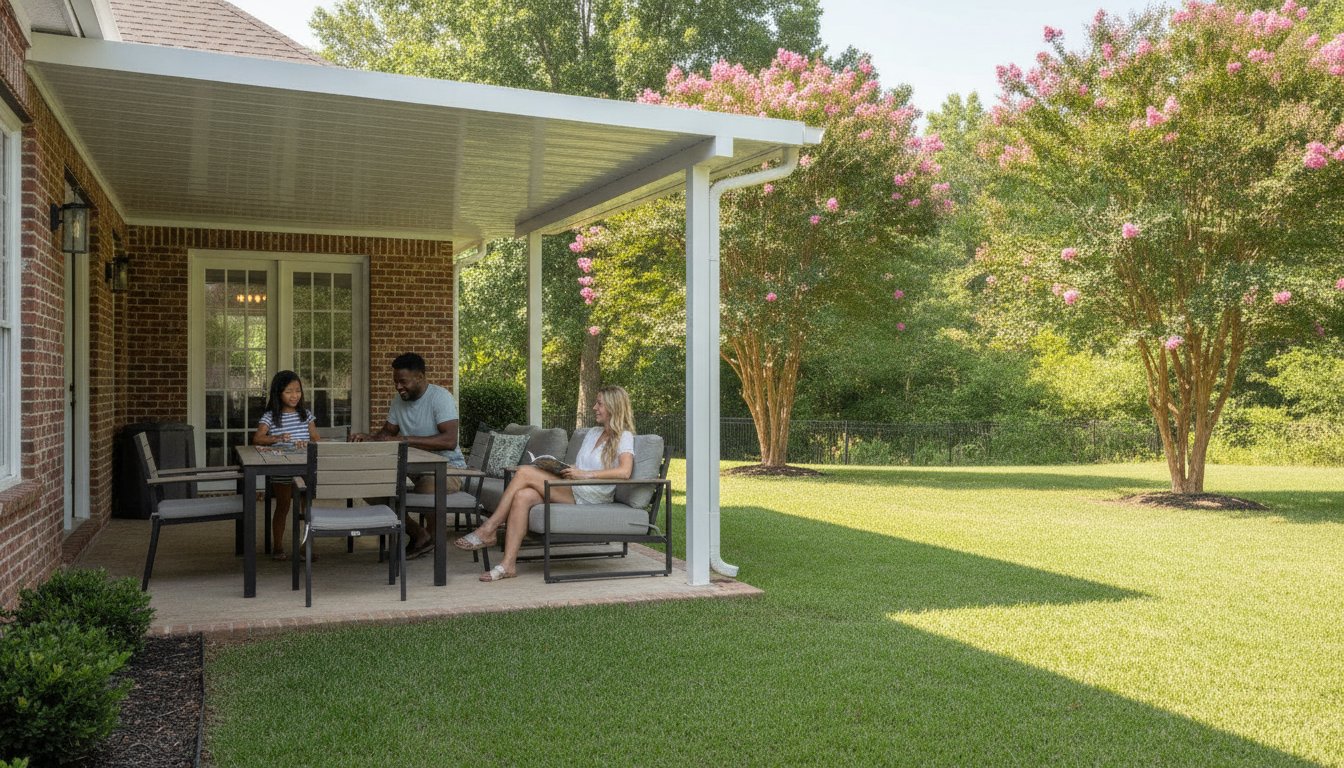
A patio cover in Mississippi is more than just a home improvement; it’s a structural shield against the most unforgiving climate in the South. You’ve likely felt the frustration of a backyard that’s unusable for four months of the year because the heat is simply too intense. Many homeowners settle for wood structures that eventually rot or flimsy kits that can’t survive a single season of Gulf Coast weather. You deserve a solution that provides genuine relief and stands firm when the storms roll in.
In this 2026 buying guide, you’ll learn how to select the custom aluminum patio covers Mississippi homeowners rely on to beat the heat and withstand hurricane-force winds. We’ll break down the engineering standards for the Gulf Coast, compare insulated roofing systems, and show you how to ensure your project meets the latest building codes for a lasting investment. By following these professional insights, you can transform your outdoor space into a comfortable, permanent retreat that adds significant value to your property.
Key Takeaways
- Understand why aluminum is the most durable material for the humid Gulf Coast climate compared to high-maintenance wood structures that rot or attract termites.
- Learn how insulated roofing systems can drop your patio temperature by over 15 degrees, making outdoor spaces usable even in peak August heat.
- Discover the critical engineering standards required to meet 2026 Mississippi wind load codes and protect your home during coastal storms.
- Explore how to select custom aluminum patio covers Mississippi that match your home’s existing architecture through specific roof profiles and factory-applied finishes.
- Get insights into the streamlined installation process that moves your project from a same-day quote to a completed outdoor retreat with a master-crafted finish.
Why Custom Aluminum is the Superior Choice for Mississippi Patios
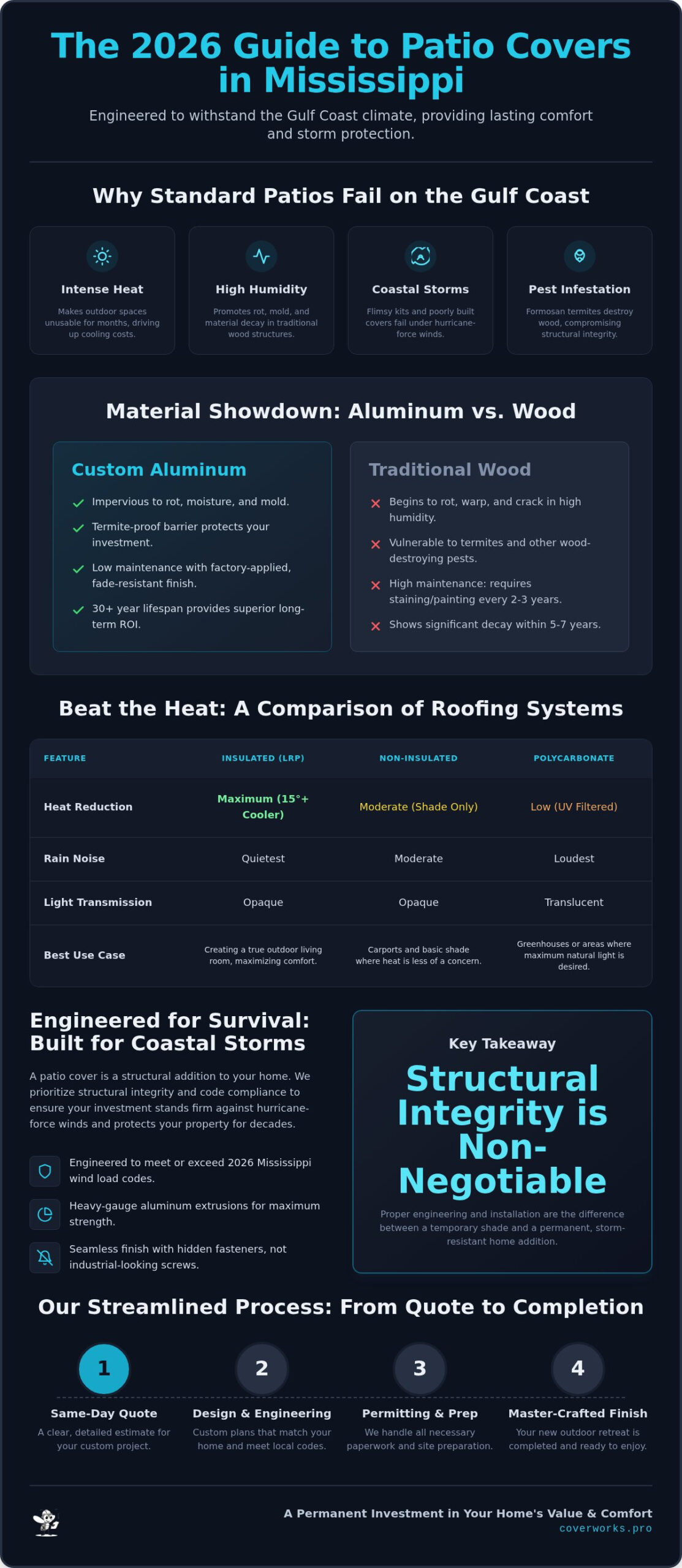
Mississippi’s climate is brutal on building materials. High humidity and heavy rainfall create a constant cycle of moisture that forces wood to expand and contract. This process inevitably leads to warping and cracking. Most wooden patio structures in our region show signs of significant decay within 5 to 7 years. In contrast, custom aluminum patio covers Mississippi residents invest in are designed to remain impervious to these environmental stressors. They don’t absorb water, which means they won’t rot or host the mold that often plagues traditional builds.
Beyond the weather, there is the persistent threat of Formosan termites and other wood-destroying pests common along the Gulf Coast. A wooden structure is an open invitation for infestation, requiring annual chemical treatments and inspections. Aluminum provides a termite-proof barrier that protects your investment. It ensures the structural integrity of your home’s attachment points remains solid for decades. We take a master craftsman approach to these installations, using heavy-gauge extrusions and hidden fasteners. This ensures the final product looks like a seamless architectural addition rather than an industrial afterthought.
Aluminum vs. Wood: A 10-Year Cost Comparison
The initial price of a wood structure might seem attractive, but the 10-year outlook reveals a different reality. Wood requires pressure washing, staining, or repainting every 2 to 3 years to prevent total failure. When you calculate the cost of professional maintenance and the inevitable repairs, the long-term ROI of aluminum is far superior. The aluminum patio cover benefits include a factory-applied finish that resists sun-bleaching and chalking, even under the intense Mississippi sun. Historically, Aluminum awnings and fixed covers have been the preferred choice for property owners who value longevity over temporary fixes. Aluminum won’t become brittle or lose its load-bearing capacity as it ages, maintaining its value for the life of the home.
Sustainability and Recyclability in Modern Construction
Modern aluminum construction is a responsible choice for eco-conscious homeowners. Aluminum is one of the most recycled materials on the planet; it retains its properties indefinitely through the recycling process. By choosing a material that lasts 30 years or more, you significantly reduce the environmental impact associated with frequent material replacements. There are also immediate energy gains. Installing a patio cover creates a thermal shield over your home’s windows and doors. This reduces solar heat gain, which helps your air conditioning system run more efficiently during our sweltering summer months. It’s a durable, low-impact solution that improves your home’s performance while providing a comfortable outdoor retreat.
Roofing Systems: Insulated vs. Non-Insulated vs. Polycarbonate
Selecting the right roof for custom aluminum patio covers Mississippi homeowners install is a decision that impacts your comfort for decades. While the previous sections focused on the structural frame, the roofing material handles the daily battle against solar heat and heavy precipitation. The goal is to choose a system that aligns with your specific lifestyle needs, whether you want a shaded sanctuary or a bright, sun-drenched space for your plants.
Insulated Laminated Roof Panels (LRP) represent the highest tier of thermal protection. These panels use a high-density foam core to create a physical barrier against radiant heat. According to research on the energy savings of cool roofs, using reflective and insulated materials can significantly lower the temperature of the area below. In the sweltering humidity of a Mississippi August, this thermal break can make your patio feel up to 15 degrees cooler than the ambient air. It’s the difference between a space that feels like an oven and one that stays comfortable all afternoon.
To help you decide which material fits your project, we’ve outlined the primary differences in the comparison table below:
| Feature | Insulated (LRP) | Non-Insulated | Polycarbonate |
|---|---|---|---|
| Heat Reduction | Maximum (15+ degrees) | Moderate (Shade only) | Low (UV filtered) |
| Light Level | Full Shade | Full Shade | Soft Natural Light |
| Rain Noise | Quiet / Dampened | Loud / Metallic | Moderate |
| Walkability | Yes (Structural) | No | No |
Insulated Laminated Roof Panels (LRP)
LRP systems are the standard for those who want a true “outdoor room.” Beyond the temperature control, the foam core acts as a sound muffler during our frequent heavy downpours. It also provides enough structural rigidity that a technician can safely walk on the roof for maintenance. If you’re weighing the initial investment against long-term comfort, check out our detailed look at insulated vs non-insulated patio roof systems.
Natural Light Solutions: Polycarbonate and Lexan
For patios attached to kitchens or living rooms with limited windows, a solid roof might make the interior of your home feel too dark. Twin-wall polycarbonate or Lexan panels allow natural light to filter through while blocking 99% of harmful UV rays. These systems are incredibly impact-resistant, handling hail and falling branches with ease. When researching polycarbonate patio roofing installers, ensure they use multi-wall sheets designed to prevent yellowing in the intense Southern sun.
Many homeowners in communities like Gulfport and Biloxi opt for a hybrid design. This setup uses insulated panels for the majority of the cover with polycarbonate sections acting as skylights over windows. It’s a smart way to maximize heat protection without losing the brightness of the sun. If you’re unsure which combination is right for your home, you can speak with our design consultants for a custom layout recommendation.
Mississippi Engineering: Wind Loads and Structural Integrity
Engineering determines whether your patio is a permanent retreat or a liability. In Mississippi, wind requirements vary drastically depending on your distance from the coast. While inland counties might only require protection against 90 mph gusts, homeowners in Gulfport and Biloxi must adhere to much stricter standards. Designing custom aluminum patio covers Mississippi families can rely on means accounting for these regional differences from the very beginning. A structure that isn’t engineered for your specific wind zone risks becoming a sail during a severe weather event, potentially causing significant damage to your home’s primary roofline.
The “Master Craftsman” secret to a lasting installation is the structural attachment point. This is where the patio cover meets your house. Many “handyman” installations fail because they use standard fasteners or improper flashing that doesn’t distribute the load correctly. We prioritize heavy-duty extruded aluminum over thinner, roll-formed components. Extruded aluminum is pushed through a die, creating a thicker and more rigid profile that offers superior resistance to bending and twisting. This choice of material, combined with engineered bracketry, ensures that the connection to your home is the strongest part of the entire system.
Permitting and building code compliance are also critical factors. As of July 6, 2026, cities like Ocean Springs have moved to the 2024 International Codes with local amendments. These updates require documented proof of engineering before a permit is even issued. Skipping the permit process might save time initially, but it often leads to failed inspections during a home sale or, worse, a denied insurance claim after a storm. Professional installation ensures every bolt and anchor meets the 2021 International Residential Code (IRC) standards used throughout the state.
Designing for High-Velocity Hurricane Zones (HVHZ)
For projects in Bay St. Louis, Gulfport, and Biloxi, we use structural designs capable of withstanding 150 mph winds. This requires specific alloy grades and increased wall thickness in the support posts and header beams. Site-specific engineering is essential because every home has a different orientation and height. These factors change how wind pressure interacts with the structure. By calculating the exact uplift and downward pressure for your specific lot, we can guarantee a lifespan that far exceeds cheaper, non-engineered alternatives.
Foundation and Anchoring Requirements
A patio cover is only as strong as its foundation. We carefully evaluate existing concrete slabs to ensure they have the necessary thickness for post-anchoring. If a slab is too thin, the wind can literally pull the anchors out of the ground. Proper anchoring involves using high-strength wedge anchors or epoxy systems that lock the structure into the masonry. A wind load rating is a structural calculation that defines the maximum wind speed a patio cover can safely withstand before risking permanent deformation or detachment, specifically reaching 150 mph in Mississippi’s highest-risk coastal zones.
Customisation Options: Styles, Colours, and Features
Customising your outdoor space is about more than just shade; it’s about creating a visual harmony between your new structure and your existing home. When selecting custom aluminum patio covers Mississippi homeowners should consider how the roof profile affects the overall curb appeal. We offer several configurations, including traditional gables that provide high ceilings and excellent airflow, and sophisticated mansard designs that add a touch of elegance to modern homes. For those seeking a clean, low-profile look, our flat-pan systems offer a sleek finish that works well with almost any architectural style.
Colour selection is equally vital. Our factory-applied finishes in Bronze, White, and Ivory are designed to match or complement your home’s siding and trim. These aren’t just surface paints; they’re durable coatings that resist the chalking and fading often caused by intense Gulf Coast UV exposure. Beyond the colours, we integrate functional features that many contractors overlook. This includes internal fan beams and hidden wiring channels. These allow for the seamless installation of ceiling fans and LED lighting without visible conduits, maintaining the master craftsman look we’re known for.
Our customisation process includes a variety of decorative options to suit your taste:
- Support Columns: Choose from sleek square posts for a modern look or decorative wrap kits for a more traditional appearance.
- Beam End Caps: Custom-cut profiles that add a finished, professional touch to the structural headers.
- Integrated Lighting: Low-voltage LED systems that provide ambiance without the clutter of external fixtures.
Architectural Integration
A successful project looks like it was built with the house, not bolted on later. We achieve this by matching roof pitches and using custom fascia that aligns with your home’s roofline. Water management is another critical design element. Our integrated gutter and downspout systems are engineered to handle the heavy downpours common in communities like Metairie and Slidell. By directing water away from your foundation and preventing splash-back on your siding, these systems protect your home while maintaining a clean aesthetic.
Enhancing the Living Experience
We design our structures with the future in mind. Many of our clients start with a covered patio and later decide to convert it into a screen enclosure or a glass room. By using heavy-duty structural components from the start, we ensure your cover is ready for those upgrades whenever you are. You can also elevate the space by pairing your new cover with decorative concrete resurfacing. This creates a cohesive outdoor room that feels just as finished as your interior living areas.
The CoverWorks Experience: Custom Aluminum Patio Covers Mississippi from Quote to Installation
The CoverWorks Inc. experience is defined by a commitment to precision and efficiency that only comes from over 25 years of field experience. We don’t operate like general contractors who juggle dozens of unrelated trades; instead, we focus exclusively on aluminum specialty structures. This specialization allows us to streamline the design-build process for custom aluminum patio covers Mississippi homeowners expect. We understand the logistical nuances of working across the Gulf South and prioritize a timeline that respects your home and your schedule. While traditional wood projects can linger for weeks, our aluminum systems are often installed in just a few days once the site is prepared.
Transparency in our quoting process is a cornerstone of our service. When we provide a same-day professional quote, it includes a comprehensive breakdown of all structural components, including the specific heavy-duty extrusions and roofing panels selected. You won’t find vague estimates or hidden fees for engineering reviews. This level of detail provides homeowners, insurance adjusters, and property managers with the confidence that the project is scoped correctly and will meet all local building codes from the start.
Our 5-Step Project Lifecycle
We follow a methodical path to ensure every structure meets our master craftsman standards. This structured approach keeps the project on schedule and ensures you’re informed at every stage of the construction process:
- Initial Consultation: We conduct a thorough site assessment and provide a same-day professional quote.
- Engineering & Permitting: Our team manages the technical documentation and works with local building departments to secure all necessary permits.
- Material Procurement: We source high-grade aluminum extrusions and components specifically tailored to your custom design and dimensions.
- Professional Installation: Our specialized crews execute the build with a focus on correct structural attachment and weather-tight flashing.
- Final Inspection: We perform a detailed walkthrough to ensure every finish and connection meets our rigorous quality standards.
Why Experience Matters in the Gulf South
Navigating the complex soil conditions and high-velocity wind zones of Mississippi requires deep regional knowledge. CoverWorks Inc. has a long history of standing behind our work in communities like New Orleans, Metairie, Slidell, Gulfport, and Biloxi. We understand the specific challenges of corrosion protection for properties near saltwater and the necessity of hurricane-grade engineering. We’ve seen how inferior structures fail during major weather events, which is why we never recommend shortcuts that compromise safety. We view every installation as a long-term partnership, offering continued support for structural repairs or rescreening as your outdoor needs evolve over the decades.
Transform Your Backyard into a Year-Round Retreat
Choosing the right outdoor structure is about balancing immediate comfort with long-term durability. Throughout this guide, we’ve highlighted why aluminum stands up to the unique challenges of the Gulf South, from relentless humidity to high-velocity wind loads. By prioritizing professional engineering and code compliance, you protect both your family and your property value. Investing in custom aluminum patio covers Mississippi homeowners can trust means you’ll spend less time on maintenance and more time enjoying your outdoor living space.
Our team brings over 20 years of regional experience to every project, ensuring that your new patio cover is a seamless architectural extension of your home. We provide hurricane-grade engineering as a standard, giving you peace of mind during the most volatile weather seasons. With our streamlined quoting process, you can move from a vision to a completed installation with efficiency and expert guidance.
Your ideal outdoor space is within reach. We’re ready to help you create a cooler, more functional backyard that your family will enjoy for decades to come.
Frequently Asked Questions
Do I need a permit for an aluminum patio cover in Mississippi?
Yes, you typically need a building permit for any roofed structure in Mississippi, whether it is attached to your home or freestanding. Local municipalities like Gulfport and Biloxi enforce specific wind load requirements and zoning laws. We handle the technical documentation and engineering specs needed for the permit process to ensure your project meets the 2021 International Residential Code standards used throughout the state.
How much wind can a custom aluminum patio cover withstand?
Properly engineered custom aluminum patio covers Mississippi residents install can withstand wind speeds up to 150 mph. This high-velocity rating is a legal and safety requirement for properties located in coastal hurricane zones. We use site-specific engineering to ensure that every anchor point and structural attachment is capable of handling the uplift and pressure associated with severe Gulf Coast weather events.
Is an insulated patio cover really worth the extra cost in the South?
Insulated roof systems are highly effective in the South because they create a thermal break that blocks radiant heat. These panels can lower the temperature on your patio by 15 degrees or more during the peak of July and August. They also dampen the sound of heavy rain and prevent the condensation buildup that often occurs with single-skin metal covers, making the investment worthwhile for year-round comfort.
Can I install a ceiling fan or lights in my aluminum patio cover?
Yes, you can easily integrate ceiling fans and LED lighting into your custom design. We utilize specialized fan beams and internal wiring channels that allow us to hide all electrical conduits within the structure. This results in a clean, professional finish that provides the same functionality as an interior room without any visible wires or bulky external mounting boxes.
How long does the installation of a custom patio cover typically take?
Most aluminum patio cover installations are completed within two to four days once the site preparation and permitting are finished. This is significantly faster than traditional wood construction, which can take weeks and require multiple trades. Because our components are precision-engineered and often pre-cut, the on-site assembly is efficient and causes minimal disruption to your daily routine.
Will an aluminum patio cover increase my home’s resale value?
Adding a high-quality aluminum structure generally increases your home’s resale value by expanding the functional square footage of your living area. Exterior improvements in the East South Central region, including Mississippi, historically provide a high return on investment. Prospective buyers specifically look for low-maintenance features that won’t require future painting, staining, or expensive termite treatments.
What is the difference between extruded and roll-formed aluminum?
Extruded aluminum is thicker and much more rigid because the metal is pushed through a high-pressure die to create a specific shape. Roll-formed aluminum is thinner sheet metal that is bent into a profile. We prioritize extruded components for structural headers and support posts. This ensures the structure has the necessary strength to meet 2026 wind load codes and maintain its integrity over decades.
Can my patio cover be converted into a screen room later?
Yes, we design our custom aluminum patio covers Mississippi homeowners select to be “screen-ready” for future upgrades. If you decide to add screen walls or even a glass room at a later date, the heavy-duty structural frame is already engineered to support the additional weight. This allows you to build your outdoor retreat in phases as your budget or lifestyle needs change.