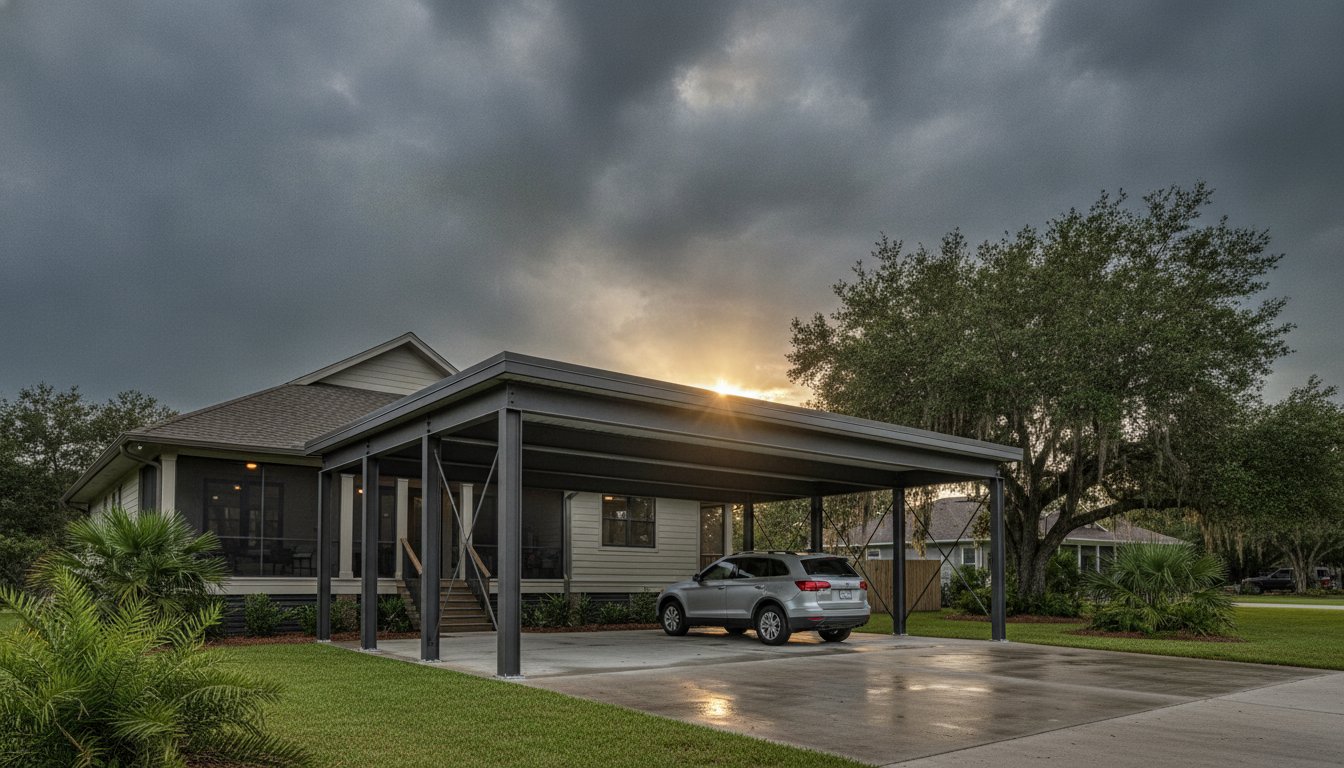
In the Gulf South, “heavy duty” isn’t just a marketing label; it’s a specific engineering requirement for survival. Whether you’re in New Orleans, Metairie, or Biloxi, you know that standard retail kits won’t stand a chance against 160 mph wind loads or the corrosive salt air of the coast. Investing in heavy duty aluminum carports is the only way to ensure your vehicles stay protected from fading paint and spring hail without worrying if the structure itself will blow away. We understand that your property requires a permanent solution that’s as resilient as the people who live here.
This 2026 guide will show you why custom-engineered aluminum is the superior choice for total vehicle protection. We’ll break down the latest building codes across Slidell and Gulfport, explain the science of corrosion resistance, and demonstrate how a professionally installed structure increases your home’s aesthetic appeal and resale value. You’ll learn exactly what to look for in a low-maintenance solution that meets the highest standards of structural integrity and local compliance.
Key Takeaways
- Identify the specific structural gauge and alloy requirements necessary to meet 2026 Gulf Coast wind load regulations for hurricane resilience.
- Learn why heavy duty aluminum carports offer superior corrosion resistance and longevity in saltwater environments compared to traditional steel or wood structures.
- Compare the thermal benefits of insulated roof panels versus non-insulated systems for controlling vehicle surface temperatures in extreme humidity and heat.
- Understand the critical role of proper permitting and site preparation to ensure your permanent structure is fully code-compliant and adds to your property’s appraisal.
- Discover how custom engineering and professional installation provide a 30-year lifecycle that temporary portable kits simply cannot match.
What Defines a Heavy Duty Aluminum Carport in 2026?
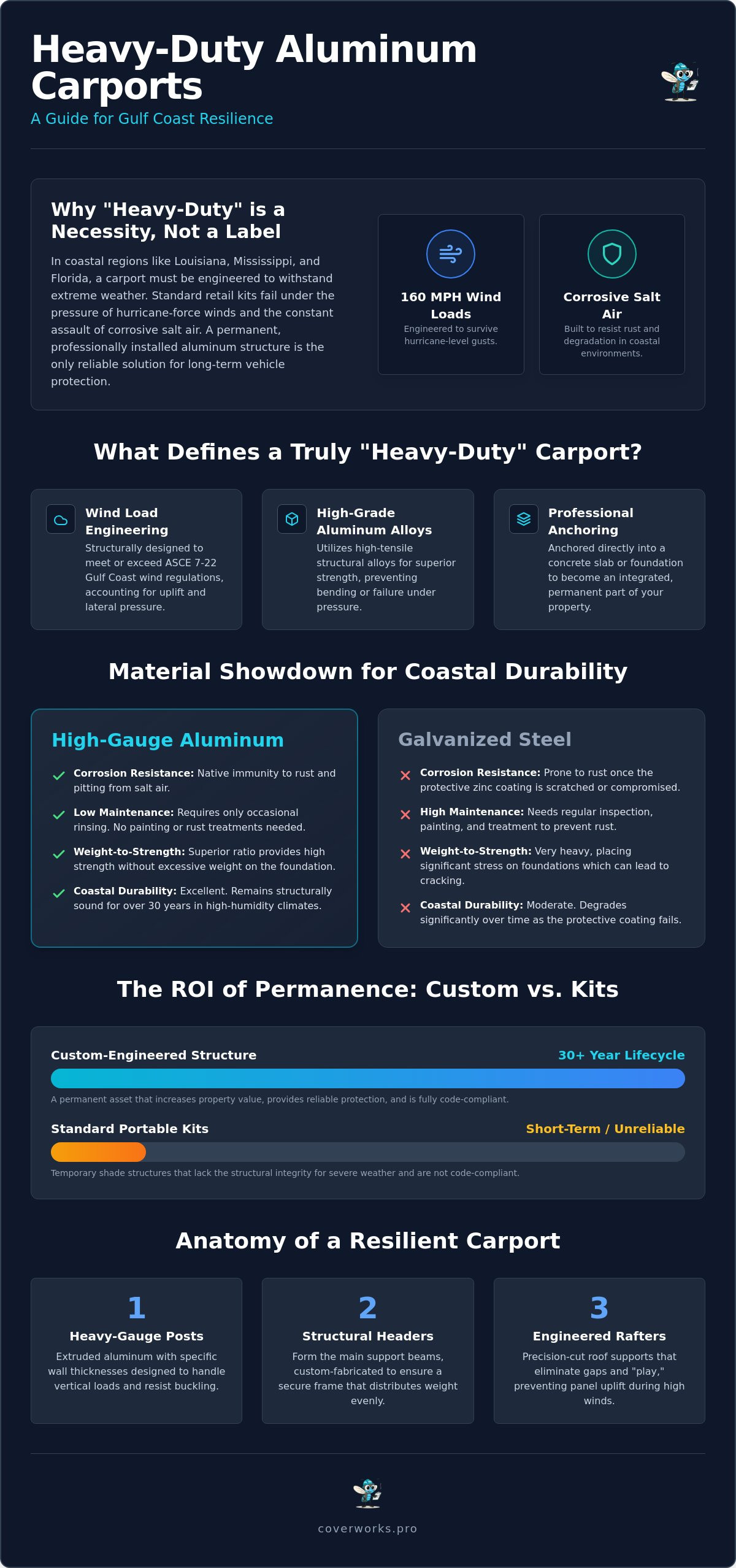
In the construction industry, “heavy duty” is often used as a vague marketing buzzword to describe anything made of metal. For a homeowner on the Gulf Coast, however, this term represents a strict set of engineering benchmarks that mean the difference between a lasting investment and a pile of scrap metal after a storm. A true Carport built for this region must exceed basic retail standards. It requires specific structural gauges, high-tensile alloys, and a design that’s anchored directly into a concrete slab or foundation through professional structural attachment.
While wood might offer a traditional look, it eventually rots in the relentless humidity of New Orleans and Metairie. Steel is undeniably strong, but without constant, expensive maintenance, the salt air will cause it to corrode and weaken from the inside out. Aluminum provides the ideal balance for our climate. It’s lightweight enough for efficient installation but naturally resists the oxidation that destroys other metals. This makes heavy duty aluminum carports the most reliable choice for long-term vehicle protection.
We often see “portable kits” marketed as heavy duty, but these are typically temporary shade structures. They lack the structural integrity necessary to survive a hurricane. A permanent aluminum structure is custom-engineered to stay put, utilizing heavy-gauge posts and rafters that are bolted down to meet or exceed local building codes. These structures aren’t just standing on your property; they’re integrated into it.
The Importance of High-Grade Aluminum Alloys
Standard aluminum is relatively soft and prone to bending under pressure. To build a structure that lasts thirty years, we use high-tensile structural alloys that offer significantly higher yield strength. This durability is non-negotiable for properties in Slidell, Gulfport, or Biloxi, where the environment is unforgiving. In 2026, improved manufacturing and powder-coating techniques have ensured that these structures maintain their finish for decades without the chalking or fading common in older models.
Engineered Wind Loads: Beyond the Basics
Wind load refers to the physical pressure that a storm’s gusts exert on the surface of a structure. The ASCE 7-22 standard serves as the national benchmark for determining these loads to ensure residential structures can withstand environmental forces. When a generic kit is hit by a 110 mph gust, the uplift often rips the roof panels right off the frame. A custom-engineered system accounts for this uplift and lateral pressure. This ensures that heavy duty aluminum carports remain intact and secure even when the most severe tropical weather hits the coast.
Engineering for Resilience: Materials and Structural Integrity
The structural integrity of heavy duty aluminum carports depends on the precision of three primary components: the posts, the headers, and the rafters. Unlike retail kits that use thin-walled tubes, a professionally engineered structure uses extruded aluminum with specific wall thicknesses designed to handle vertical and lateral loads. These components are custom-fabricated to fit the unique dimensions of your driveway or parking pad. This precision ensures that every connection point is secure. It eliminates the gaps and “play” that often lead to structural failure in high winds.
Aluminum vs. Galvanized Steel in the Gulf South
| Performance Factor | High-Gauge Aluminum | Galvanized Steel |
|---|---|---|
| Corrosion Resistance | Native resistance to salt air; won’t rust or pit. | Prone to rust once the protective zinc coating is scratched. |
| Maintenance Needs | Minimal; requires only occasional rinsing with water. | High; needs regular painting and rust treatment. |
| Weight-to-Strength | Superior; provides high strength without massive bulk. | Heavier; puts significant stress on concrete foundations. |
| Coastal Durability | Excellent; remains structurally sound for 30+ years. | Moderate; degrades significantly in high-humidity climates. |
In high-humidity areas like New Orleans and Metairie, material choice is a long-term financial decision. While galvanized steel is initially strong, the zinc coating eventually breaks down. This exposes the underlying iron to moisture and salt air. Once rust begins, it compromises the structural gauge from within. Aluminum doesn’t face this risk. It possesses a superior weight-to-strength ratio, allowing for large spans without the massive weight of steel. Over a 20-year period, the maintenance requirements for aluminum are practically zero. Steel often requires scraping and repainting to fight off corrosion, but a high-quality powder-coated finish prevents oxidation and fading for decades.
Roofing Options: From Polycarbonate to Insulated Panels
Your choice of roof panel dictates how much heat and light reach your vehicle. For homeowners who want to maintain a bright environment, there are significant Lexan patio cover benefits; these include high impact resistance and natural light transmission. However, for maximum thermal protection, a 3-inch insulated roof system is the gold standard. These panels feature a high-density foam core between two aluminum skins. This design drastically reduces the surface temperature of your car during a July afternoon in Biloxi or Slidell.
The Florida Building Code for Aluminum provides strict guidelines on how these roof systems must be secured to prevent uplift. Beyond the panels themselves, the roof pitch and integrated gutter systems are critical. Proper drainage prevents water from pooling. This reduces the constant stress on headers and prevents leaks at the structural attachment points. Every component of these heavy duty aluminum carports, from the structural alloy to the stainless steel fasteners, is selected for regional endurance. If you’re ready to upgrade your property with a structure that lasts, you can request a professional evaluation of your site’s specific needs.
Custom-Built vs. Portable Kits: The ROI of Permanence
Choosing between a retail kit and a custom structure is a decision between a temporary fix and a long-term asset. While portable kits are marketed for their easy assembly, they lack the structural weight and rigorous engineering required for the Gulf Coast. A 30-year lifecycle is standard for professionally built heavy duty aluminum carports. In contrast, a typical retail kit often requires replacement every few years due to cumulative wind damage or metal fatigue. When you factor in the cost of three or four kits over three decades, the custom-built permanent structure becomes the more economical choice.
A permanent structure adds tangible value to your home’s appraisal. Appraisers view unpermitted, portable carports as personal property rather than a permanent improvement. From an insurance perspective, a non-permitted kit can be a significant liability. If a storm causes a temporary structure to collapse onto your vehicle, adjusters may deny the claim if the structure didn’t meet local wind-load regulations. Investing in a permanent, engineered solution protects both your vehicle and your long-term financial interests. It ensures that your property remains compliant with the evolving safety standards of 2026.
Professional Installation and Structural Safety
Structural safety begins below the surface. In coastal Mississippi and Alabama, building codes mandate that permanent carports be anchored into reinforced concrete footings to resist extreme uplift. DIY installations often rely on simple stakes or weighted bases that fail during the first sign of a tropical storm. Professional builders also ensure proper flashing and structural attachment to your home’s existing roofline or foundation. This prevents water intrusion that could lead to hidden wood rot in your home’s fascia or siding. A master craftsman understands that the connection to the host structure is just as critical as the carport itself.
Aesthetic Integration with Your Home
A custom carport shouldn’t look like an afterthought. Modern aluminum systems offer a variety of decorative trim packages and color-matching options to ensure the structure complements your home’s existing architecture. Whether you choose a sleek frame or a more traditional look, the goal is seamless integration. Many homeowners find that the clean lines and finishes of these structures are very similar to modern aluminum pergola designs. This allows you to maintain a consistent aesthetic across all your outdoor living spaces. You’ll get the heavy-duty protection your vehicles require without sacrificing the curb appeal of your property.
Planning Your Installation: Site Prep, Permitting, and Codes
A successful carport project is a methodical process that begins long before the first post is set. The roadmap starts with a comprehensive site survey to determine the best location for the structure while respecting property setbacks and existing utility lines. This planning phase is crucial for avoiding legal disputes with neighbors or the city. Once the site is cleared, we move to the engineering phase. This involves obtaining site-specific engineering seals that certify the design meets the rigorous wind load requirements of the Gulf South. These seals are mandatory for the permit application and serve as your guarantee that the structure is built to professional standards.
Securing heavy duty aluminum carports requires a deep understanding of local soil conditions and environmental stressors. In cities like New Orleans, Metairie, and Slidell, the high water table and soft soil necessitate specific foundation strategies. We coordinate the transition from site preparation to structural attachment to ensure a seamless build that respects both your time and your property. By managing the logistics of the project from the start, we ensure that your installation proceeds without the delays common in less organized construction projects.
Navigating Local Building Permits
A permit is much more than a piece of paper; it’s your best protection against future code enforcement issues and insurance complications. In the Gulf Coast region, building departments are increasingly strict about outdoor structures due to the high risk of hurricane damage. A properly permitted structure ensures that your carport is recognized as a permanent improvement to your home. This adds to your total property value and satisfies the requirements of your homeowner’s insurance policy. We handle all the administrative “red tape” for you, from drafting the initial plans to closing out the permit after the final inspection. This proactive approach prevents the headaches often associated with DIY or unpermitted “handyman” projects.
Site Preparation and Foundation Requirements
The longevity of your carport depends on the quality of the ground it stands on. We prioritize proper site grading to ensure that rainwater flows away from the structure, preventing standing water from accumulating under your vehicles. For projects in a 140 mph wind zone, structural posts must be anchored into reinforced concrete footings that are a minimum of 24 inches deep to provide the required resistance against wind-driven uplift. This depth ensures the structure remains stable even when the soil becomes saturated during heavy tropical rains. Maintaining a level surface during this phase is essential for the perfect alignment of the aluminum headers and rafters, ensuring the roof system drains efficiently and remains structurally sound for decades.
Why CoverWorks Inc. is the Premier Choice for Gulf Coast Carports
Choosing a contractor for a permanent outdoor structure requires finding a partner who understands the local environment as well as they understand engineering. With over 25 years of field experience, CoverWorks Inc. has established itself as a master craftsman for the Gulf South. We’ve seen firsthand how the humidity and storms of this region treat inferior products. That’s why we refuse to use anything but high-gauge, engineered materials for our heavy duty aluminum carports. Our legacy is built on structures that remain standing decades after their installation, providing homeowners with a level of reliability that retail kits can’t match.
We believe that a professional consultation should be efficient and transparent. Our “Same-Day Quote” process reflects this commitment to your time. When you contact us, you won’t wait weeks for a basic estimate. We provide clear, detailed pricing that accounts for the specific engineering and permitting requirements of your property. This streamlined approach allows you to move from the planning phase to protection without unnecessary delays. You gain the peace of mind that comes from knowing your project is handled by professionals who prioritize structural integrity and building code compliance above all else.
Bespoke Design for Every Vehicle Type
Standard carports often fail to accommodate the diverse needs of modern households. We specialize in bespoke designs that offer customized heights and widths for RVs, offshore boats, and multi-car collections. Our engineering team ensures that even high-profile structures maintain their wind-load ratings. We also offer integrated lighting and electrical packages, turning a simple parking area into a well-lit, functional space. Because we use high-tensile aluminum, our structures require significantly less upkeep than other materials. You can see the details of this advantage in our guide on aluminum vs wood pergola maintenance, which highlights why aluminum is the superior choice for the coast.
Our Service Area and Local Expertise
Our deep familiarity with the specific soil and wind conditions across Louisiana, Mississippi, and Alabama sets us apart. Whether we’re working in the soft soil of Slidell or the high-velocity wind zones of Gulfport and Biloxi, we apply 25 years of regional knowledge to every foundation we pour. We don’t believe in cutting corners or using generic components that might compromise safety. Every structure is a reflection of our commitment to the communities we serve. We provide fast, professional installation that respects your property and your schedule.
Secure Your Investment with Hurricane-Engineered Protection
Protecting your vehicle on the Gulf Coast requires a structure that can handle salt air, extreme heat, and 2026 wind load standards. We’ve discussed how custom-engineered heavy duty aluminum carports outperform temporary kits by offering a 30-year lifecycle and increased property appraisal value. By choosing high-tensile alloys and professional structural attachment, you ensure your cars, boats, or RVs remain safe through the most severe tropical weather.
With over 25 years of experience serving Louisiana, Mississippi, and Alabama, CoverWorks Inc. provides the regional expertise needed for a code-compliant installation. Our hurricane-engineered structures are built to withstand the unique challenges of our coastal environment. This gives you a seamless path to a permanent outdoor solution that respects your time and your budget.
Take the first step toward a more resilient property and long-term peace of mind today.
Frequently Asked Questions
Do I need a building permit for an aluminum carport in Louisiana?
Yes, building permits are mandatory for permanent aluminum carports across Louisiana. Parishes like Orleans, Jefferson, and St. Tammany require structures to meet specific wind zone ratings to ensure public safety. We manage the entire permitting process for you, providing the necessary site-specific engineering to ensure your project is fully compliant with local codes and insurance requirements.
What is the maximum wind speed a heavy-duty aluminum carport can withstand?
Custom-engineered heavy duty aluminum carports are designed to withstand wind speeds ranging from 150 to 175 mph depending on your specific location. Coastal areas in Mississippi and Florida have strict requirements that mandate these high ratings to prevent structural failure during hurricanes. We ensure that every component, from the posts to the roof panels, meets or exceeds these local safety standards.
How does the cost of an aluminum carport compare to a traditional garage?
An aluminum carport is a significantly more cost-effective alternative to building a traditional stick-built garage. It provides the same level of UV and storm protection for your vehicles without the high expenses of framing, siding, and complex roofing. Additionally, carports don’t usually require the same level of extensive foundation work as a fully enclosed room, making them a faster and more budget-friendly investment.
Can I attach an aluminum carport to my existing home roofline?
Yes, we frequently design carports that utilize a structural attachment directly to the existing home’s fascia or roofline. This process requires professional flashing and specific engineering to ensure the host structure can safely support the additional load. If an attachment isn’t the best fit for your home’s design, we can also build a freestanding structure that sits flush against the house for a seamless look.
How long does the installation of a custom aluminum carport take?
Most custom aluminum carport installations are completed within one to three days once the materials are fabricated and the permit is issued. The exact timeline depends on the complexity of the design and whether we’re pouring a new concrete pad or reinforced footings. We prioritize an efficient workflow to minimize disruption to your property while maintaining the highest standards of workmanship.
What maintenance is required for a powder-coated aluminum structure?
Maintenance for a powder-coated aluminum structure is minimal compared to the constant upkeep required for wood or steel. You’ll only need to rinse the frame with water occasionally to remove salt spray, dust, or dirt accumulation. This specialized finish is designed to resist the chalking, fading, and peeling that typically occurs with painted surfaces under the intense Gulf Coast sun.
Is an insulated roof better than a standard aluminum roof for a carport?
An insulated roof is often the superior choice for carports in high-heat areas like New Orleans and Biloxi. These 3-inch thick panels feature a high-density foam core that blocks heat transfer, keeping the area under the carport much cooler than a standard single-skin roof. This thermal barrier helps prevent the “oven effect” that can damage your vehicle’s interior and dashboard over time.
Will an aluminum carport rust if I live near the ocean in Biloxi or Gulfport?
No, heavy duty aluminum carports will not rust, making them the ideal choice for properties in Biloxi or Gulfport. Aluminum naturally resists corrosion because it creates its own protective oxide layer when exposed to the air. While steel structures eventually succumb to the salt air and humidity of the coast, aluminum maintains its structural integrity and aesthetic finish for decades with almost no upkeep.