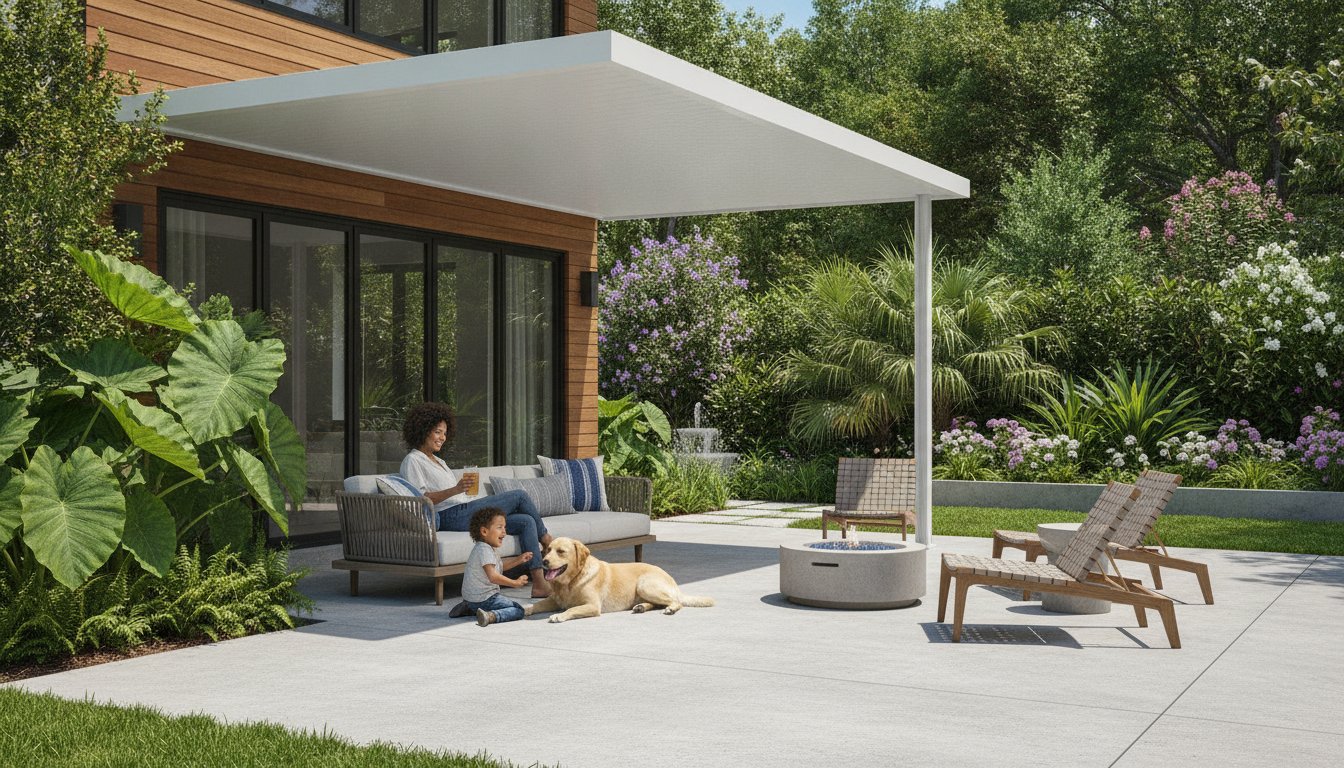
On a typical July afternoon along the Gulf Coast, your patio surface can easily reach a blistering 140 degrees, making it a danger zone for bare feet and pet paws alike. It’s a common frustration for homeowners who want to enjoy their outdoor space but find themselves trapped indoors to avoid the searing heat. If you’ve ever felt the sting of a sun-baked deck or worried about your dog’s paws, you know that standard concrete simply isn’t built for our climate. This guide details the most effective professional strategies for cooling patio deck surfaces, allowing you to lower your outdoor temperatures by up to 30 degrees using advanced materials.
We understand that a total deck replacement is often too costly and disruptive for most families. Instead, we focus on a dual-layer approach that combines heat-reflective coatings with engineered shade. You’ll learn how specialized resurfacing materials keep your feet comfortable even in direct sunlight. We also explain how insulated aluminum patio covers provide a durable, storm-ready solution that reduces ambient heat. By the end of this guide, you’ll have a clear plan to transform your scorching patio into a walkable, refreshing retreat that stands up to the unique demands of the Gulf Coast.
Key Takeaways
- Understand how thermal mass in materials like concrete stores solar energy and why it causes outdoor surfaces to reach dangerous temperatures.
- Discover how professional solutions for cooling patio deck surfaces, such as Kool Deck resurfacing, use reflective technology to lower surface heat significantly.
- Compare the heat-blocking capabilities of insulated versus non-insulated aluminum patio covers to create a permanent, engineered shade solution.
- Learn a step-by-step approach to upgrading your existing patio by prioritizing improvements based on sun exposure and your specific lifestyle needs.
- Identify the benefits of using durable, hurricane-rated structures that are specifically designed to withstand the extreme heat and storms of the Gulf Coast.
The Science of Hot Patios: Why Surfaces Sizzle
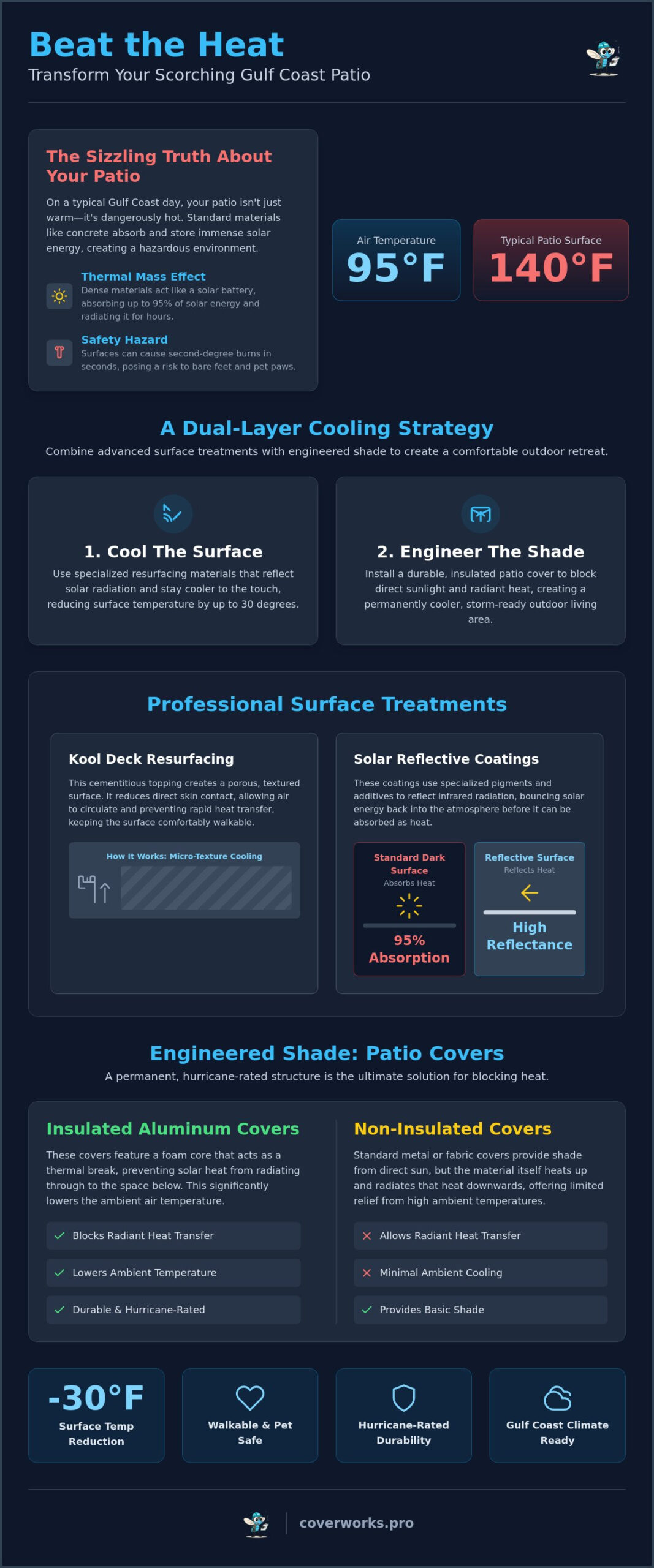
Understanding why your outdoor space feels like an oven is the first step toward effective cooling patio deck surfaces. Most homeowners assume the air temperature is the primary problem, but the real culprit is the material beneath your feet. While the air might be 95 degrees, your patio floor is often much hotter because it interacts with solar radiation differently than the atmosphere does.
Thermal Mass and Heat Retention
Thermal mass refers to a material’s ability to absorb, store, and eventually release heat energy. Dense materials like standard concrete, brick, and natural stone possess high thermal mass. This means they act like a massive solar battery throughout the day. While wood or thin composite boards might heat up quickly and cool down just as fast, concrete stays hot long after the sun has set. It continuously pulls energy from the sun and holds it deep within the slab.
The process begins with UV radiation and infrared absorption. When sunlight hits a dark or porous surface, the material converts that light into thermal energy. The Science of Cool Pavements explains that traditional dark surfaces can absorb up to 95% of solar energy. This energy doesn’t just sit on top; it penetrates the entire structure. This creates a reservoir of heat that radiates upward, heating the air immediately above the patio and making the entire area feel stifling.
The Gulf Coast Factor: Humidity and Heat
In regions like Louisiana and Alabama, the local climate adds a layer of difficulty that inland states don’t face. High humidity and high dew points create a thick blanket of moisture in the air. This atmospheric condition prevents effective evaporative cooling, which is the natural process that usually helps surfaces shed heat. On a dry day, a surface might release its energy back into the atmosphere relatively quickly. On a humid Gulf Coast night, that heat remains trapped in the concrete. This means your patio starts the next morning already warm, leading to a cumulative heat effect.
Safety is a significant concern for families and pet owners during these peak months. Human skin starts to feel pain at around 111 degrees, and first-degree burns can occur at 118 degrees. When a patio surface reaches 140 degrees, it can cause second-degree burns in just a few seconds of contact. Relying on standard “cool colors” or light-colored paint isn’t a complete strategy for cooling patio deck surfaces. Paint doesn’t change the density of the slab or its fundamental ability to store energy. Professional solutions must address the physics of the material itself to provide lasting relief.
Professional Surface Treatments: Kool Deck and Reflective Coatings
While shading is vital for comfort, the foundation of a cool outdoor space starts with the floor. Standard concrete is a heat sponge. Professional treatments change how that surface interacts with solar energy by altering its physical properties and reflective capabilities. Applying these professional treatments is one of the most reliable methods for cooling patio deck surfaces in high-heat zones. To explore how high-performance concrete finishes are utilized in industrial and commercial settings, you can discover Polished Concrete Atlanta and their specialized flooring solutions.
What is Kool Deck Resurfacing?
Kool Deck is a specialized cementitious topping. It remains the industry standard for high-traffic, sun-exposed areas like pool decks. Unlike standard concrete, which is dense and smooth, Kool Deck is applied to create a textured, porous surface. This texture is critical because it reduces the amount of skin-to-surface contact. When you walk on it, your feet only touch the high points of the texture. This allows air to circulate in the tiny valleys of the material, preventing the rapid transfer of heat to your skin.
The application involves spreading the mixture over a prepared concrete base. This creates a structural bond that is durable enough to withstand the intense rain and humidity of the Gulf Coast. For homeowners with existing concrete patios, decorative concrete resurfacing provides a way to upgrade the space without the expense or mess of a full demolition. It transforms a functional slab into a comfortable, aesthetically pleasing feature of the home. Homeowners with pool areas should also review our complete Kool Deck resurfacing checklist for slip-resistant pool deck coatings to ensure their project meets both safety and performance standards.
Decorative Concrete and Solar Reflectance
Reflective coatings work by bouncing solar radiation back into the atmosphere before it can be absorbed as heat. This is achieved through the use of light-colored pigments and specialized infrared-reflective additives. According to the EPA on Cool Pavements, these types of solar-reflective surfaces can remain significantly cooler than traditional dark pavements. This technology is particularly effective for cooling patio deck surfaces that receive direct afternoon sun.
It’s important to distinguish these professional coatings from standard hardware store deck paint. Paint is often a thin film that traps moisture and eventually peels. Professional-grade coatings use breathable materials that allow moisture vapor to escape from the concrete slab. This breathability is essential in high-moisture environments like Louisiana and Mississippi, where trapped water can cause standard coatings to bubble or fail. To keep these surfaces effective, regular cleaning is necessary. Dirt and debris can coat the reflective pigments, which reduces their ability to bounce away sunlight and slowly increases the surface temperature over time.
Engineering Shade: The Power of Aluminum Patio Covers
While Section 2 detailed how reflective coatings reduce heat absorption, even the most advanced liquid treatments have limits when facing 100-degree direct sunlight. To achieve a truly comfortable outdoor space, you must address the source of the energy: the sun itself. Aluminum patio covers serve as a primary shield, blocking UV radiation before it ever reaches your floor. This dual-layer strategy is the most effective approach for cooling patio deck surfaces because it combines a reflective floor with a structural thermal barrier overhead.
According to EPA’s guide to cool pavement strategies, conventional outdoor surfaces can reach temperatures of 120–150°F, creating a localized heat island effect on your property. By installing an engineered aluminum structure, you stop this heat accumulation before it starts. Aluminum is an ideal material for the Gulf Coast because it doesn’t warp like wood or rust like steel, and it dissipates heat much faster than traditional building materials.
Insulated vs. Non-Insulated Covers
Homeowners often choose between insulated and non-insulated structures based on their specific cooling needs. Insulated patio covers utilize high-density foam cores sandwiched between aluminum skins. These panels act like a refrigerator wall, creating a total thermal break that prevents the sun’s heat from radiating through the roof to the area below. They’re the gold standard for maximum temperature reduction, especially if you plan to eventually enclose the space into a glass room.
Non-insulated patio covers offer a different set of benefits. While they don’t provide the same thermal barrier as insulated panels, they’re highly effective at providing total shade while allowing for excellent ventilation. These structures are often more budget-friendly and are ideal for areas where you want a durable, permanent roof that protects against both rain and direct sun without the added thickness of insulation.
Pergolas and Polycarbonate Options
If you prefer a more open feel, modern aluminum pergolas provide a balance of dappled shade and constant airflow. These structures are perfect for cooling patio deck surfaces by breaking up direct solar paths while allowing heat to rise and escape through the rafters. They offer a timeless aesthetic that complements the regional architecture of Louisiana and Mississippi while maintaining the structural integrity required for coastal wind loads.
For those who want protection from the rain but still desire natural light, Lexan and twin-wall polycarbonate roofs are an excellent alternative. These materials are engineered to block nearly 100% of harmful UV rays and a significant portion of infrared heat while remaining translucent. This allows you to enjoy a bright, airy patio without the searing temperatures associated with traditional clear glass or open sky exposure. Choosing the right structure depends on whether your priority is total heat block or a blend of light and ventilation.
Step-by-Step: How to Implement a Patio Cooling Strategy
Creating a comfortable outdoor environment requires more than a single product. It involves a systematic approach that addresses both the floor and the air above it. By following a logical progression, you can ensure your investment provides the maximum temperature reduction possible for your specific property layout. This process focuses on cooling patio deck surfaces while simultaneously managing the ambient heat that makes Gulf Coast summers so intense.
Phase 1: Surface Assessment and Repair
The first step is a thorough inspection of your existing slab. Heat and humidity can cause concrete to expand and contract, leading to hairline cracks or moisture-related scaling. Before applying any cooling patio deck surfaces treatments, you must repair these structural issues to ensure a proper bond. If your concrete is in good condition, you can choose between a solar-reflective coating or a full Kool Deck resurfacing for your pool deck. Preparation is the most critical part of this phase. The surface must be pressure washed and etched to remove oils and dirt, as even a thin layer of grime can significantly reduce the solar reflectance of your new finish.
Phase 2: Structural Shade Planning
Once your surface strategy is set, you need to identify the “burn zone.” This is the area of your patio that receives direct, punishing sunlight during the peak afternoon hours. Tracking the sun’s path across your yard helps you determine the best placement for an engineered structure. In the Gulf Coast, western and southern exposures are the most problematic. You’ll need to decide if a permanent insulated patio cover or a versatile pergola fits your lifestyle. It’s essential to consult with professionals who understand regional wind-load requirements. Structures in our area must be engineered to withstand hurricane-force winds, not just provide shade.
Phase 3: Finishing Touches for Airflow
The final phase involves managing the air movement around your patio. Even with a cool floor and a shaded roof, stagnant, humid air can feel oppressive. Integrating outdoor-rated ceiling fans into your aluminum patio cover is a highly effective way to create a consistent breeze. You might also consider a professional misting system. These systems can lower the ambient air temperature by another 10 to 15 degrees, provided they are positioned to avoid excessive moisture buildup on your deck. Strategic landscaping, such as planting heat-tolerant shrubs, can also act as a natural wind break or provide additional low-level shade.
To measure the success of your implementation, use an infrared thermometer to track surface temperatures before and after each phase. Most homeowners see the most dramatic results after combining a reflective coating with a structural cover. If you’re ready to start your transformation, you can request a professional consultation for your patio project to ensure your cooling strategy is engineered for long-term durability.
Professional Solutions for Gulf Coast Comfort
Achieving the ideal balance of temperature reduction and structural durability requires a contractor who understands the specific environmental pressures of the South. While the strategies discussed in this guide provide a blueprint for relief, their true potential is realized when they’re engineered as a single, cohesive system. Our team brings over 20 years of specialized experience to every project in Louisiana, Mississippi, and Alabama. We ensure that your investment in cooling patio deck surfaces provides relief for decades rather than just a few seasons by matching the right coatings with the correct structural support.
Why Local Expertise Matters
Building along the Gulf Coast involves navigating complex building codes that vary significantly between coastal counties and inland parishes. CoverWorks Inc. designs every structure to meet or exceed regional wind-load requirements, ensuring your insulated patio cover or pergola stays secure during severe weather. This commitment to structural integrity doesn’t come at the expense of beauty; we focus on aesthetic harmony that complements your home’s existing architecture. For those looking to protect their entire swim area, our Custom Pool Enclosure Installation in Louisiana offers a comprehensive way to manage heat and debris simultaneously.
Bespoke Aluminum Structures
We believe that every outdoor space is unique, which is why we offer a full range of customizable solutions. Whether you need a heavy-duty carport to protect your vehicles from the sun or a sophisticated glass room that extends your living area, our aluminum systems are engineered for thermal efficiency. We often recommend Lexan patio cover benefits for homeowners who want to maintain natural light while blocking the infrared radiation that causes surface heat. These systems are particularly effective at cooling patio deck surfaces by filtering out the harshest spectrums of sunlight before they reach the ground.
Our process is designed to be as efficient as the structures we build. We provide same-day quotes to respect your time and maintain a streamlined installation timeline that minimizes disruption to your daily life. By combining decorative concrete resurfacing with advanced aluminum covers, we create a multi-layered defense against the heat. If you’re ready to transform your scorched deck into a functional retreat, contact us today for a professional consultation. We’ll help you select the right materials and engineering to ensure long-term comfort and increased property value.
Transform Your Outdoor Space into a Year-Round Retreat
Reclaiming your patio from the punishing Gulf Coast sun requires a strategic shift from basic maintenance to professional engineering. By addressing the physics of thermal mass through reflective coatings and blocking UV radiation with insulated aluminum structures, you can finally enjoy a walkable, comfortable surface during the hottest months. These combined strategies for cooling patio deck surfaces provide a permanent solution that stands up to regional storms while protecting your family and pets from blistering temperatures. Your outdoor area should be an extension of your home, not a place you avoid for half the year.
With over 20 years of experience serving Louisiana, Mississippi, and Alabama, we specialize in custom-engineered designs that balance structural strength with aesthetic beauty. You don’t have to wait weeks to begin your project; we respect your expectations by providing efficient service and reliable results. Take the first step toward a more comfortable lifestyle and get a same-day quote for your custom cooling solution today. We look forward to helping you build a cooler, more inviting outdoor space that lasts for decades.
Frequently Asked Questions
Can I apply a cool coating over my existing concrete patio?
Yes, you can apply professional reflective coatings over an existing concrete slab provided the surface is structurally sound and free of major cracks. The process requires a thorough deep cleaning and acid etching to ensure the new material bonds permanently to the old concrete. This is a highly effective way to achieve cooling patio deck surfaces without the high cost and mess of a total deck replacement.
Does Kool Deck really make a difference in 100-degree heat?
Kool Deck is specifically engineered to stay comfortable in extreme temperatures by utilizing a textured, porous surface that reduces skin-to-surface contact. Research indicates that these types of heat-reflective coatings can keep concrete surfaces up to 35% cooler than standard pavement. This technology allows the material to reflect solar energy back into the atmosphere rather than storing it in the slab like a battery.
Which is better for cooling: an insulated patio cover or a pergola?
An insulated patio cover is the superior choice for maximum heat reduction because it provides a total thermal break between the sun and your patio floor. While an aluminum pergola offers excellent airflow and beautiful dappled shade, it doesn’t stop radiant heat as effectively as high-density foam panels. If your primary goal is to lower the ambient air temperature significantly, an insulated structure is the most reliable investment.
Are light-colored deck boards always cooler than dark ones?
Light-colored surfaces are generally cooler because they have higher solar reflectance, but the material’s density and technology also matter. Even a light-colored material with high thermal mass will eventually store heat if it lacks the proper engineered properties to shed that energy. To get the best results for cooling patio deck surfaces, you should look for materials that combine light pigments with infrared-reflective additives.
How long does a professional pool deck resurfacing last?
A professional resurfacing project typically lasts between 10 and 15 years when it is maintained according to manufacturer guidelines. In our humid Gulf Coast environment, it’s essential to use breathable materials that allow moisture vapor to escape from the concrete. Regular cleaning is also necessary to prevent dirt from dulling the reflective pigments, which would otherwise cause the surface to absorb more heat over time.
Can I install a ceiling fan in an aluminum patio cover?
You can certainly install outdoor-rated ceiling fans in aluminum patio covers to improve ventilation and comfort. Insulated patio covers are especially well-suited for this because they often feature internal channels that allow contractors to hide electrical wiring safely. This addition helps move stagnant, humid air, making the space feel several degrees cooler even on the most stifling afternoons.
What is the most heat-resistant material for a patio surface?
Specialized cementitious toppings and certain natural stones, such as travertine or coral stone, are among the most heat-resistant options for outdoor living. These materials don’t store energy as aggressively as standard concrete or dark pavers. When you pair these surfaces with an engineered shade structure, you create a multi-layered cooling system that keeps the area safe for bare feet and pets.
How much does it cost to cool down a large patio area?
The total investment for a cooling project depends on the specific combination of surface treatments and structural shade required for your space. Factors such as the total square footage, the current condition of your concrete, and the wind-load engineering needed for your specific county will determine the project scope. We recommend a professional consultation to evaluate your property and identify the most efficient cooling strategy for your budget.